When Water Carries Stories: Community Screenings of Rising Waters, Raising Rights
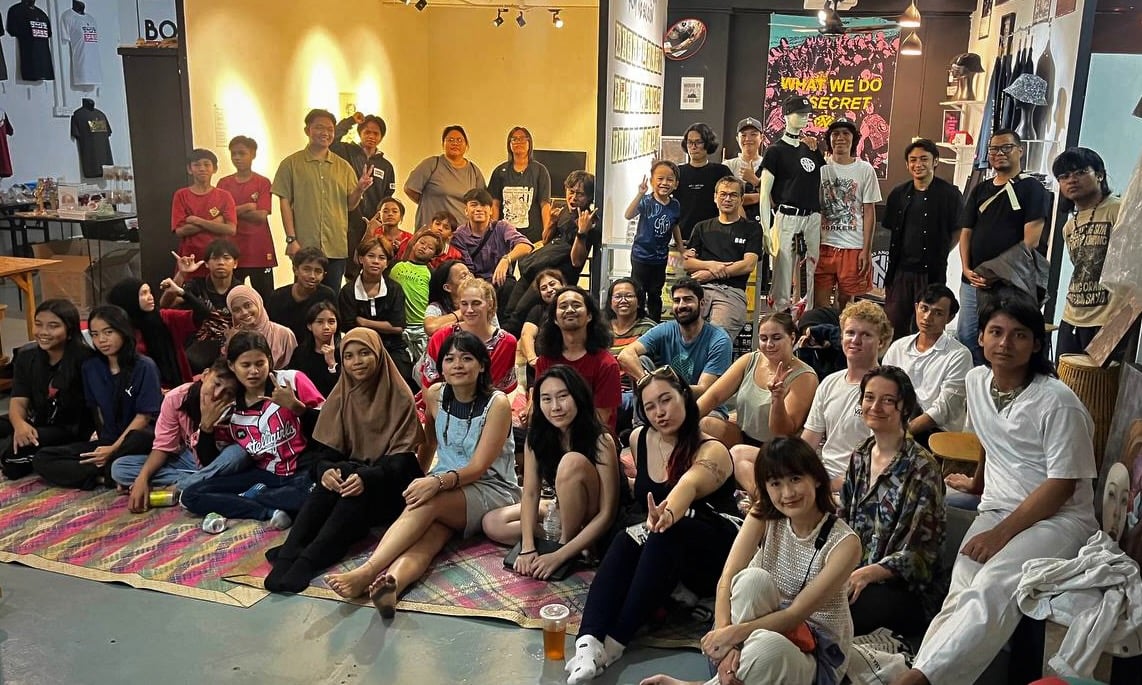
Photo by Cristy Aniko Markus, from the Kota Kinabalu screening of the film programme.
By King Catoy, Eunice Helera and Nadira Ilana
In December 2025, water became more than a resource or a metaphor—it became a conversation starter across the Asia-Pacific. Rising Waters, Raising Rights: Human Rights Through the Lens of Water, a curated film program presented by Cinemata for International Human Rights Day, brought together audiences from Manila to Kota Kinabalu, from Brooklyn to Chiang Mai, creating ripples of dialogue around shared struggles: climate displacement, statelessness, labor rights, and the everyday resilience of communities living at water's edge.
The program, curated collaboratively by Eunice Helera (Philippines) and Nadira Ilana (Malaysia), used water as both symbol and lived reality to explore human rights across the Maphilindo region—Malaysia, the Philippines, and Indonesia—territories historically connected by the Sulu Coral Triangle. Through five thematic "currents" (Sinking Grounds, Tides of Silence, Fisherfolk & Frontlines, Waves of Belonging, and Drifting States), the program wove together 27 notable short films and documentaries, available online between December 10-23 on Cinemata.org, while community hosts mounted physical screenings and watch parties across the region.
The program's decentralised structure invited partner organisations, film collectives, and advocacy groups to adopt specific thematic sections and host their own screenings—transforming the program from a passive viewing experience into active community dialogue.

Download Program Booklet (PDF)
Manila: Labour, Climate, and Cinema
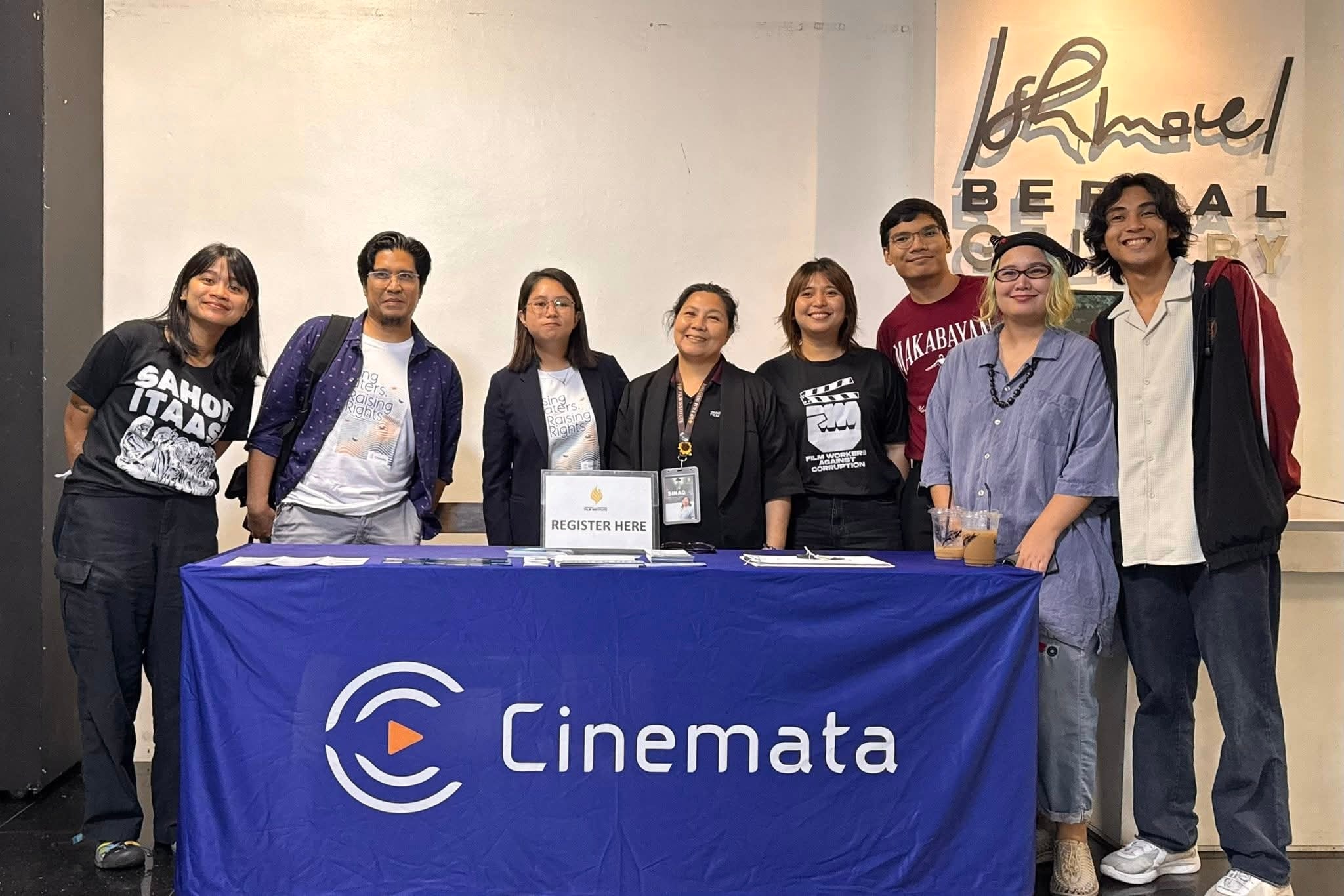
Group photo of the screening organisers: Cinemata Team, UP Film Centre representatives, Kinoise PH, and Film Workers Against Corruption. Courtesy of Marc Lino J. Abila of Pinoy Weekly.
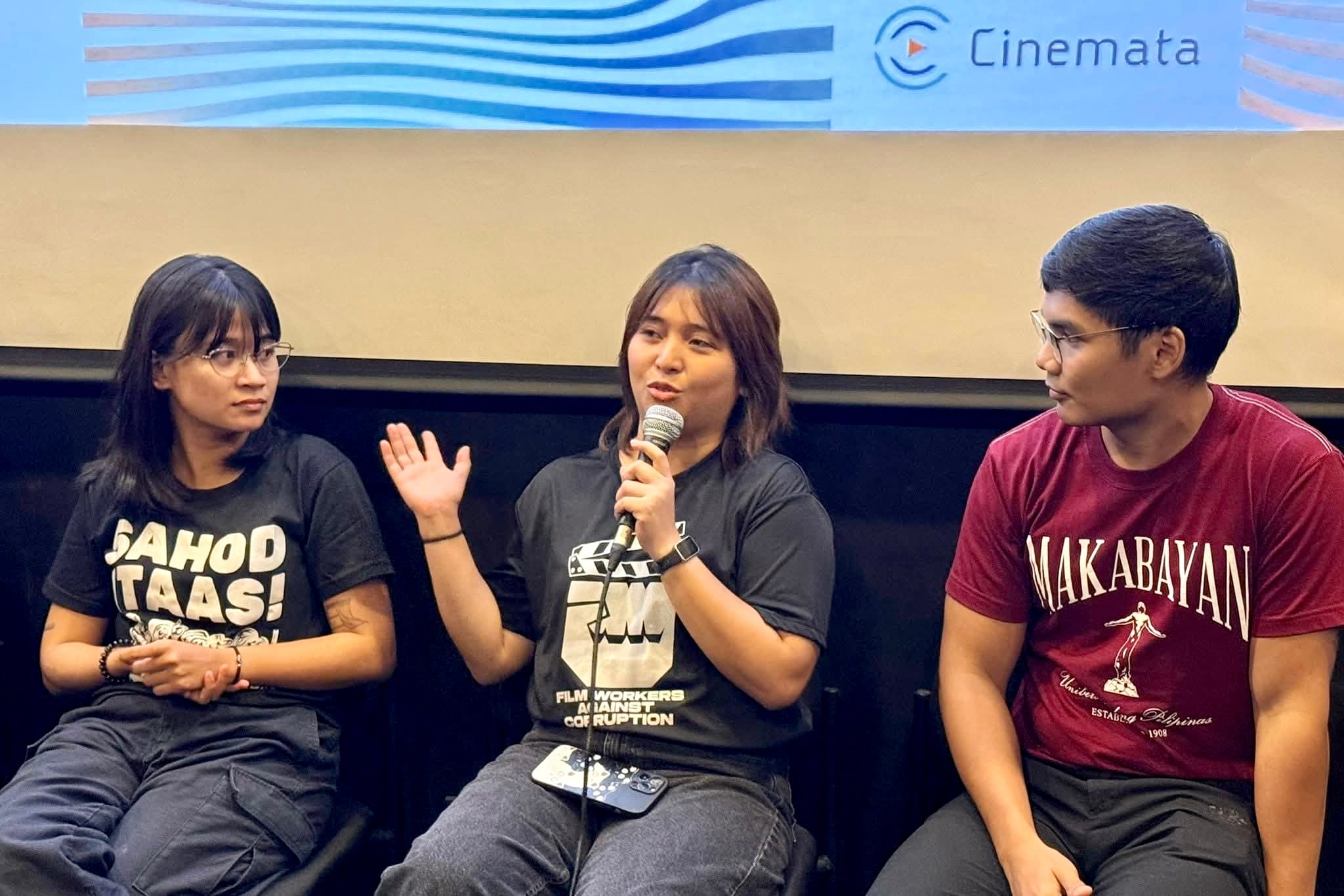
The Philippine kickoff of Rising Waters, Raising Rights took place on December 10 at the UP Film Institute Videotheque, co-organised with Film Workers Against Corruption, and supported by Kinoise PH and Laya Coffee Diliman, with UPFI Film Centre as venue partner. The launch gathered students, filmmakers, cultural workers, and organisers for a curated onsite screening of six films: Kung Bakit Madumi ang Ilog sa'min, Lusong, Astri & Tambulah, Here, Here, Sunog sa Sugbo, and Objects Do Not Randomly Fall From The Sky. Together, these works traced how environmental neglect, labour precarity, queer longing, displacement, and political waters intersect in everyday life.
The screening was also attended by members of the media, including Reel Cinema PH, Pinoy Weekly, and Inquirer.Net, who joined the post-screening conversations on environmental accountability, land and water as contested spaces, and the role of cinema in surfacing forms of violence that are often rendered invisible or normalised.
Just days later, the program found an unexpected yet deeply resonant audience beyond the cinema space. On December 13, more than 50 women and queer leaders from women-led mass organisations and labour groups gathered at Richmonde Hotel Ortigas for the National Women Workers Consultation Workshop on Gender-Just Transition and Climate Justice, organised in partnership with the International Labour Organisation (ILO) and Women Workers United.
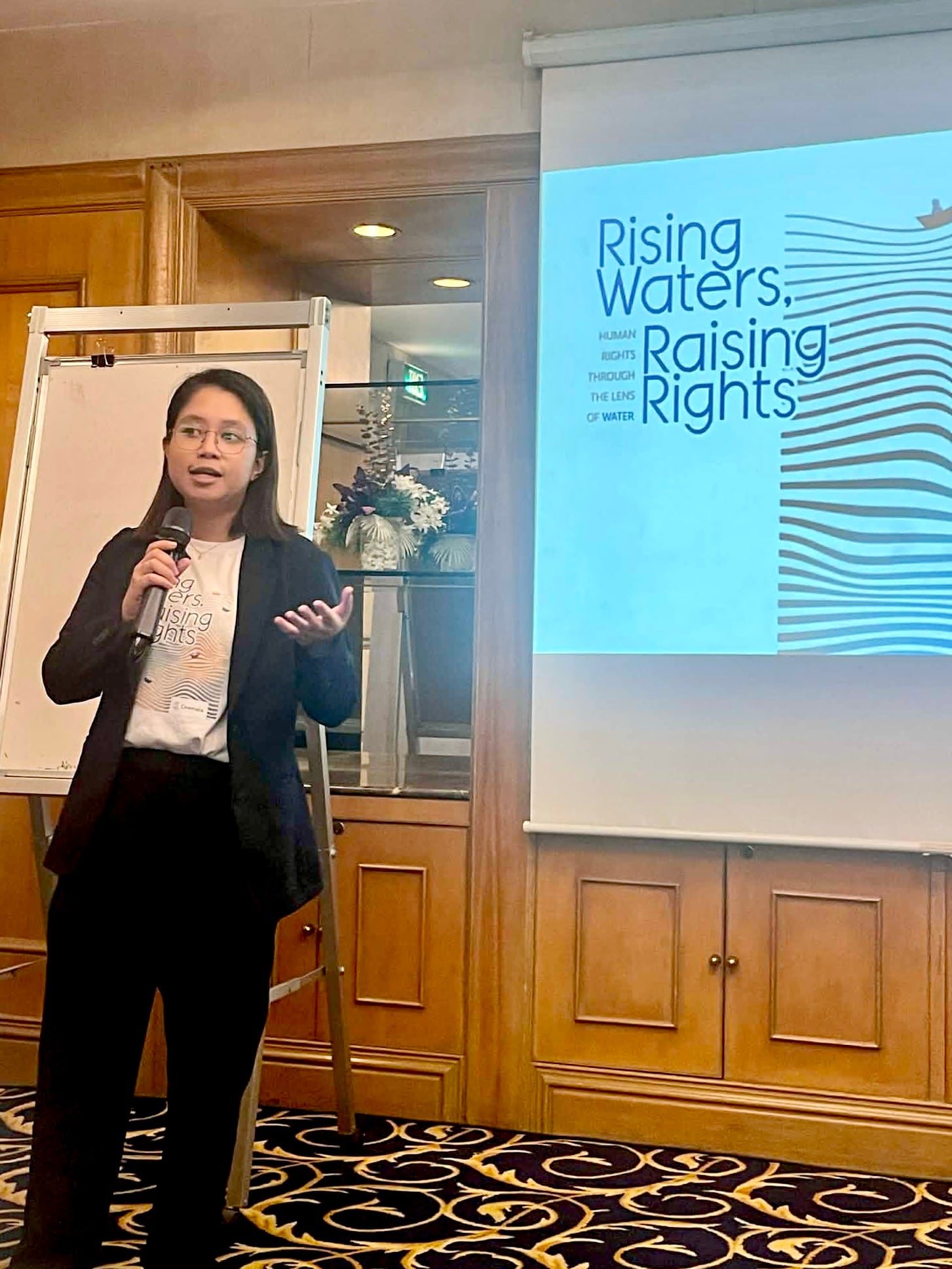
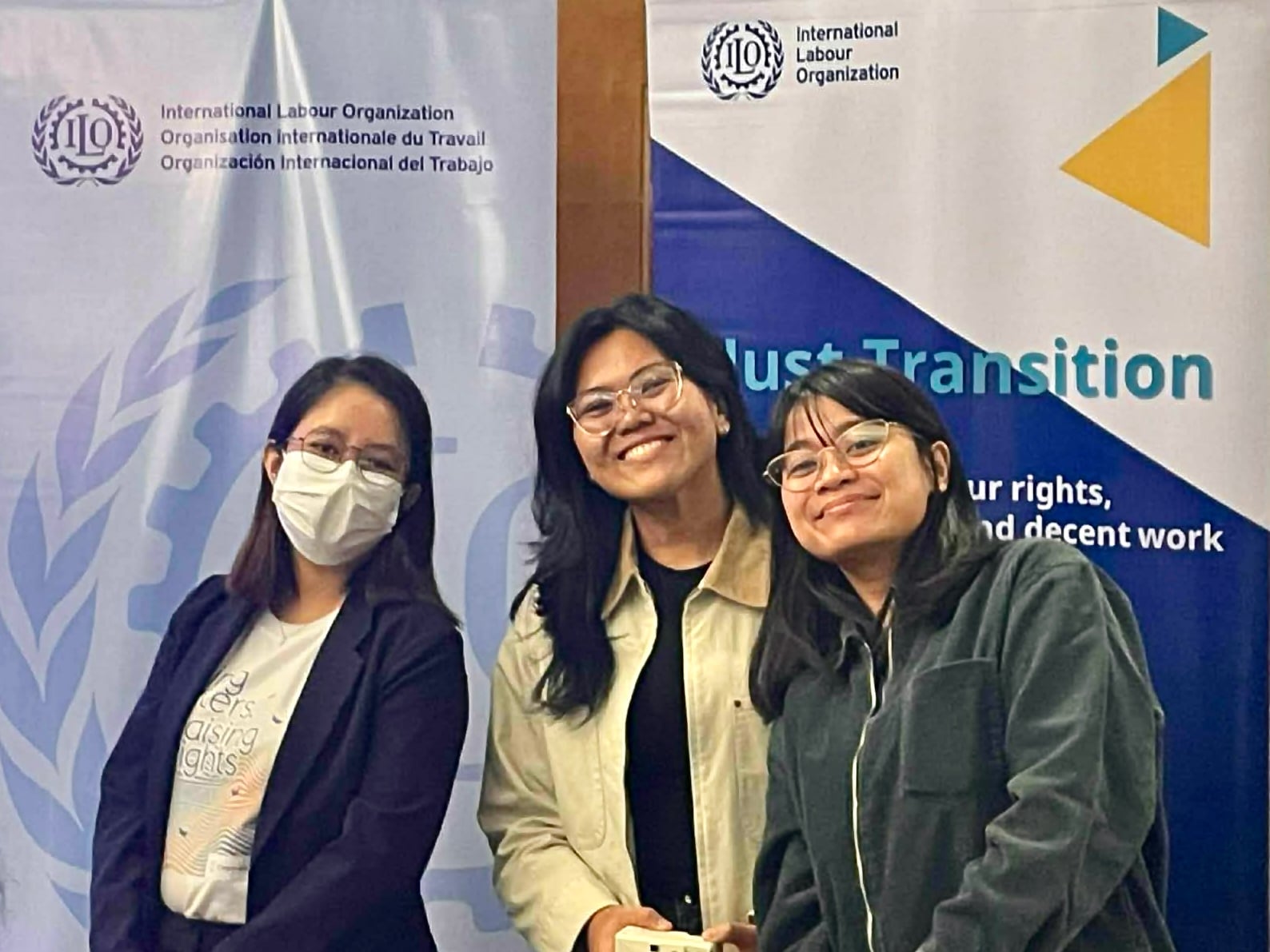
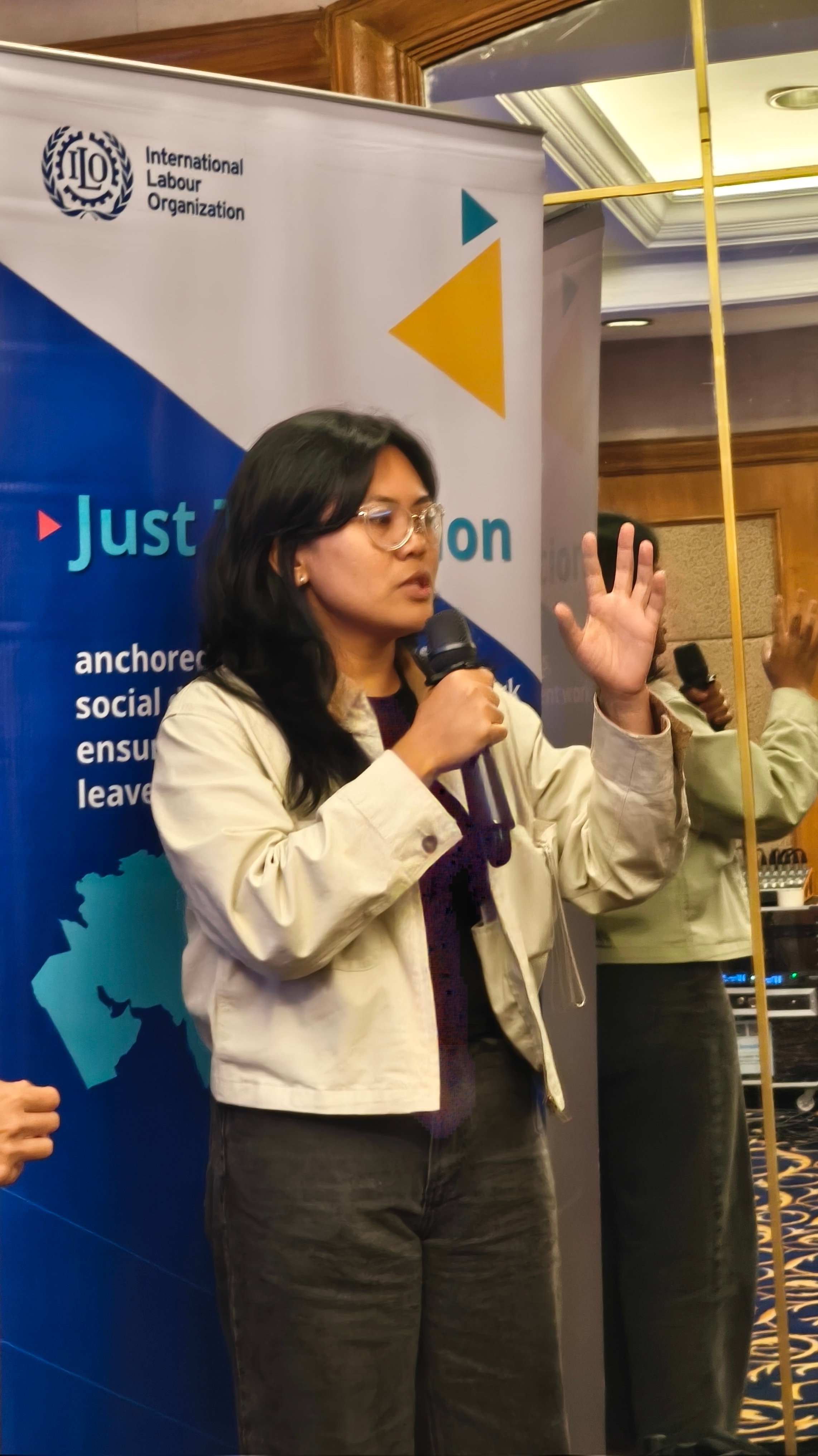
Eunice Helera, Cinemata Curator, and representatives from women labour groups addressing participants.
Between workshop sessions focused on strengthening women's leadership in climate justice advocacy, participants watched selected films from the program—Dambuhalang Panganib sa Pakil, Dagami Daytoy, and Objects Do Not Randomly Fall From The Sky. These works foregrounded how environmental destruction, extractive industries, and political waters directly threaten livelihoods, territories, and collective survival, particularly for women workers and marginalised communities.
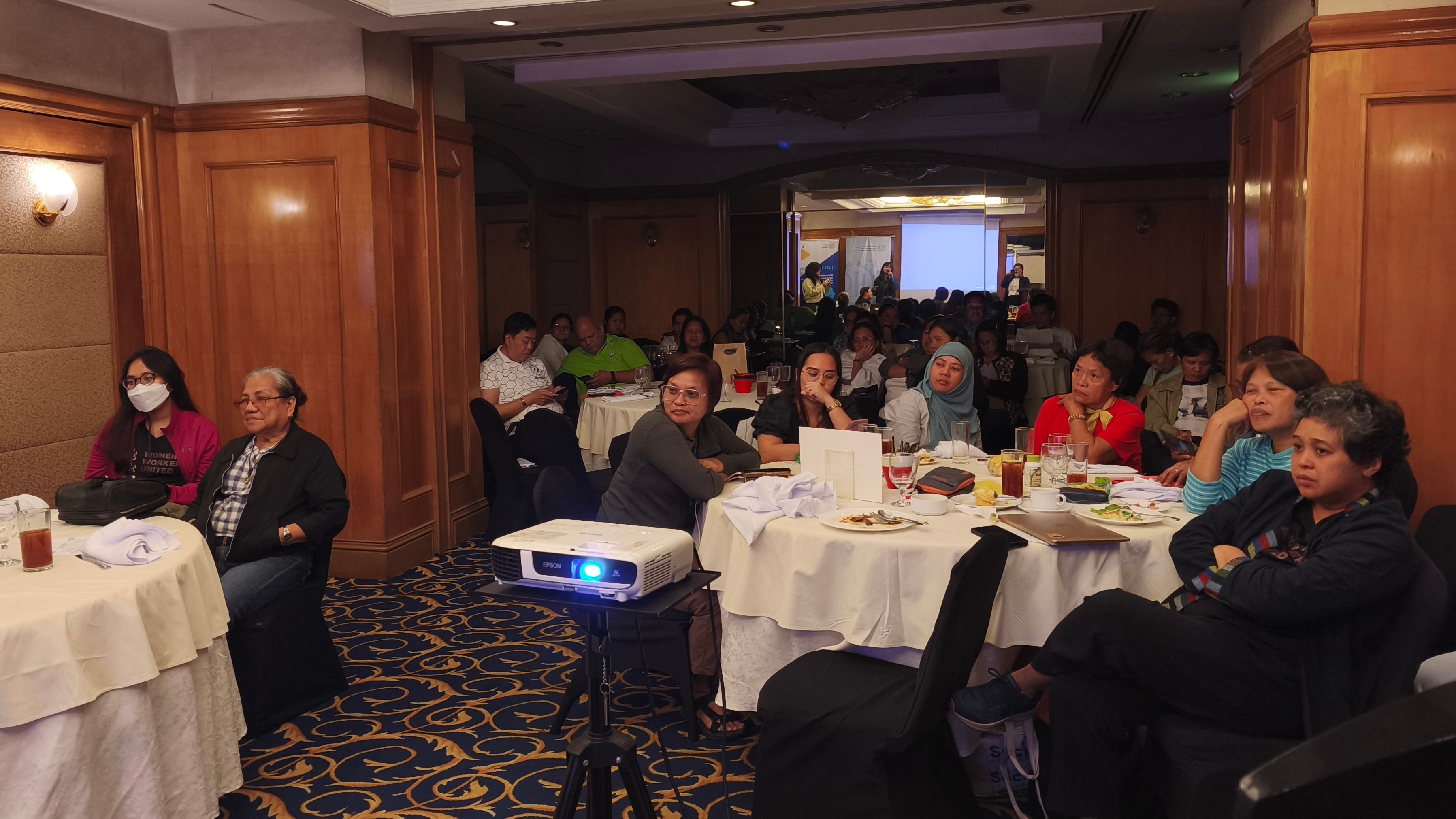
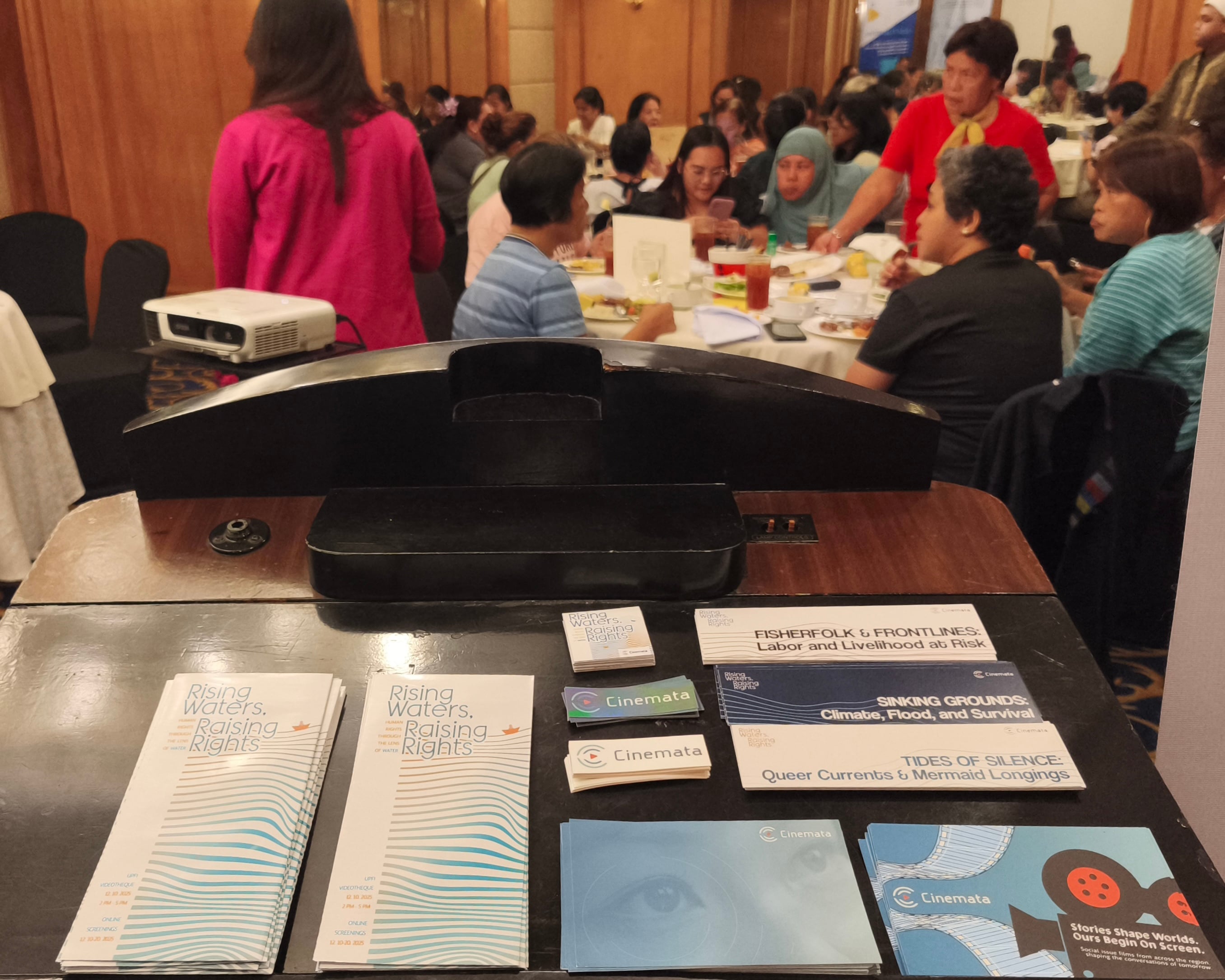
Audience composed of women labour leaders and representatives from the International Labour Organisation. Photo by Joanne Cesario.
The pairing of labour organising and cinema opened up a different mode of engagement. Films became not just illustrative tools, but entry points for reflection—allowing participants to articulate how climate policies, extractive industries, and so-called development projects directly affect bodies, livelihoods, and communities. The screenings helped bridge policy language with lived experience, reinforcing that climate justice and labour justice are inseparable struggles.
Across both settings—from the university screening room to a national labour consultation—Rising Waters, Raising Rights demonstrated how cinema can move across spaces and audiences, creating shared ground for dialogue on climate, labour, and accountability.
Chiang Mai: Regional Solidarity Through Film
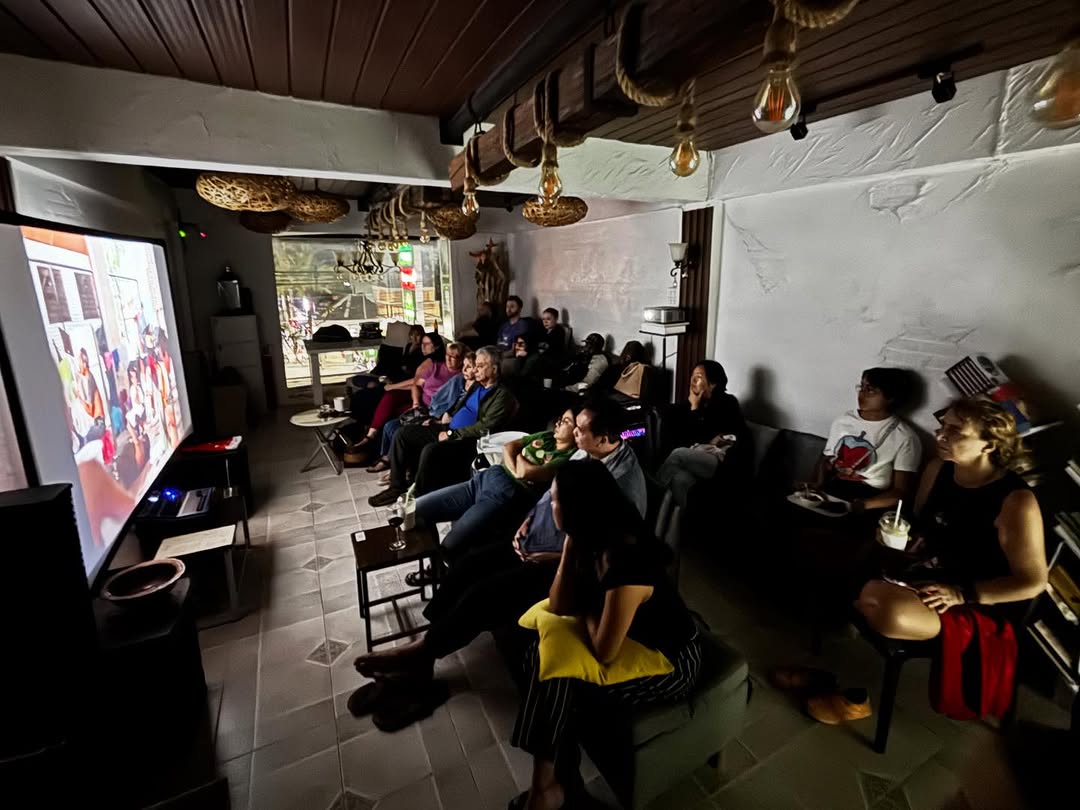
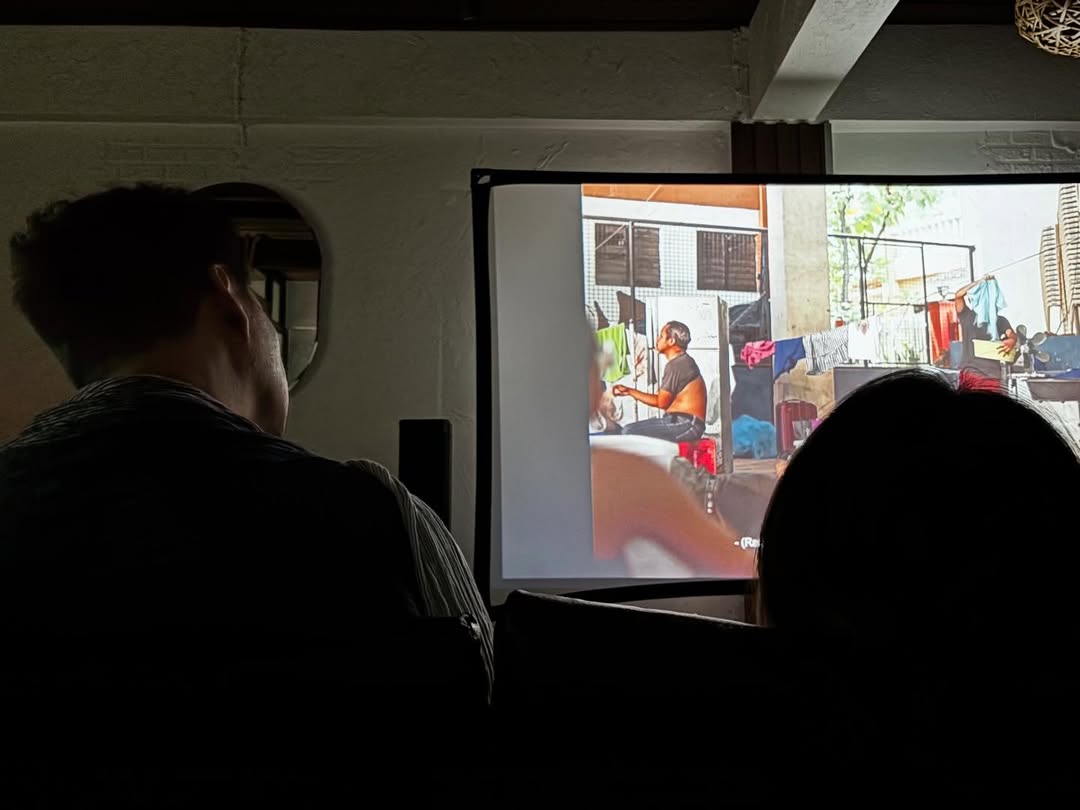
Film screening in Chiang Mai organised by FRAME. Photo courtesy of their Instagram account.
FRAME Chiang Mai hosted their final screening of 2025 as part of Rising Waters, Raising Rights, featuring selections from Sinking Grounds, Fisherfolk & Frontlines, and Drifting States. The screening reinforced Cinemata's regional reach beyond the Maphilindo focus, demonstrating how water-related struggles resonate across mainland Southeast Asia as well.
Brooklyn: Diaspora Dialogues
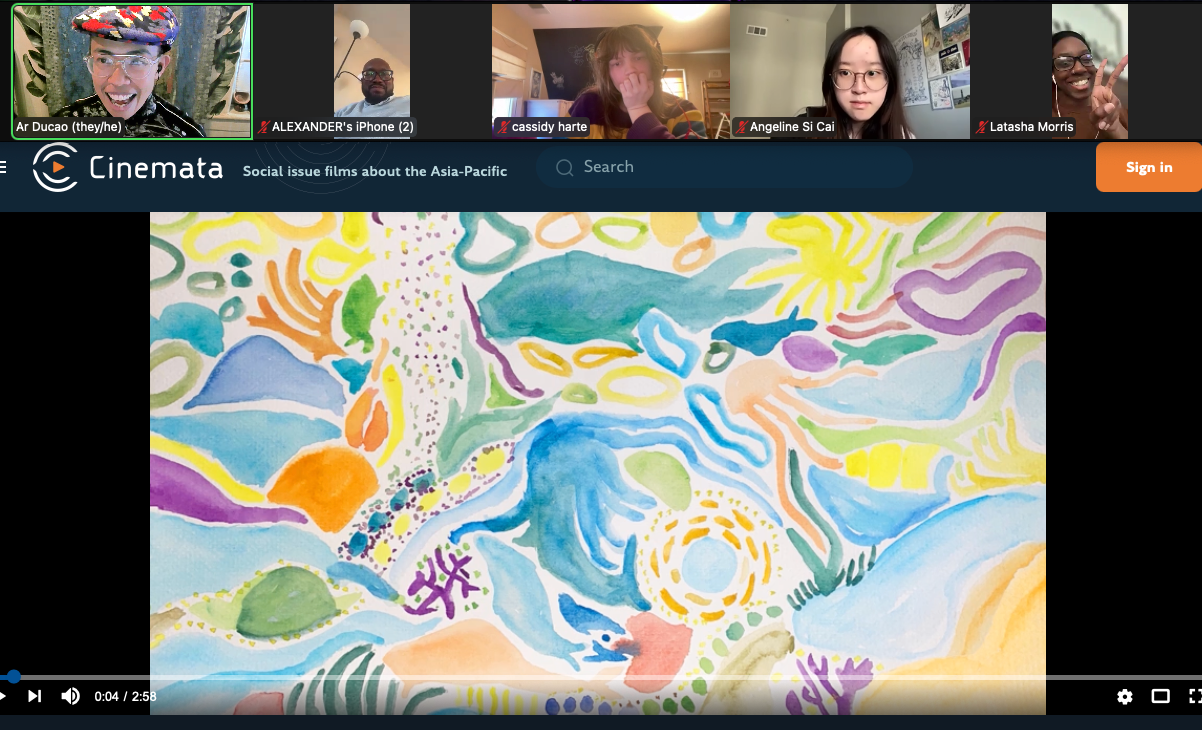
DuKode Studio, a Filipino-led, Brooklyn-based creative computing collective specialising in cross-cultural visualisations and civil rights applications, brought the program to the Filipino diaspora community in New York. The online screening created a transpacific bridge, allowing overseas Filipinos to engage with contemporary advocacy filmmaking from their home region while discussing how climate and migration issues connect homeland and diaspora experiences.
Kota Kinabalu: Cinemata & CineBah
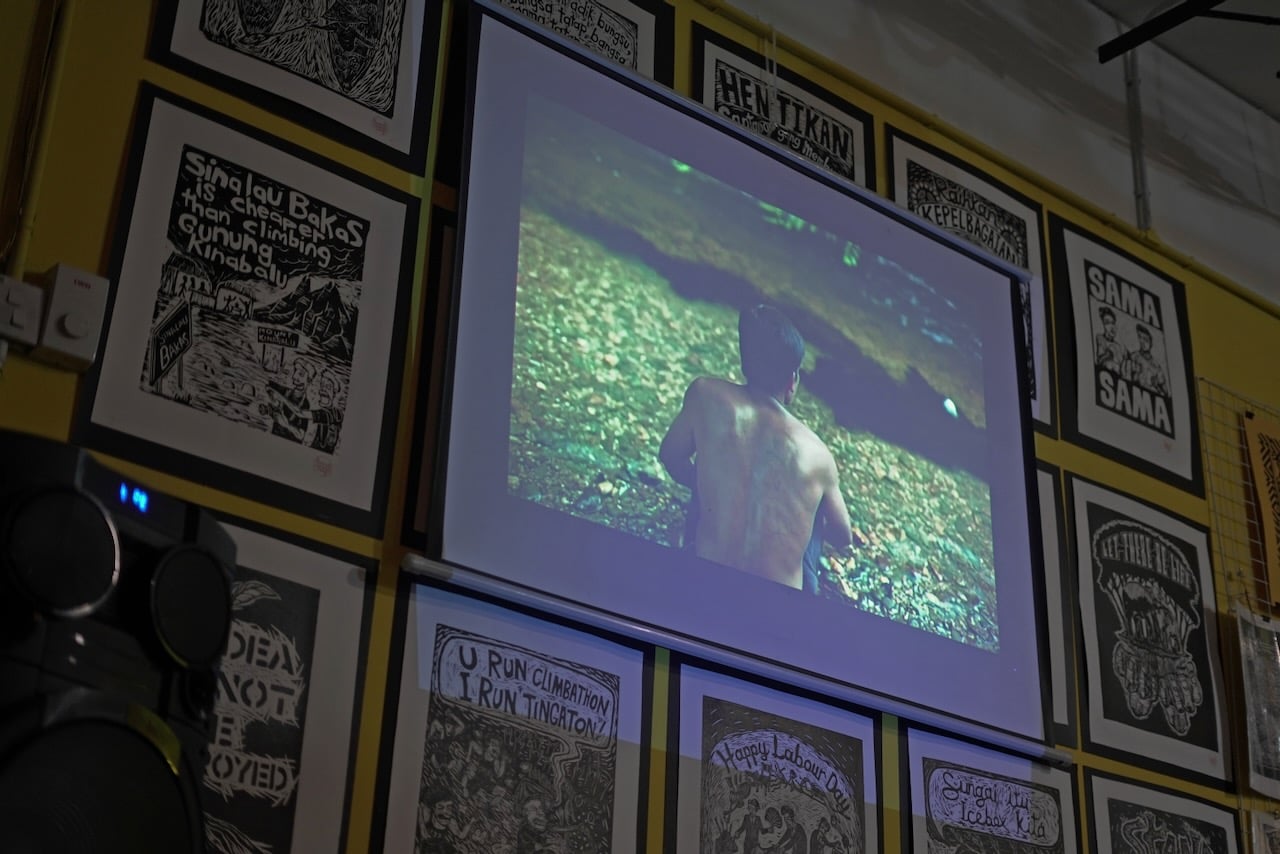
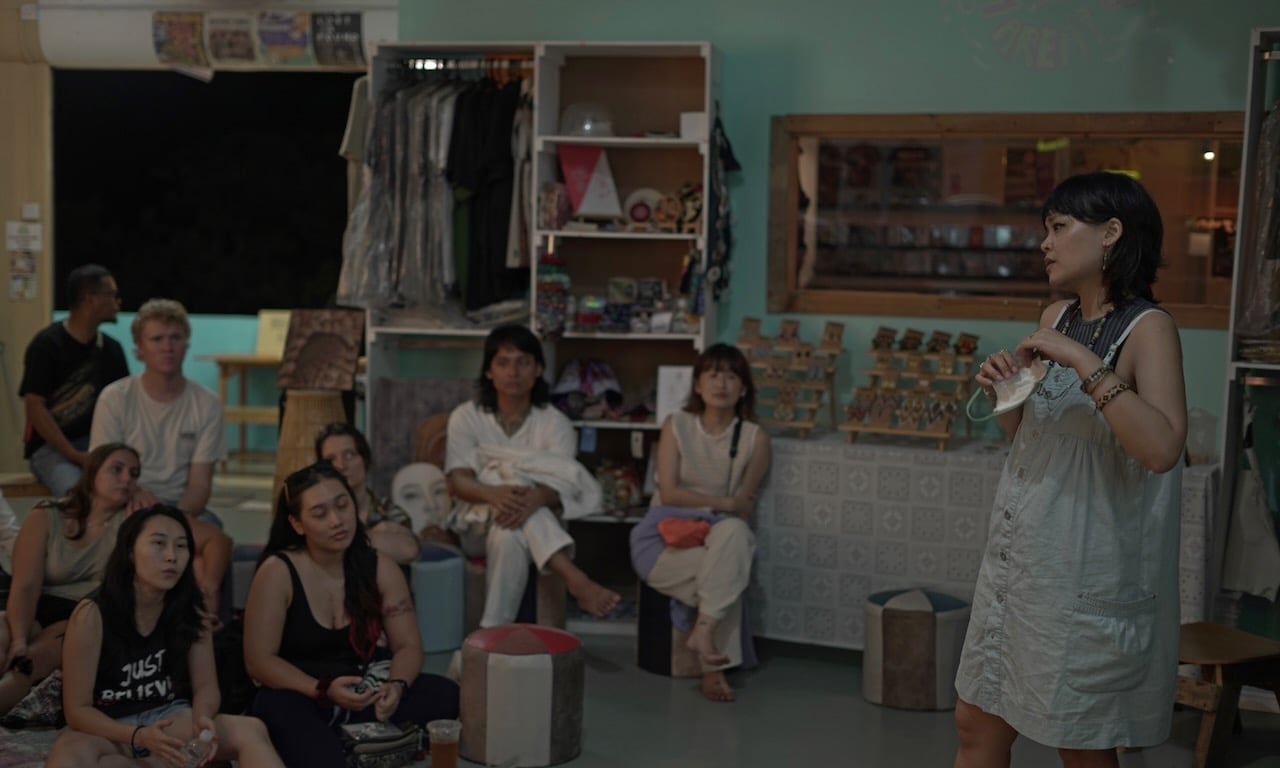
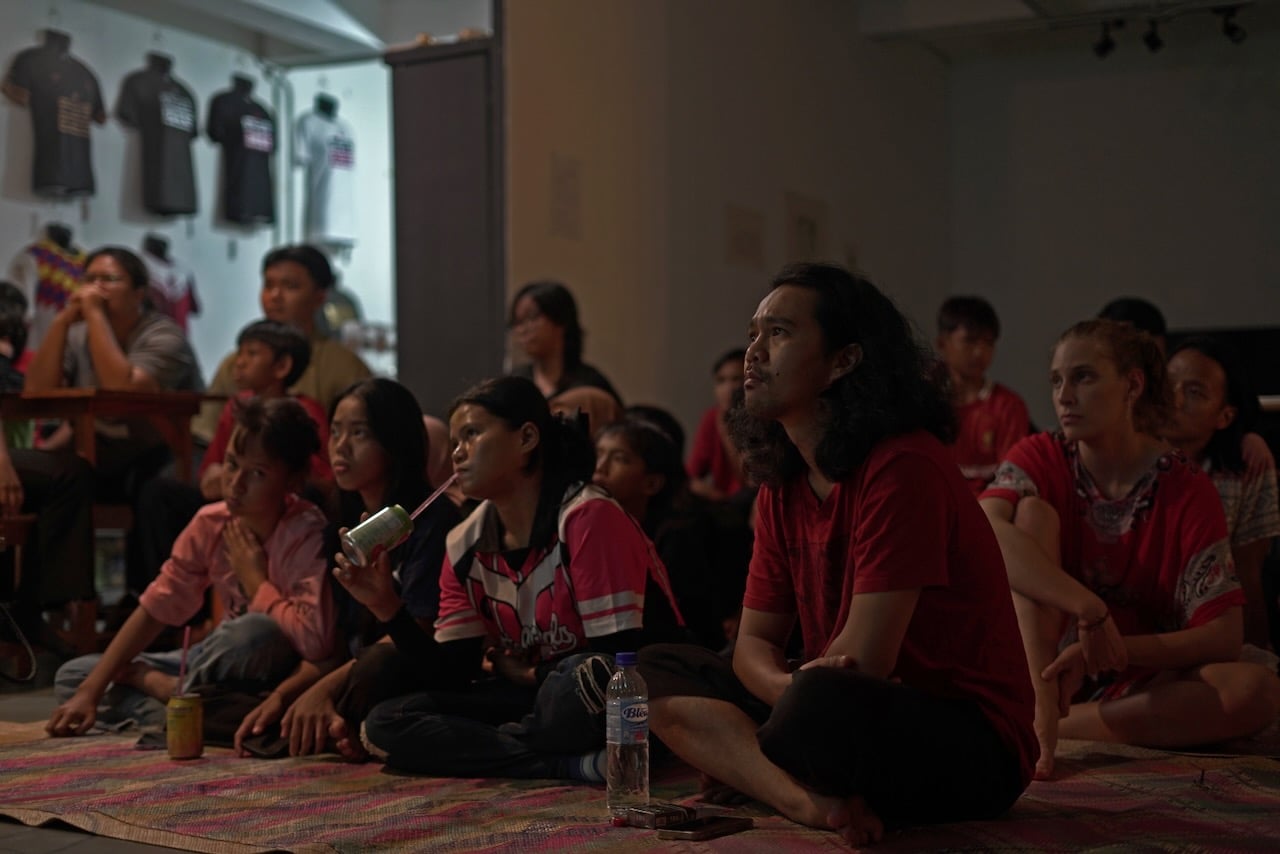
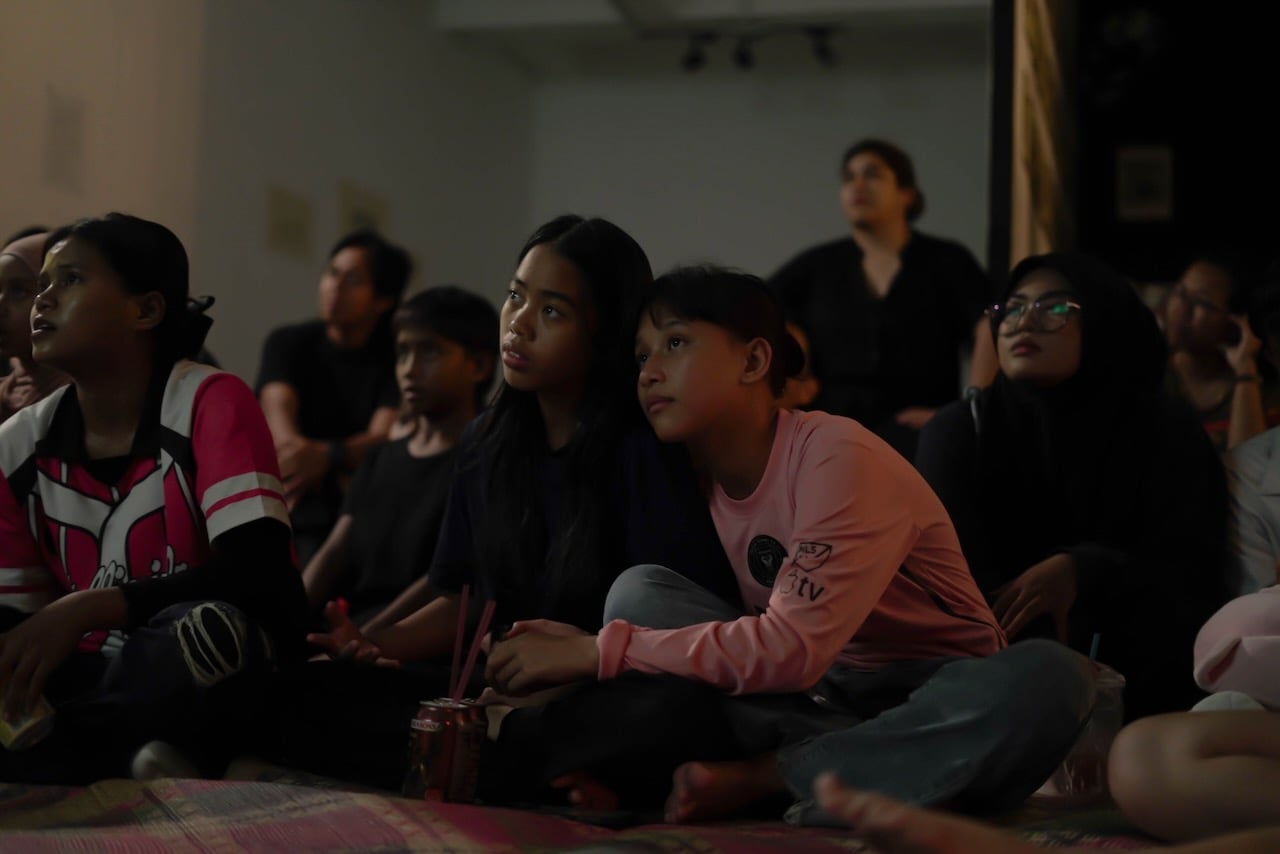
Audience members from Kota Kinabalu watching the films, including stateless children from Sekolah Alternatif. First row, right photo: Nadira Ilana, Cinemata Curator from Malaysia. Photo by Cristy Aniko Markus.
Ruang Tamu Ekosistem, a community arts and advocacy collective space and Sabah film club, CineBah, hosted the Malaysian premiere of RWRR. From the full programme, seven prestigious short films were selected to strengthen film literacy among young audiences and to address Sabah-specific climate challenges - namely the impacts of mining, mega-dams, and deforestation on land- and sea-based Indigenous communities, as well as stateless populations. The event was attended by 50 participants, half of whom were stateless children from Sekolah Alternatif, whose organisation also contributed three short films to the programme.
Technical Infrastructure Meets Community Care
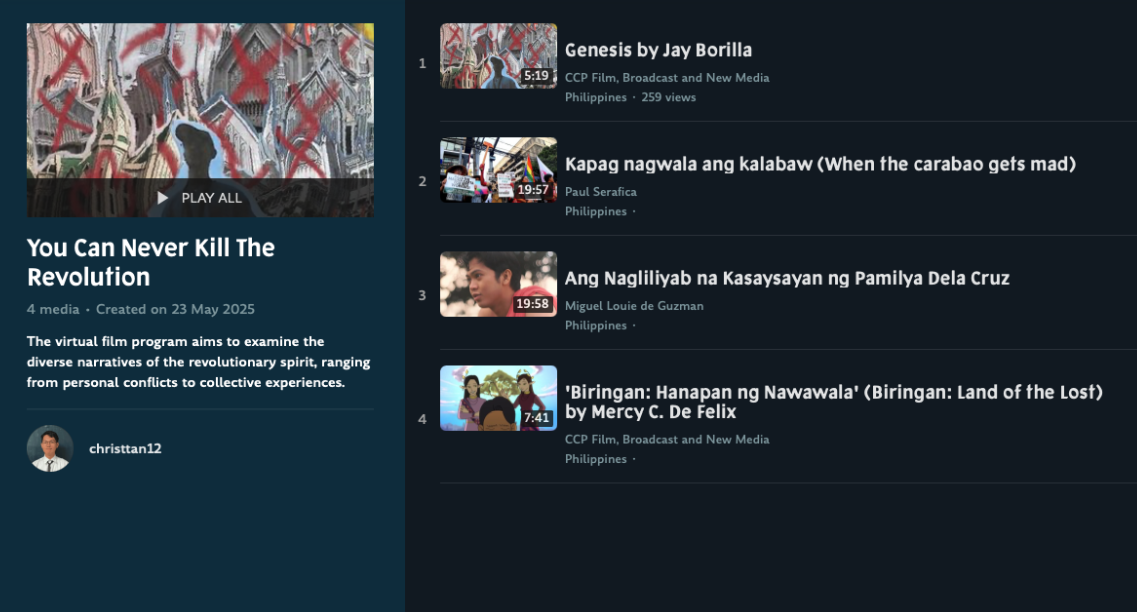
Behind these community gatherings was a technical upgrade designed specifically for watch party hosts. A recent site update introduced seamless playlist fullscreen functionality, allowing hosts to screen multiple films consecutively without disrupting the viewing experience—a small but crucial feature that lets communities focus on conversation rather than technical troubleshooting. Combined with Cloudflare's content delivery network, which caches videos on servers closer to each screening location, the platform ensured smooth playback even for audiences with varying internet speeds across Southeast Asia.
Films That Travel Like Water
For filmmakers, Rising Waters, Raising Rights proved that platforms like Cinemata can amplify social issue films beyond the festival circuit. Award-winning works like Mickey Lai's WaShhh, Earth Defender by Studio Birthplace and Iban filmmaker Kynan Tegar, and Nonilon Abao's This Is Our Land were showcased alongside powerful films from stateless youth at Sekolah Alternatif Semporna. Instead of relying on algorithms, the program put curation and community partnership at the centre—respecting filmmaker voices and building real engagement around urgent stories.
Many filmmakers from Malaysia and the Philippines encountered Cinemata for the first time through the programme. By the time the screening window closed on December 23, ten of them had decided to permanently archive their films on the site—works that had already completed successful festival runs, now made freely accessible to audiences, educators, and advocates for years to come. Like water itself, the program's impact spread in unexpected directions, pooling wherever communities were ready to receive it. For filmmakers whose work often faces censorship or marginalisation on commercial platforms, these spaces of authentic engagement matter more than view counts ever could.
The newly archived collection is available on Cinemata, where these films will continue to flow toward the audiences who need them most.
We would like to thank the media platforms and content creators who supported Rising Waters, Raising Rights through coverage, promotion, and community amplification: Counter Flow, Butingthings, CBO Channel, Pinoyscreenandstage, My Movie World, ReelCinemaPH, The Leisurely Life, CJ Says, Counter Flow Lakwatsero Lovers, BusinessWorld, Daily Tribune, and Agimat.Net. Their support helped extend the program's conversations beyond the screening spaces and into wider public discourse. Big thanks to Louise Pearce for the Rising Waters, Raising Rights graphics design.