Now Showing: Anthropocinema
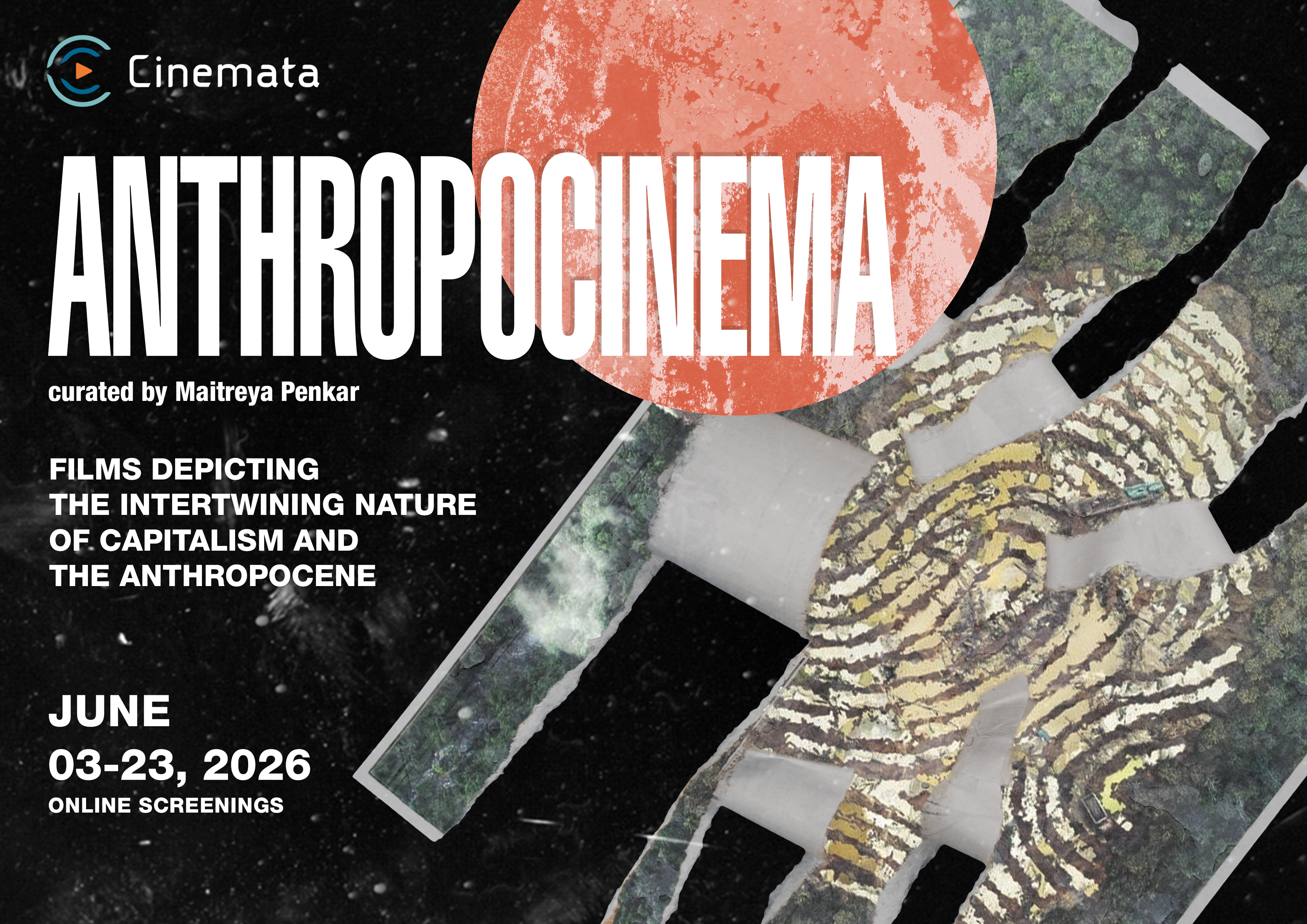
Written and curated by Maitreya Penkar
Holding all of humanity equally responsible for the climate crisis ultimately absolves the capitalist structures of oppression from all blame. Capitalism, particularly its industrial and economic forms since the 19th century, is the primary driver of the current planetary-scale changes.
As an industry, filmmaking demands enormous energy. The medium itself, often made with toxic chemicals, rare earth elements, celluloid and other forms of plastic — reflects the very industrialism that altered the planet. Yet, cinema also has the power to depict ecological realities while amplifying underrepresented voices.
This programme explores how the current geological epoch referred to by some as the Anthropocene is shaping socio-cultural structures and how its political and ecological repercussions are interconnected. Moving beyond traditional environmental messaging to explore climate change, species extinction, extractivism, manufactured landscapes, labour patterns, economic migration, and displacement in South and South-East Asia.
The Human Epoch
A mix of documentaries and animations about water bodies: massive dam projects disrupting and displacing indigenous populations, dying rivers, collapsing ecosystems and the resulting socio-cultural changes in coastal communities.
This 90 minute chapter contains 6 films addressing the distribution of power and entrenched inequalities in communities directly dependent on bodies of water that portray those made sacrificial victims; often along lines of class. This chapter contemplates existential threats, anxieties of an uncertain future and eco-grief.
Posthuman and Beyond
A collection of experimental films and conceptual video art works. It takes the audience on a journey — starting from the beginnings of civilization to modern day industrialization, extraction and exploitation; personification of natural elements and supernatural elements from indigenous beliefs in relation to capitalist systems. Concluding with post-anthropocene — what's next?
This chapter includes 6 audiovisual works, running for about an hour, that de-center the human narrative, allowing audiences to linger on the sheer duration of geological or non-human time. This chapter examines how films depict humans as intertwined with nonhuman entities such as animals, plants, technologies, atmospheres and spirits. A cinematic approach shaped by decolonial thought exploring experimental forms that collapse nature-culture divides while dismantling rigid distinctions between human and non-human binaries.
WATCH THE FILM PROGRAMME
These cinematic perspectives aim to dismantle colonial legacies of environmental exploitation and the resulting biodiversity loss, habitat transformations, followed by a socio-cultural shift, striving to leave the viewer with a renewed curiosity and a sense of agency.
The 12 films, split in 2 chapters, will be available for public viewing on Cinemata.org from 3rd-23rd June 2026. Community Screenings will be held at FRAME in Chiang Mai, Thailand on 3rd & 4th June 2026. Another community screening in Manila, Philippines at Chapterhouse on 10th June 2026. Additional virtual and regional screenings will be hosted through our network of partners.
For organisations, educators, community groups, and advocates interested in screening the programme within their own communities or advocacy contexts, please feel free to contact [email protected]. We would be happy to explore screening opportunities and community partnerships.
About the Community Curator
Maitreya Penkar is a film programmer, filmmaker, and community organizer from Mumbai, India. With a background in sound, journalism, and film studies in the Netherlands, their practice moves across disciplines, grounded in listening, collaboration, and the belief that cinema can open space for reflection, dialogue, and action. Currently based in Chiang Mai, Thailand, they are learning the Thai language, programming community film screenings, and working on film projects. They also co-run a weekly film club, FRAME.
About Cinemata
Cinemata is an open-source, ad-free video platform dedicated to social and environmental films from the Asia-Pacific. Launched by EngageMedia in 2021, it now hosts over 7,200 films from more than 30 countries contributed by filmmakers, collectives, and communities.
Unlike commercial platforms, Cinemata does not sell user data; filmmakers retain full rights to their work. The platform is shaped by filmmakers, programmers, curators, journalists, educators, activists, cultural institutions, and civil society organisations across the Asia-Pacific who believe in the power of stories to create change.