Cinemata Features: Maitreya Penkar
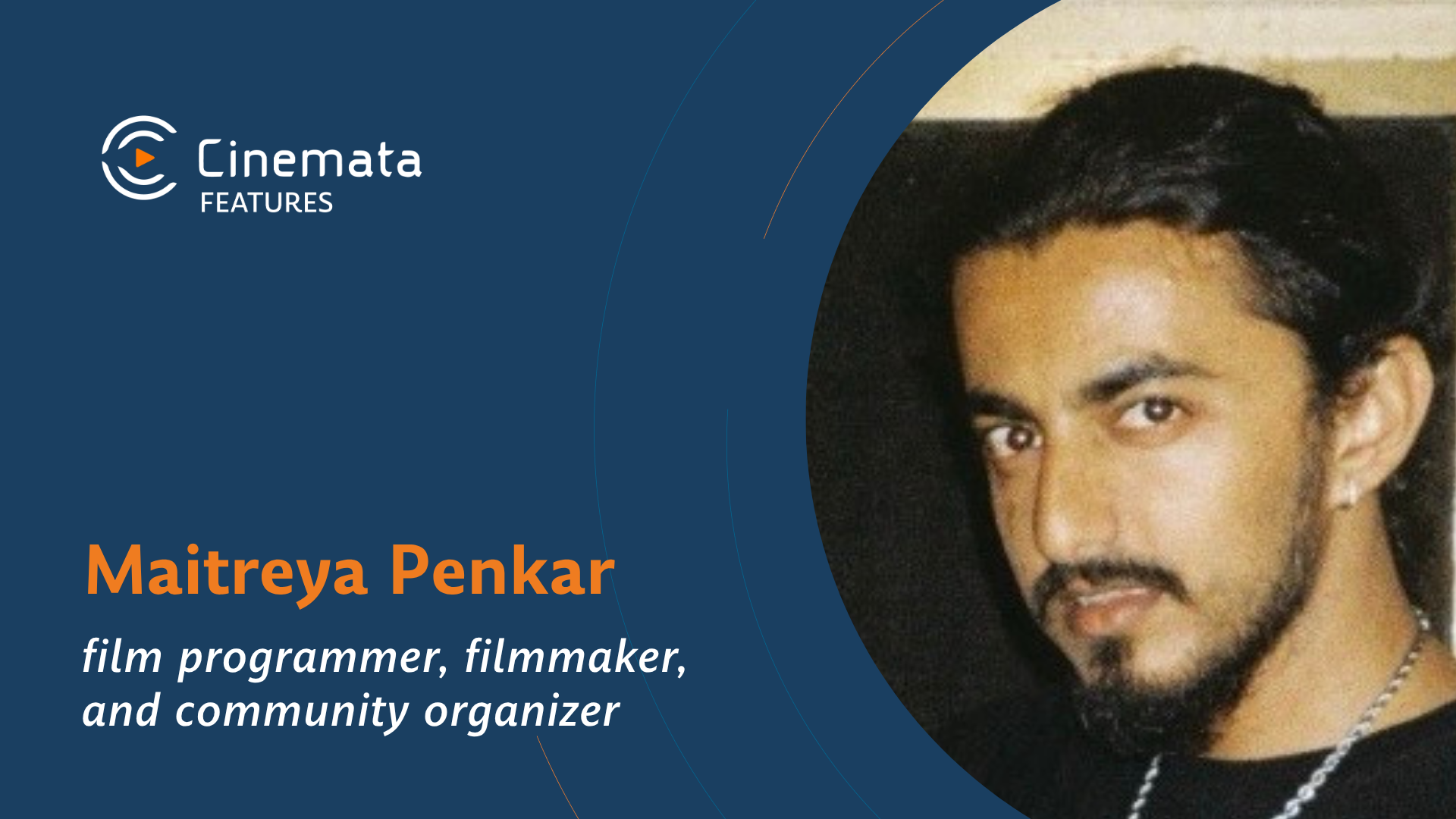
Cinemata Community Curator Maitreya Penkar is a film programmer, filmmaker, and community organizer from Mumbai, India. With a background in sound, journalism, and film studies in the Netherlands, their practice moves across disciplines, grounded in listening, collaboration, and the belief that cinema can open space for reflection, dialogue, and action.
Currently based in Chiang Mai, Thailand, they are learning the Thai language, programming community film screenings, and working on film projects. They also co-run a weekly film club, FRAME.
In this conversation, they reflect on their journey into curation, navigating different cultural contexts, and the kinds of programmes they hope to bring to Cinemata.
On Beginnings & Practice
Can you tell us about your journey into film programming and how your background in art, journalism, and film studies shaped your approach to curation?
My journey into film programming feels like a natural convergence of my core interests. It began with a desire to observe and document the world around me, which led me to journalism and then to filmmaking. My background in sound and journalism taught me the importance of listening—listening to stories, to silences, and to the undercurrents of social struggle.
This was deepened during my film studies in the Netherlands, where I moved beyond the technical to engage with cinema as a site of reflection, emotion, and social change. Courses like Cinema, Capital & Climate Change and Cinema & Social Change helped me understand that curation isn’t just about selecting films with thematic cohesion. It’s about sparking dialogue—dialogue that lingers and can lead to action.
For me, curation is an extension of journalism. It’s about framing a story, giving context, and amplifying voices that need to be heard. My role isn’t just to appreciate the craft, but to build a bridge between the work and the public. That’s what I strive to do with both FRAME and Cinemata.
On Context, Community, and Practice
How do you navigate differences in audience, space, and context when moving between countries or communities?
It starts with listening and humility. My experience moving from India to the Netherlands, and now to Thailand, has taught me that there is no standardized approach.
Before curating, I try to understand the audience’s existing relationship with cinema, the political climate of the place, and the relevant cultural nuances. For instance, a Q&A format that works for a regional audience in Groningen might need to be adapted for a multicultural community in Chiang Mai to feel safe and inclusive.
I also rely heavily on local collaborators. This has taught me the value of localized, trust-based organizing—centering mutual support and collective effort. I see my role as a bridge: bringing in a global perspective from my film studies and community engagement, while always grounding the process in local knowledge and needs.
On Cinemata & Future Directions
What kinds of programmes or conversations are you hoping to bring to the platform?
I’m interested in developing programmes that bridge the gap between art, industry, and independent, community-led storytelling.
Building on my research during film studies, I want to focus on the Anthropocene and its ripple effects—whether in displacement or shifts in socio-political structures. Given Cinemata’s focus on human rights and environmental films, I’m particularly interested in exploring how these issues intersect.
I hope to create spaces for dialogue that extend beyond the film itself, connecting filmmakers with advocates, activists, and community organizers. I’m also interested in how filmmakers in the region are using innovative techniques to tell stories of displacement and resistance.
Drawing from my experience with FRAME, I’d like to develop programmes that are accompanied by meaningful discussions and resources for community engagement—turning screenings into catalysts for action.
On Audience & Impact
What would you like audiences to carry with them after watching a programme you’ve curated?
Above all, I want audiences to carry a sense of agency. I don’t want them to be passive consumers of a film. I want them to feel seen, challenged, and empowered to act.
I hope they leave with a renewed curiosity—a desire to learn more—or a sense of connection to a story or community they didn’t know before. Whether it’s the emotional resonance of a narrative or a difficult conversation that emerges after a screening, I want the experience to linger.
For me, cinema is not just passive entertainment. It is a vital communal space for reflection, dialogue, and ultimately, for active public engagement.
About the Cinemata Community Curators Residency
The Cinemata Community Curators Residency supports curators across the Asia-Pacific to develop film programmes, playlists, and public screenings on Cinemata. It is part of a broader effort to build a community-driven platform where films remain accessible, contextualized, and in dialogue with the issues they engage.