What's New in Cinemata — March 2026
Our community-driven platform just got a meaningful update — and this one has something for almost everyone who uses Cinemata, whether you're a filmmaker sharing your work, a curator reaching out for screenings, or a curious viewer discovering the site for the first time.
Here's what changed.
📬 New to Cinemata? You'll now know when your film goes live.
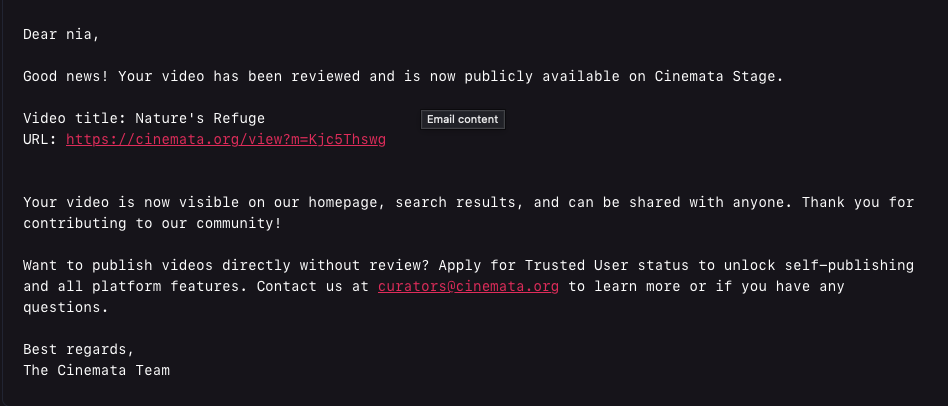
When you sign up and upload your first films to Cinemata, your videos go through a curatorial review before they're published on the platform. Previously, there was no feedback — you just had to check back and see. Now, you'll receive an email when your video's publishing status changes, whether it's been approved and is now public, or if the curatorial team needs to flag something.
Trusted User status — which you can apply for and curators can grant — allows your uploads to go live without waiting for review. But for members still going through the review process, this notification closes a feedback loop that should have existed from the start.
🛡️ Your uploads are in safer hands.
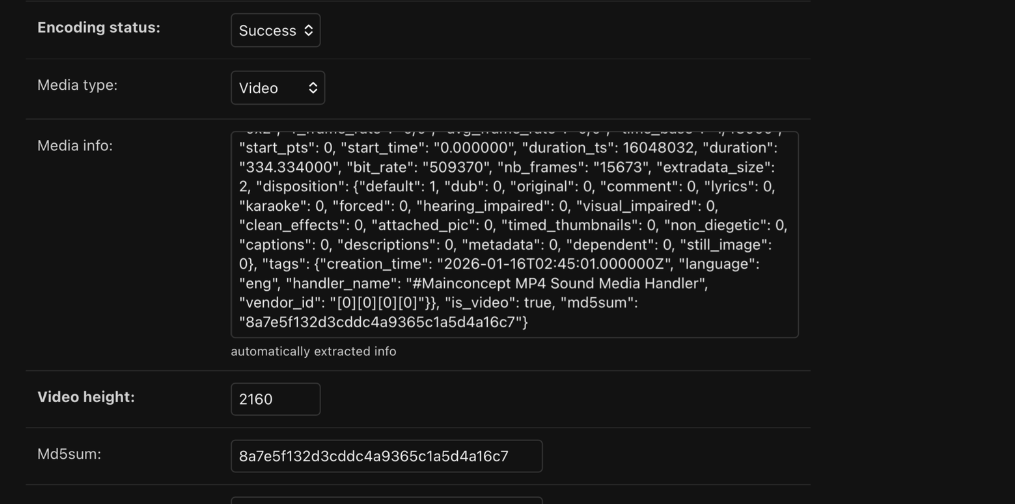
We've improved the encoding pipeline that processes your videos after upload. A set of edge cases — situations where a video could get stuck processing without explanation — has been identified and resolved. Transcoding is now more resilient, and your films are more reliably delivered to viewers in the right format.
🧅 Cinemata is now accessible on Tor Browser.
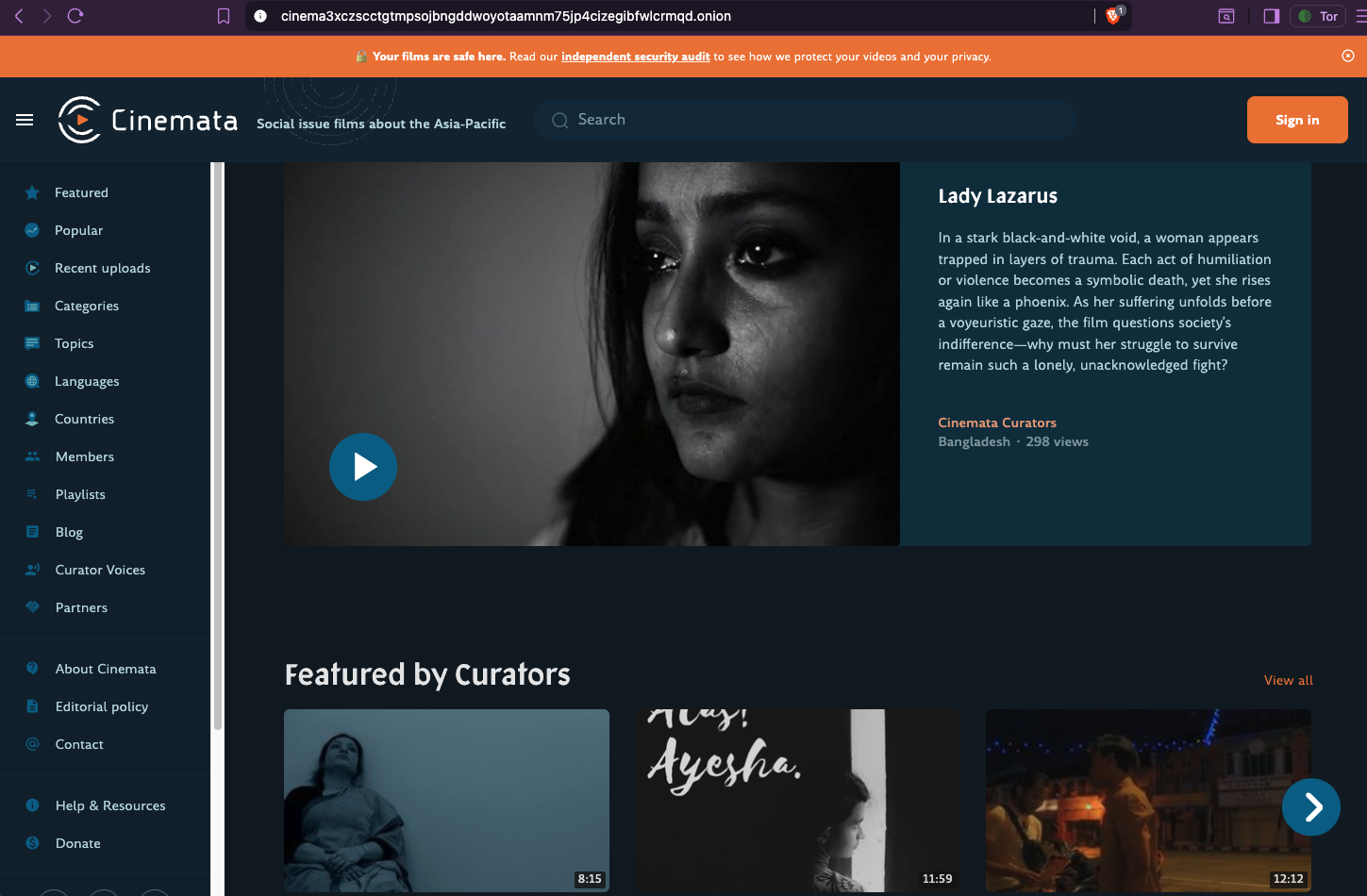
For filmmakers and viewers working in environments where internet access is monitored or restricted, Cinemata can now be reached through the Tor network. The .onion address is:
http://cinema3xczscctgtmpsojbngddwoyotaamnm75jp4cizegibfwlcrmqd.onion
This means the platform is reachable even when the main site is blocked — a meaningful step for the activists, journalists, and community media makers this platform was built to serve.
📋 Reaching out to filmmakers just got easier to track.
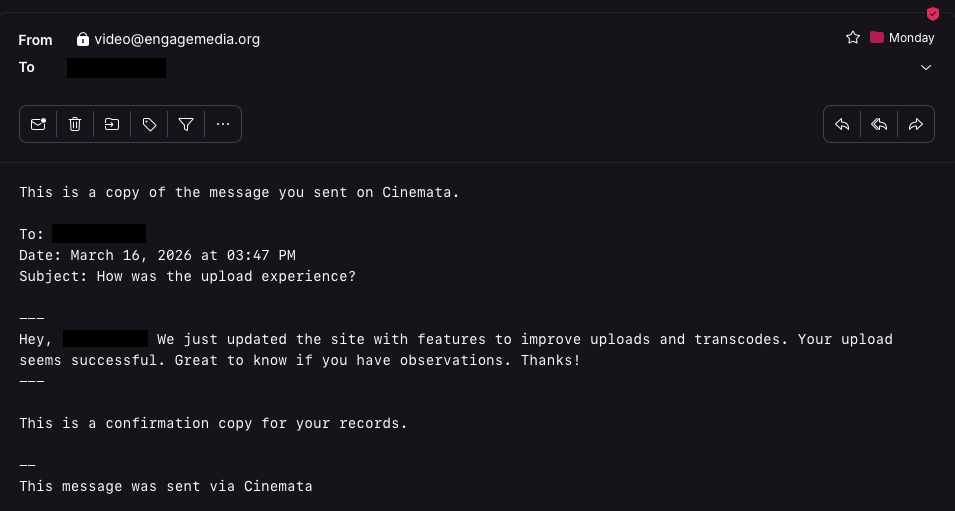
Cinemata's contact form is used by festival programmers, educators, and community organisers to connect with filmmakers directly. Starting with this update, when you send a message through the contact form, you'll automatically receive a copy in your own inbox. No more wondering if your screening inquiry went through. For filmmakers, this means the people reaching out to you have a record of what they sent — which makes follow-up conversations a lot smoother.
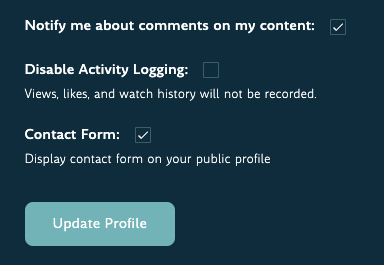
A note on this — you're in control. Not everyone wants to be reachable this way, and that's completely valid. If you'd prefer not to have a contact form on your public profile, go to Edit Profile and untick "Contact Form: Display contact form on your public profile."
While you're there, it's also worth knowing about a privacy setting that arrived in our last update: Disable Activity Logging, which stops Cinemata from recording your views, likes, and watch history. Both settings are available in your profile — and both are there because this platform is built for people who take their privacy seriously.
🔍 Search now shows you what a film is actually about.
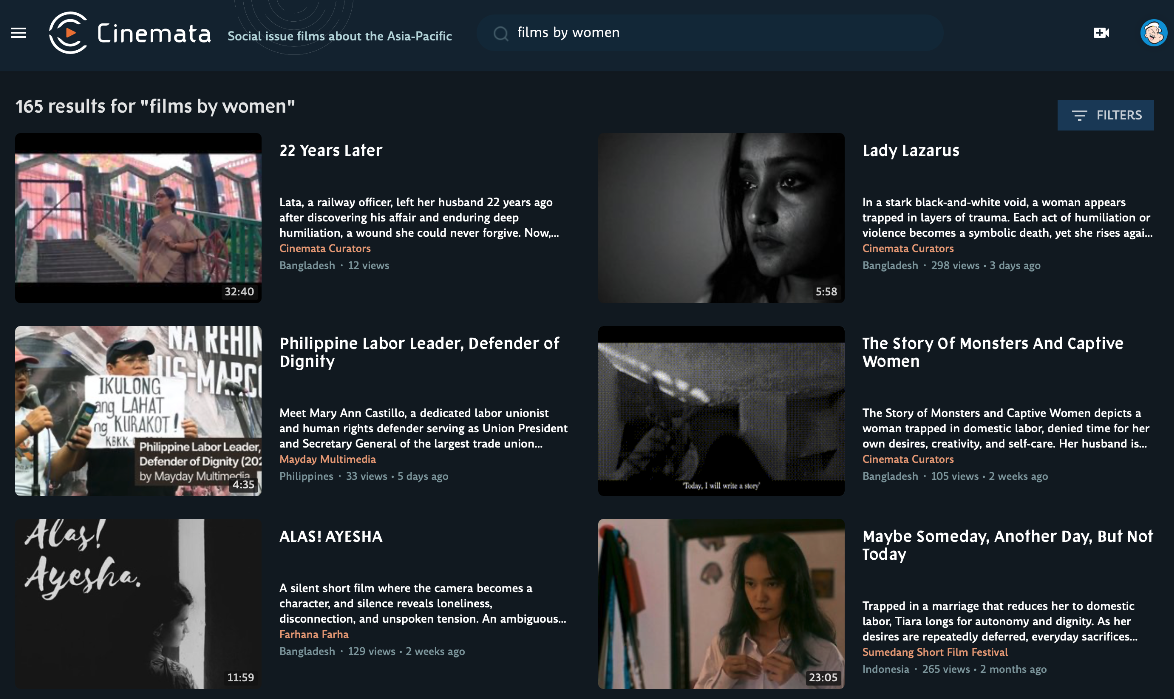
When you searched Cinemata before this update, the results sometimes showed film credits instead of a description of the film itself — not very useful if you're trying to discover something new. That's fixed now. Search results show a proper summary or synopsis, so you can tell at a glance whether a film matches what you're looking for.
🔧 Under the hood: a rebuilt foundation.
This release also marks the completion of a major architectural upgrade to CinemataCMS — the open-source platform powering Cinemata. Our lead developer, Adryan Eka Vandra, rebuilt the entire frontend build system and upgraded the core framework from the ground up. The result isn't something you'll notice as a visitor, but it means the platform is significantly faster to develop on, easier to maintain, and better positioned for the community features we're building next. This kind of foundational work is how a platform stays healthy over the long term — and it's worth acknowledging.
🎨 Coming up: a fresher look for Cinemata.
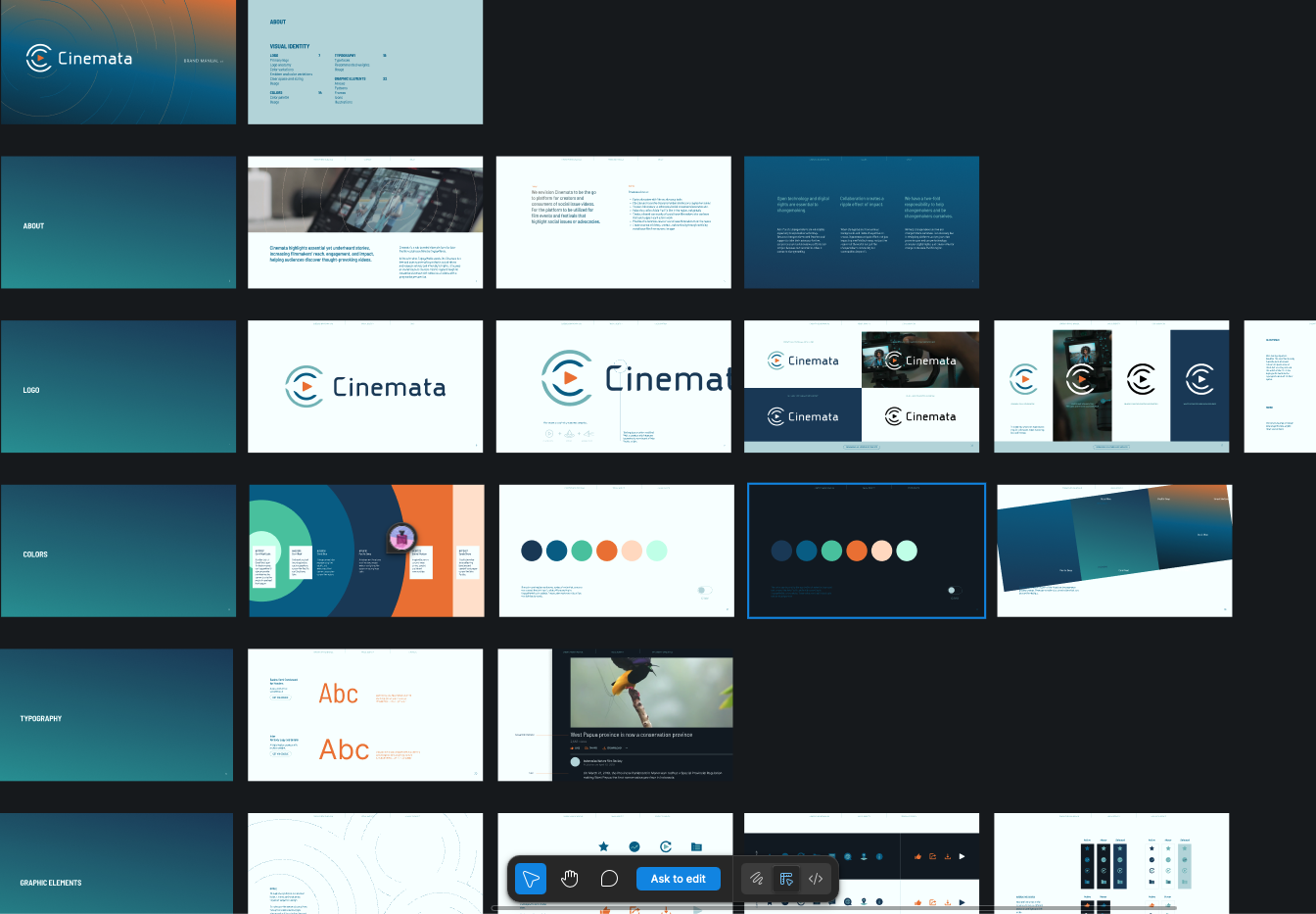
The next round of updates will focus on the look and feel of the site — how it presents films, how you move through it, and how the platform feels to use day-to-day. It's the part of a platform update that people actually notice, and we're looking forward to sharing more soon.
— The Cinemata Team