Cinemata Features: Farhana Farha
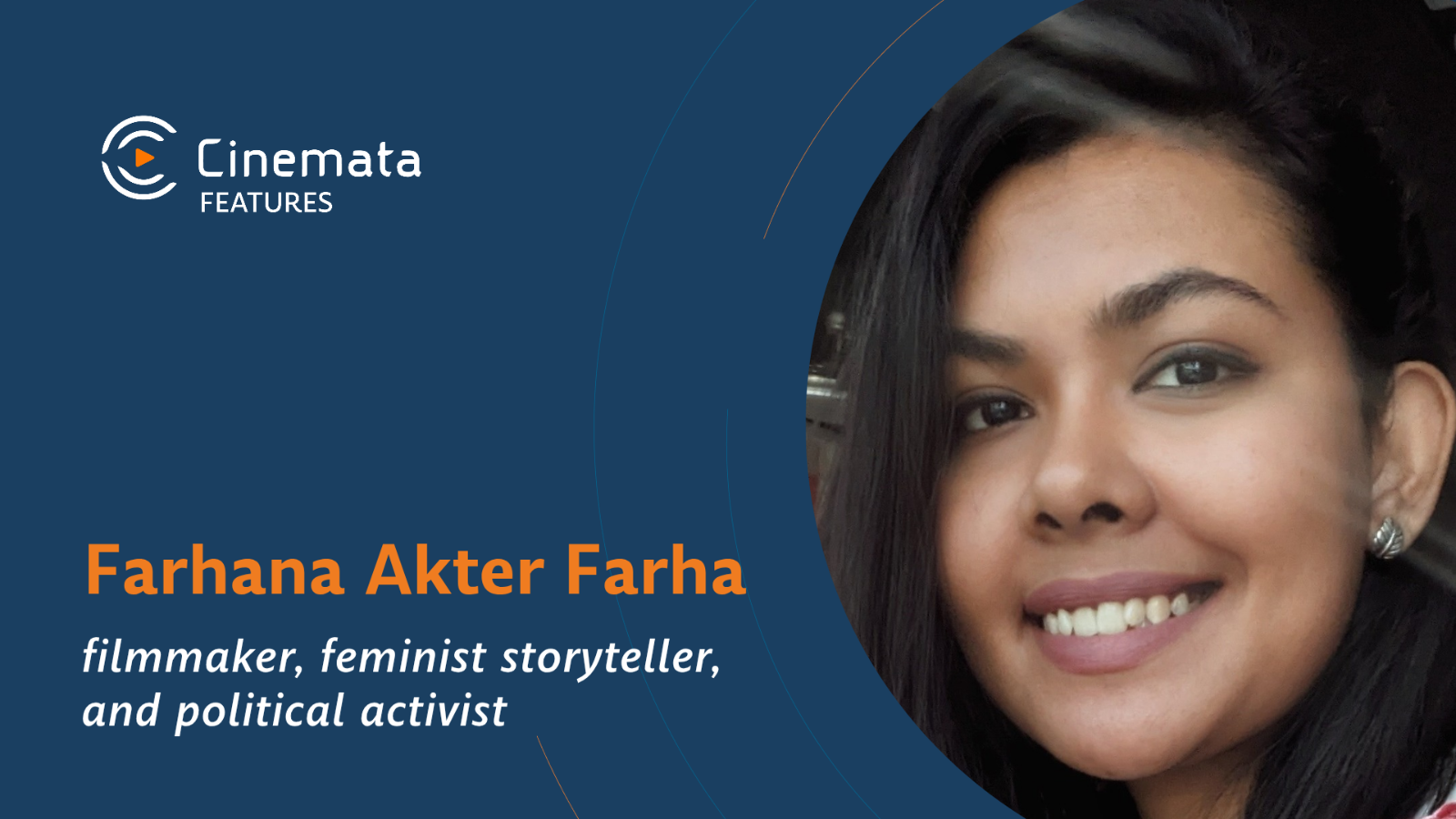
Cinemata Community Curator Farhana Akter Farha is a filmmaker and emerging curator from Bangladesh whose work moves between storytelling, activism, and community engagement. As part of the Cinemata Community Curators Residency, she presents After the Silence, a programme exploring how gendered violence operates across everyday and structural contexts, and how those pushed into silence begin to speak back.
In this conversation, she reflects on stepping into curation, the urgencies shaping her work, and how cinema can become a space for accountability, dialogue, and resistance.
On Becoming a First-Time Curator
As a filmmaking student at Dhaka University, how does stepping into curation change the way you think about cinema?
Farhana Farha (FF): My time at the Department of Television, Film & Photography at the University of Dhaka did more than teach me how to make films. It fundamentally shaped the way I think. It expanded my vision, allowing me to see cinema as a vast, interconnected medium that reaches far beyond my own creative circle.
Stepping into curation feels like a natural extension of that growth. It has taught me to apply my academic and technical knowledge across a wider range of social and political contexts. Curation has shifted my view of cinema from a personal artistic pursuit into a collective tool. It allows me to bridge different worlds and use the screen as a site for public accountability and shared resilience.
On Suppressed Histories and the Work of Accountability
In your local context, what stories or conversations feel urgent to you right now, and how do you hope this programme will help bring them into focus?
In Bangladesh, the most urgent stories are often the ones suppressed by power. Through my work as a coordinator for the feature film The University of Chankharpul, I see how toxic political culture within public universities continues to destroy the dreams of thousands of students by denying them their basic human rights.
As a feminist and political voice, I believe we must hold every incident accountable—not only for women, but also for men and the trans community who face violence in both physical and digital spaces.
This programme is designed as a kind of “resonance chamber,” where film enthusiasts and survivors can meet. I hope it brings the voice of resilience into focus, showing that even when power attempts to silence us, our stories remain a form of resistance.
On Learning & Growth
How do you hope this experience will influence your future filmmaking?
This experience is sharpening my identity as both a community curator and a filmmaker who refuses to be neutral.
My past work, including my award-winning film The Epitaph and my documentary on the working class during the pandemic, focused on capturing suffering and survival. Curating for Cinemata is teaching me how to think more strategically about hope.
It will influence my future films to move beyond observation. I want them to function as tools for grassroots mobilization—holding power accountable while also celebrating the resilience of those who resist it.
A Closing Reflection
What would you say to young filmmakers or those from different backgrounds who are curious about programming but feel intimidated about entering that space?
Your background is not a barrier. It is your strength.
If you feel like there isn’t space for your voice, then curation is a way to build that space yourself. Programming is an extension of storytelling. Instead of editing footage, you are shaping an experience for your community.
To those from marginalized backgrounds: your perspective is exactly what the film world needs. Don’t wait for permission to lead. Your voice, especially your political voice, matters now more than ever.
About the Curator
Farhana Akter Farha is a filmmaker, feminist storyteller, and political activist committed to human rights and accountability. A graduate of Television & Film Studies from the University of Dhaka, she directed the award-winning film The Epitaph, which received the Festival Mention Award (National) in 2023.
She is currently a Community Curator for Cinemata and a coordinator for The University of Chankharpul, a film examining political violence within Bangladesh’s public universities. With experience in digital journalism at Independent Television and media relations at Moner Bondhu, Farha brings together media practice and grassroots advocacy, using storytelling as a tool for accountability and resistance.
About the Cinemata Community Curators Residency
The Cinemata Community Curators Residency supports curators across the Asia-Pacific to develop film programmes, playlists, and public screenings on Cinemata. It is part of a broader effort to build a community-driven platform where films remain accessible, contextualized, and in dialogue with the issues they engage.