You Can Never Kill the Revolution: A Film Program
Republished with permission from Sinegang.ph
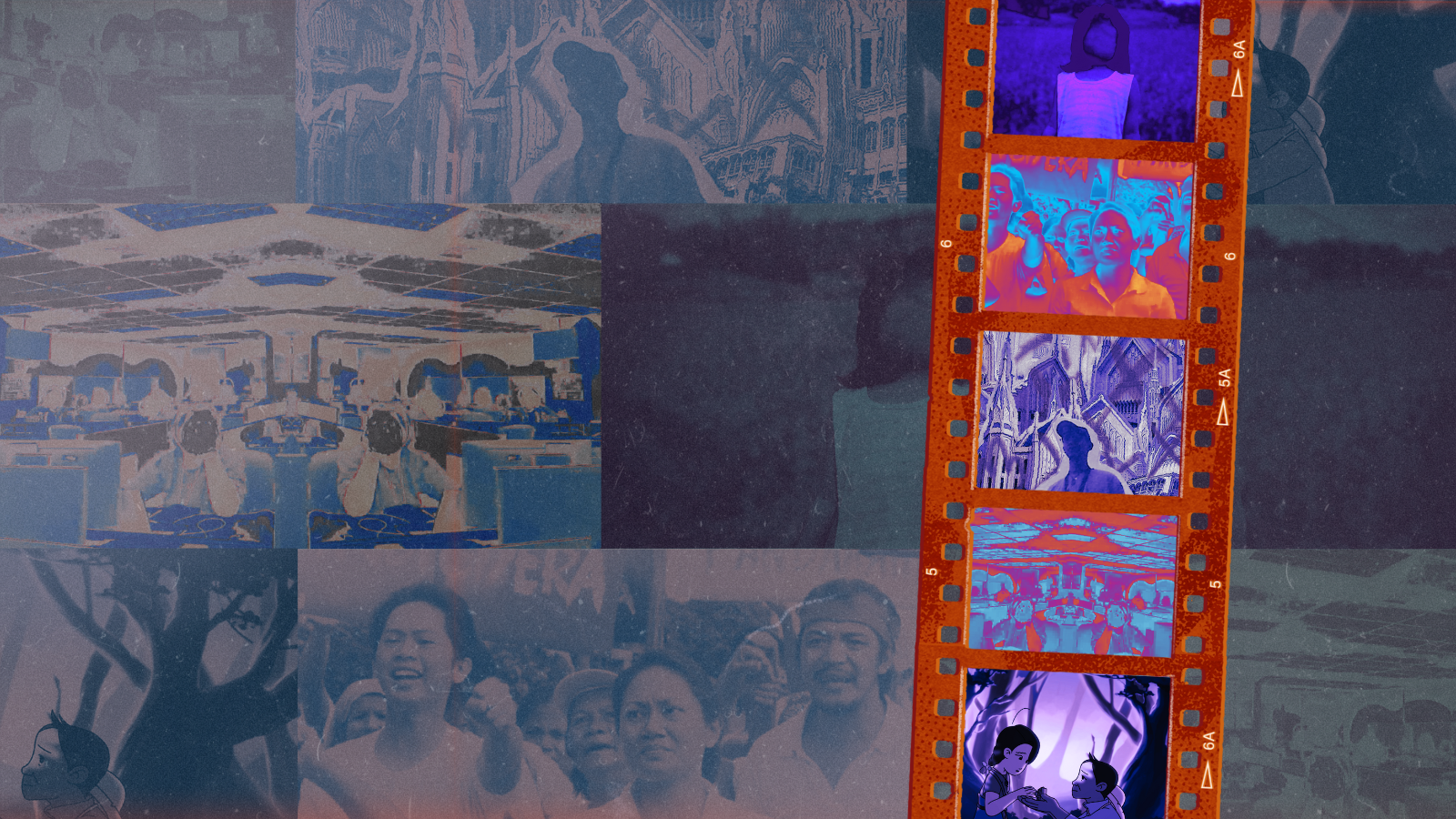
Graphics design by Arri Salvador
By Christ Dustly Go Tan | November 30, 2025
The legacy of Andres Bonifacio, one of Philippine history's eminent revolutionary leaders, continues to inspire the masses to struggle for freedom. The call for freedom is still resonant in the present as newer forms of colonialism become prevalent, keeping those at the margins and promoting a society tolerant of injustice and impunity. Decades of oppression and exploitation rooted in imperialist interests have catalyzed movements and even the self to realize that it is already too much, and the people deserve a better future. This national trauma became the raison d'être of an armed struggle to change the system and to end tyrannical regimes. The only answer is the revolution and to dismantle the very systems and machineries that continue to plunder the country in every succeeding regime. The Supremo is dead, but the revolution still lives on because the people demand for it.
The virtual film program You Can Never Kill the Revolution aims to examine the diverse narratives of the revolutionary spirit, ranging from personal conflicts to collective experiences. The Bonifacios of today are seen in the streets protesting, in the mountains taking arms, and those who are fighting for a better country in their own personal and political means. Highlighting personal stories that are rooted in anger from systemic abuses and marginalized stories from those in the mountains whose loved ones are killed in disputes over the land. The program not only reflects personal and collective motives of the movements, but also the reservations and struggles of the revolutionaries. These films justify the need for revolutions in uprooting the country from its current struggles. The sacrifice of those who fought will become the very catalyst to continue the revolution to prevent more lives from being lost.
Genesis
Dir. Jay Borilla
Jay Borilla's Genesis questions the very existence of the Filipinos who get to define and control it. But with the sheer trauma Filipinos have endured throughout different administrations, one thing that has changed is the one who sits in power. With this accumulated anger of the people, it's only right to reject and dismantle the very oppressive systems, from religion to governments, that continue to suppress the future they deserve. Authoritarian figures and systems are the banes of the Filipino existence, depriving them of their potential and only reminding them of their trauma from resistance. They do not define and dictate the very existence of the Filipinos, as the Filipino people have defined their own existence and struggled for it. They should not owe any sense of gratitude towards them, as it is their mandate to serve the people, not the other way around.
Kapag nagwala ang kalabaw
Dir. Paul Serafica
Paul Serafica's Kapag nagwala ang kalabaw contradicts the speculation surrounding intersectionality, where there are sectors of society that aren't oppressed or continue to face human rights violations, especially those in the city, where life is supposed to be better than in the province. What made Cubao the thriving city district it is now is the continuous efforts of the labor sector, despite their ongoing exploitation, just to achieve that image of deluxe. The cycle persists as long as workers are viewed as replaceable units, deprived of their humanity. Their prayers are now turned into protests; simply hoping for a better future is not enough, and it must be struggled for. The accumulated rage of these sectors is heard as they march into the streets, protesting their calls and reminding them who really are the backbones of the industry.
Ang Nagliliyab na Kasaysayan ng Pamilya Dela Cruz
Dir. Miguel Louie de Guzman
Miguel Louie de Guzman's Ang Nagliliyab na Kasaysayan ng Pamilya Dela Cruz deconstructs the multifaceted ideas of resistance and why, to live in the current living conditions of society, one has to continuously struggle and fight for it, especially for those in the margins. Why people choose to fight and why they choose not to is a complex debate of personal conflicts and into considering the future of the mass movement. It's worth remembering that every comfort and success we enjoy now is a historical account of resilience and struggles that the people fought for to reach that point. And this history of struggle will continue until no one needs to resist anymore, and finally, when liberation is reached.
Biringan: Hanapan ng Nawawala
Dir. Mercy C. De Felix
Mercy C. De Felix's Biringan: Hanapan ng Nawawala recontextualizes the Biringan City myth as a coping mechanism, an escapism from the social reality of having a family member involved in the armed struggle. The metaphor of eating black rice to travel to Biringan City to escape the pain and reject the struggle of loved ones who left to join the movement also emphasizes the inner conflicts of the family members left behind, grappling with the reality of an absent family member. Processing grief allows tempting methods to be acknowledged to escape the present reality they are in. Those who are left behind also don't understand the very principles of the movement, as family members tend to leave without explaining, but maybe it is too much for them to handle if they know, but they hoped that someday they would understand why they have to leave to fight.
Ang Amomonggo Sa Aton
Dir. VinJo Entuna
VinJo Entuna's Ang Amomonggo Sa Aton brings light to how stories of monsters are being created and told, and how they are being used to scare and threaten marginalized communities from resisting their feudal oppressors. More importantly, it also reveals how these stories are being used to corrupt and spread black propaganda on the resistance. One consistent thing is how violence became the necessity of armed resistance, and that the armed struggle is a reaction to the same methods inflicted by the fascist government army. What would a protest placard do in the face of gunpoint?
Watch the virtual program here.
Christ Dustly Go Tan is an advocate of alternative cinema and is currently taking a Bachelor of Science in Biology with a major in Ecology at the University of the Philippines Los Baños. He is a staff writer for Sinegang.PH, an associate member of the Society of Filipino Archivists for Film, a resident actor at the UP Film Circle, and currently serves as the Katipon Director of DAKILA Laguna. His writing explores short films, regional cinema, and film festivals, often emphasizing narratives that highlight human rights and intersectionality. He also organizes film screenings using short films as a medium for educational discussions. In his spare time, he is curating another short film program.