Cinemata Features: Roland Cartagena
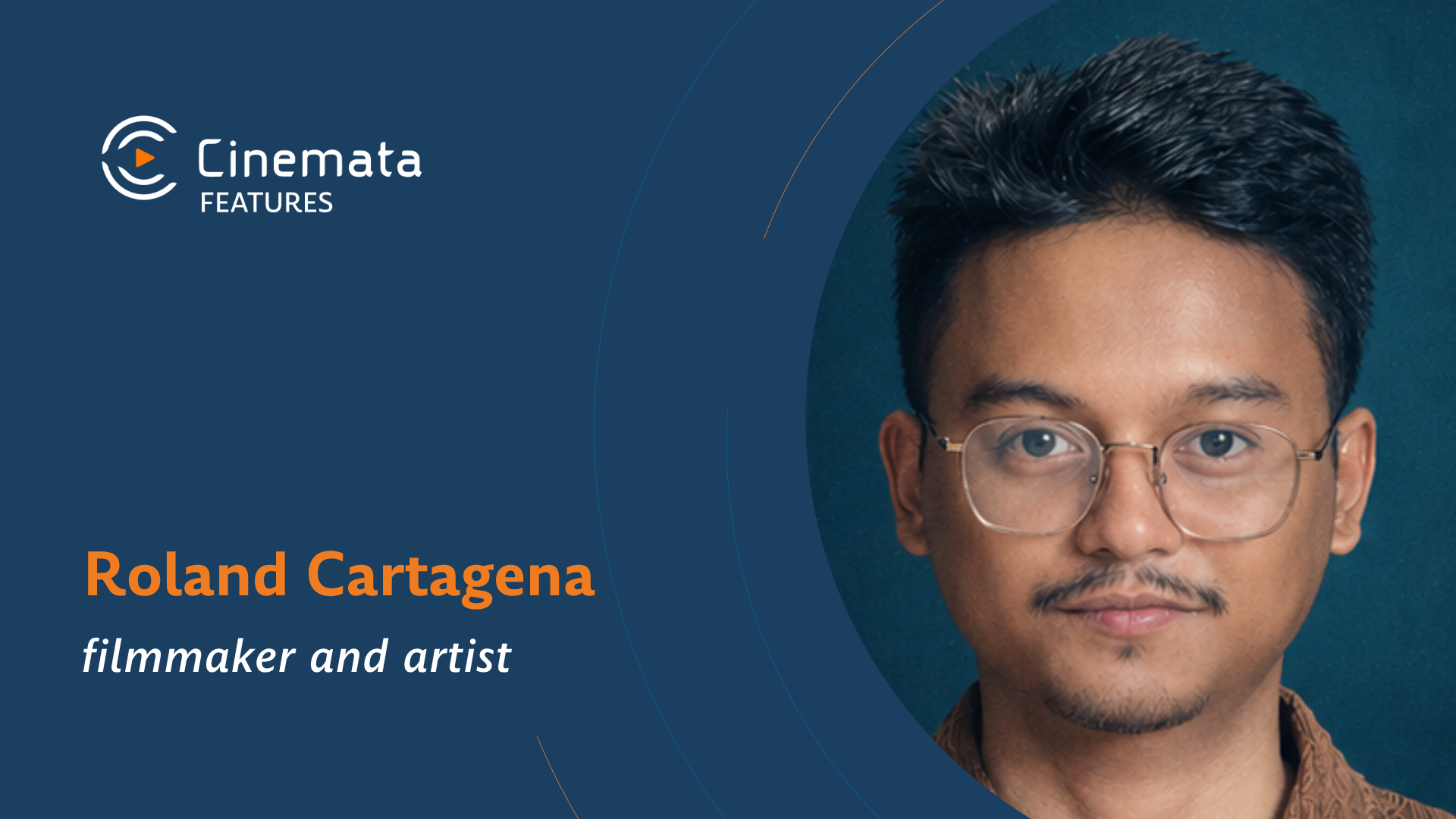
Who Gets Seen? Roland Cartagena on Visibility, Power, and Film Curation
For Filipino filmmaker, artist, and programmer Roland Cartagena, curation is not simply about organizing films into a coherent programme—it is also a negotiation of power, visibility, and collective responsibility. Coming from a practice shaped by independent filmmaking, community screenings, and alternative exhibition spaces, Roland approaches programming as a political and social act: one that questions institutional authority while searching for ways cinema can remain accountable to the communities and realities it engages with.
Based in Mindanao and working across film, animation, and video art, Roland’s practice often interrogates structures of exclusion, representation, and access. His curatorial thinking emerges from these same concerns, particularly around how film programmes can move beyond institutional frameworks and become spaces of solidarity, participation, and critical reflection. Across our conversation, he reflects on the possibilities and contradictions of what he describes as “democratic curation”—a practice interested in creating room for voices, images, and experiences that are often rendered invisible within dominant cinematic and geopolitical narratives.
The discussion also traces Roland’s engagement with questions of authorship, arbitership, and the tension between openness and coherence in film programming. While recognizing that curation inevitably involves forms of exclusion, he remains invested in how curatorial authority is exercised and negotiated, especially in relation to communities and audiences outside conventional cinema spaces. Rather than seeing programmes as static cultural products, Roland imagines them as living movements shaped through collaboration, sincerity, and accountability.
At the center of his current programme development is a response to escalating geopolitical unrest, militarization, and the human consequences of conflict across regions. Through cinema, Roland hopes to create spaces where audiences can confront, process, and rethink the anxieties and tensions of the present moment—not through spectacle, but through collective engagement and critical reflection. In this Curator Spotlight conversation, he speaks about independence, experimentation, institutional critique, and the unresolved possibilities of building more community-rooted forms of curation.
Eunice: You’ve spoken about wanting to challenge traditional curatorial authority. What does “democratic curation” mean to you at this point in your practice?
Roland: I think curation can be democratic in many ways. Personally, I think carving out spaces where the invisible can be made visible is my main goal for this program. Film programming will always entail some form of exclusion, so making it count when one does have to exclude becomes the intervention.
Eunice: A lot of your thinking comes from experiences outside conventional cinema spaces—like community screenings and festivals without barriers. How have these shaped your idea of what a film program can be?
Roland: A film program doesn’t always have to serve or emanate from the institution. It can also serve communities through collaboration, involvement, or solidarity. A film program can be made less about symbols and more about movements.
Eunice: There’s an interest in exploring open calls without strict selection or exclusion. What draws you to this approach, and what possibilities—or risks—do you see in it?
Roland: Film programming is always an act of arbiting, so there’s always that caveat. At the same time, creativity will always find ways to subvert curatorial authority. I think one benefit is the capacity to counteract canonical thinking. On the other hand, we should be wary of reproducing forms of exclusions.
Eunice: How do you navigate the tension between removing curatorial authority and still creating a coherent program or experience?
Roland: More than decentering authority, I think another matter is how curatorial authority is exercised. I think the coherence and merit of a film program is built on sincerity and accountability. A film program can have strong claims and intent, but the viewing experience itself can either betray or demonstrate those claims and intent.
Eunice: In developing this program, what kinds of political or social urgencies are you responding to?
The program is basically a response to the geopolitical unrest of the times, focusing on civil subjects impacted by warmongering and militarization. The hope is to interpret these tensions into a legible sentiment, offering a respite, impetus, or shift in how we make sense of our present situation.
Eunice: How has your background in filmmaking—and your decision not to pursue it commercially—influenced how you approach curation now?
Roland: I think independence does a lot of work in cultivating an alternative voice. When you don’t have anyone telling you what’s viable or not, you are freer to experiment and go off the beaten path. I think I approach curation the same way. I always try to be critical—to interrogate and negotiate confines, conventions, and assumptions, even if it means losing commercial or institutional interest. I think it’s just a matter of finding your circle.
Eunice: At this stage, what feels most unresolved in your curatorial process—and what are you actively trying to figure out?
Roland: I’m currently invested in the possibilities of what community or “democratic” curation can look like. There are already developments on this front, but I think there’s still a lot to problematize particularly in the turf of film programming, film festivals, and the general exhibition of films.
Roland Cartagena is a Filipino filmmaker and artist from Zamboanga, Mindanao. He studied at the University of the Philippines Film Institute and completed his bachelor’s degree at the onset of the coronavirus pandemic. As of writing, he is pursuing his graduate studies in curatorship in his alma mater. He primarily works with short form and his practice spans film, animation, and video art. Besides his métier, he occasionally engages in film research and programming.
About the Cinemata Community Curators Residency
The Cinemata Community Curators Residency supports curators across the Asia-Pacific to develop film programmes, playlists, and public screenings on Cinemata. It is part of a broader effort to build a community-driven platform where films remain accessible, contextualized, and in dialogue with the issues they engage.
In partnership with Elevated Frames, as part of their residency, the curators will be guided by Eunice Helera, Programme Coordinator, who will be working closely with them through conversations, questions, and ongoing exchanges. Together, they will navigate not only what these programmes become, but how they are formed.