Field Notes from ACPAC 2026
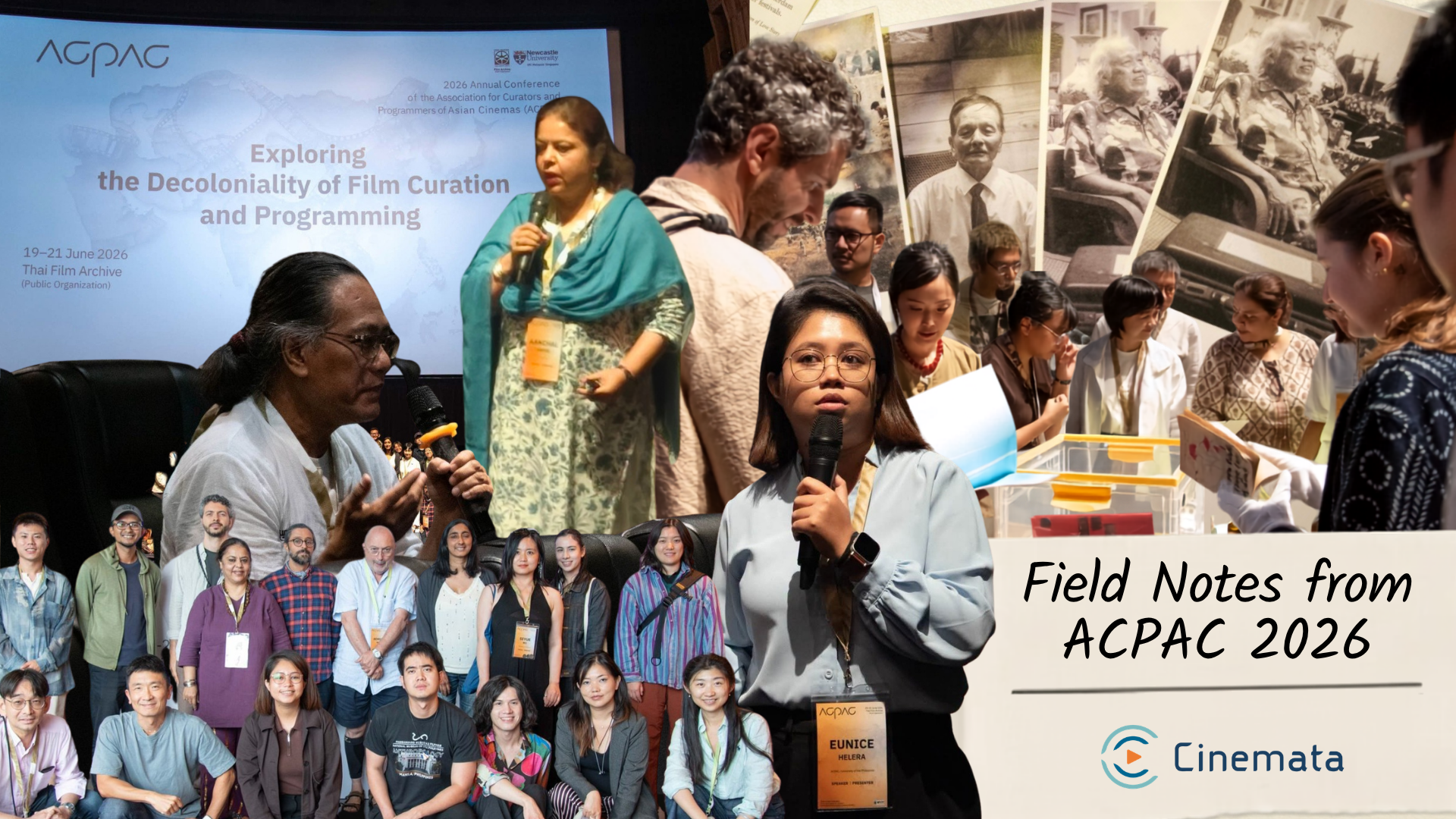
Field Notes from ACPAC 2026
by Eunice Helera
The first day of ACPAC immediately resonated with many of the conversations we had recently during the Cinemata Community Convening. Throughout the day, I found myself reflecting not only on individual presentations but also on how they collectively addressed a larger question:
how do we sustain the life of films beyond their initial exhibition?
Rather than focusing solely on programming, many of the sessions examined the infrastructures, relationships, and practices that allow films to continue circulating long after they leave the festival circuit.
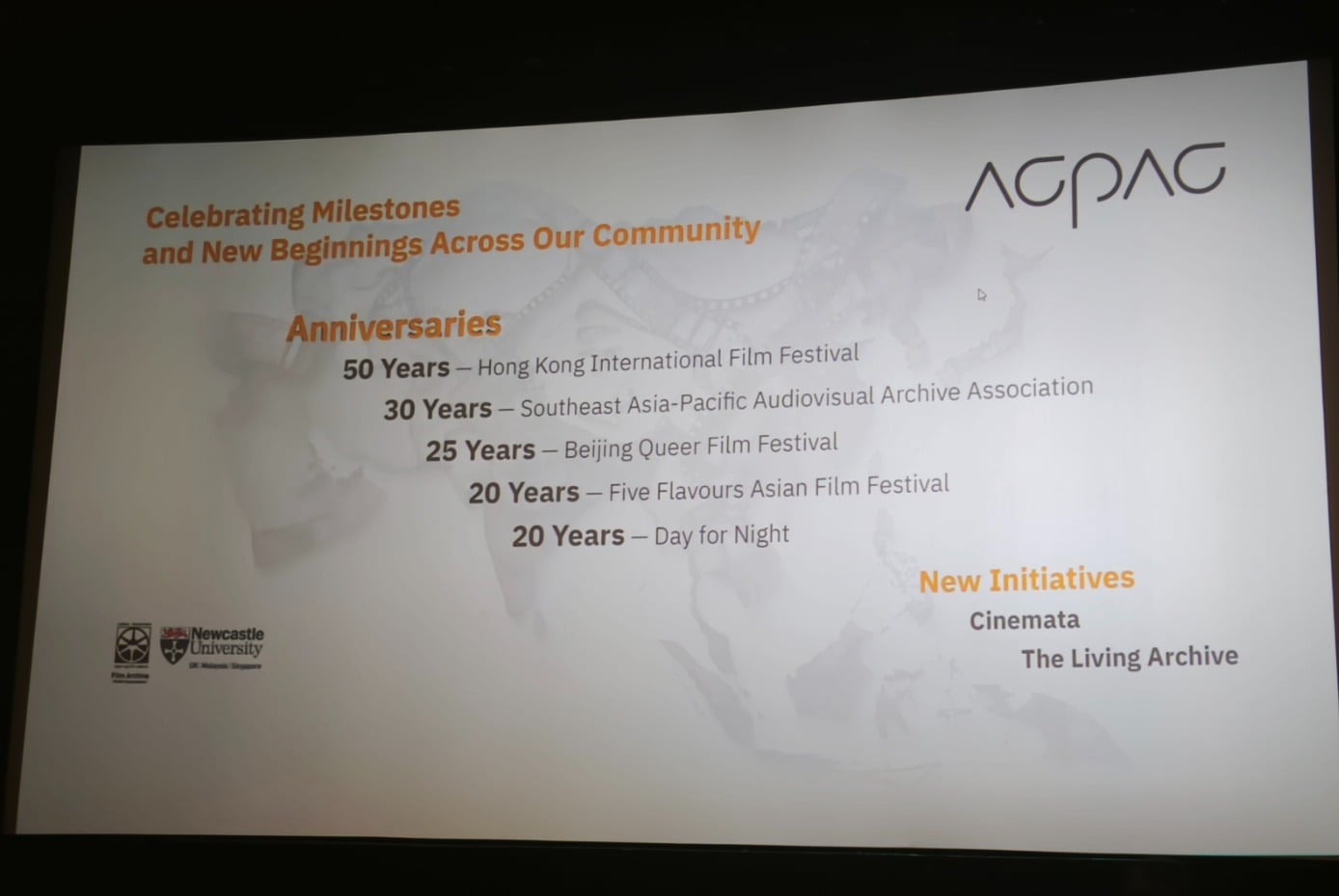
Even before the conference proper began, I was pleasantly surprised to see Cinemata recognized during ACPAC's opening presentation, Celebrating Milestones and New Beginnings Across Our Community. Alongside milestone anniversaries of long-standing institutions such as the Hong Kong International Film Festival (50 years), the Southeast Asia-Pacific Audiovisual Archive Association (30 years), the Beijing Queer Film Festival (25 years), Five Flavours Asian Film Festival (20 years), and Day for Night (20 years), Cinemata was introduced as one of ACPAC's recognitions of new initiatives, together with The Living Archive. It was a proud moment to see Cinemata acknowledged within a regional gathering of curators and programmers as an initiative contributing to the evolving landscape of Asian cinema. For me, this recognition reaffirmed that Cinemata is increasingly being seen not simply as an online platform, but as an active part of the broader ecosystem of film circulation, curation, and community-building across the region.
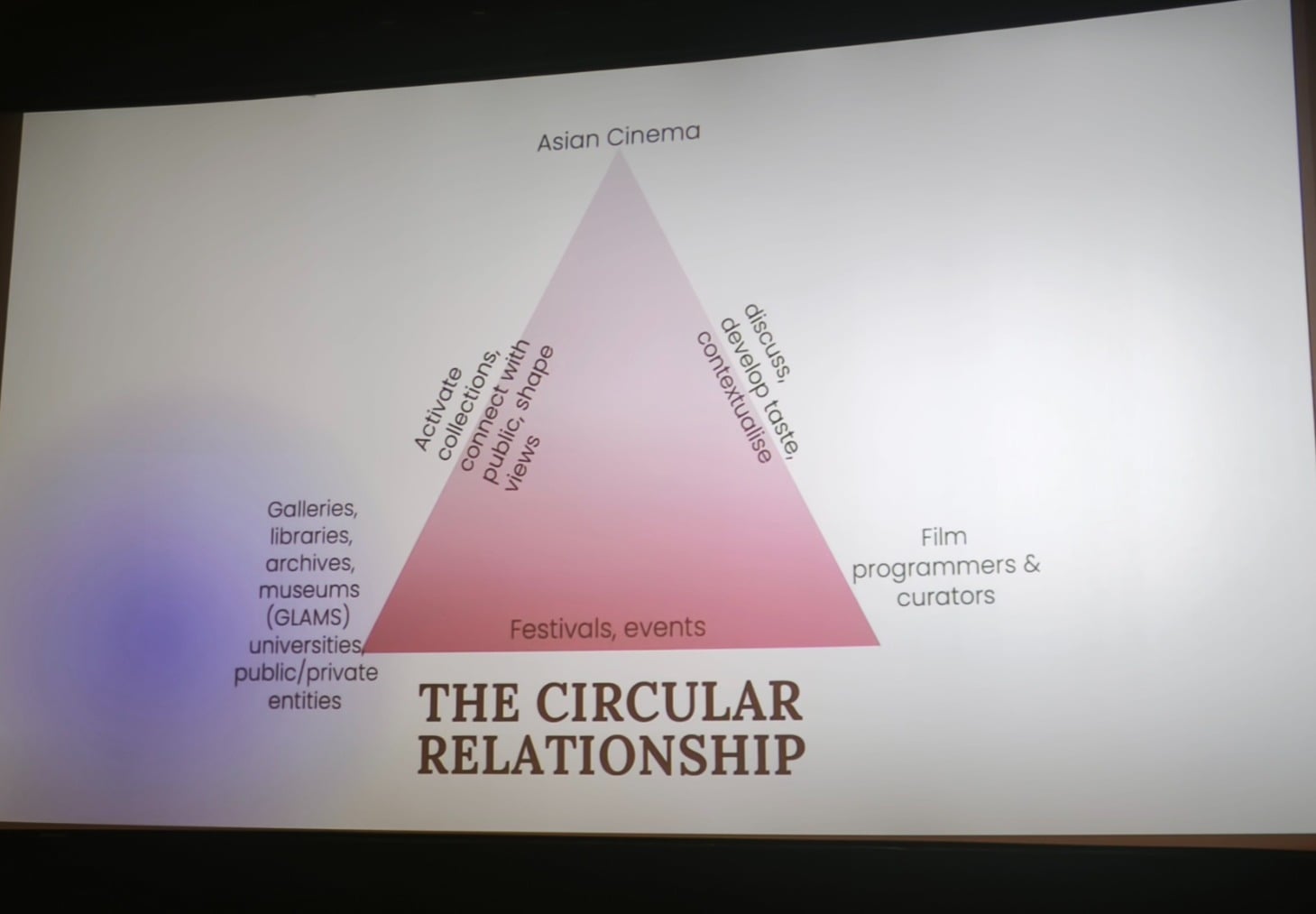
One framework that particularly stayed with me was "The Circular Relationship," presented by Karen Chan of the Asian Film Archive. The diagram mapped how Asian cinema does not exist in isolation but continually moves through interconnected spaces and actors. Rather than treating films, festivals, archives, institutions, curators, and audiences as separate entities, the framework demonstrated how each depends on and strengthens the other.
The diagram illustrates a cycle where film programmers and curators discover, contextualize, and develop audiences around films. Through festivals and events, these films are activated and introduced to public audiences. They are then sustained by galleries, libraries, archives, museums (GLAMs), universities, and public and private institutions, which preserve them, provide resources, and create opportunities for education and continued circulation. At the center of this relationship is Asian cinema itself, constantly moving between these different spaces rather than remaining fixed within a single platform or institution.
What I found particularly meaningful was that the framework validates something we have been gradually building through Cinemata. We often describe Cinemata as a streaming platform, but the discussion reminded me that it is better understood as part of a larger cultural ecosystem. Our role extends beyond hosting films online. Through the Community Curators Initiative, editorial writing, watch parties, community screenings, and partnerships with festivals and educational institutions, Cinemata participates in this same cycle of circulation. We help films move from festivals to audiences, from online discovery to offline conversations, and from individual viewing experiences to broader public engagement.
The framework also closely resonates with my own ongoing research on cultural infrastructure. Throughout the past year, I have been exploring how festivals, cinemas, alternative spaces, and community initiatives collectively support the circulation of films. Seeing this visualized at ACPAC reinforced the idea that no single institution can sustain film culture alone. Instead, it is the relationships between archives, programmers, festivals, platforms, educational institutions, and audiences that allow films to continue finding new life beyond their first screening.
For Cinemata, I found this especially affirming. It reminds us that our work should not only focus on growing the platform itself, but also on strengthening the partnerships and networks that surround it. Every collaboration with a university, community space, festival, archive, or independent curator expands this circular relationship, ensuring that films continue to circulate across different contexts and reach audiences in meaningful ways. Rather than existing alongside festivals and cultural institutions, Cinemata becomes one of the infrastructures that keeps this ecosystem connected.
This framework also became the lens through which I understood many of the succeeding presentations throughout the day. While each session approached film culture from a different perspective, they all returned to the same underlying question: what kinds of infrastructures, practices, and communities allow films to continue living beyond their first screening?
One of the presentations that immediately expanded on this question was Zijiao Zhu's "Infrastructural Agency: Tactical Archiving and Decolonial Practice in FIRST IFF's Digital Architecture."
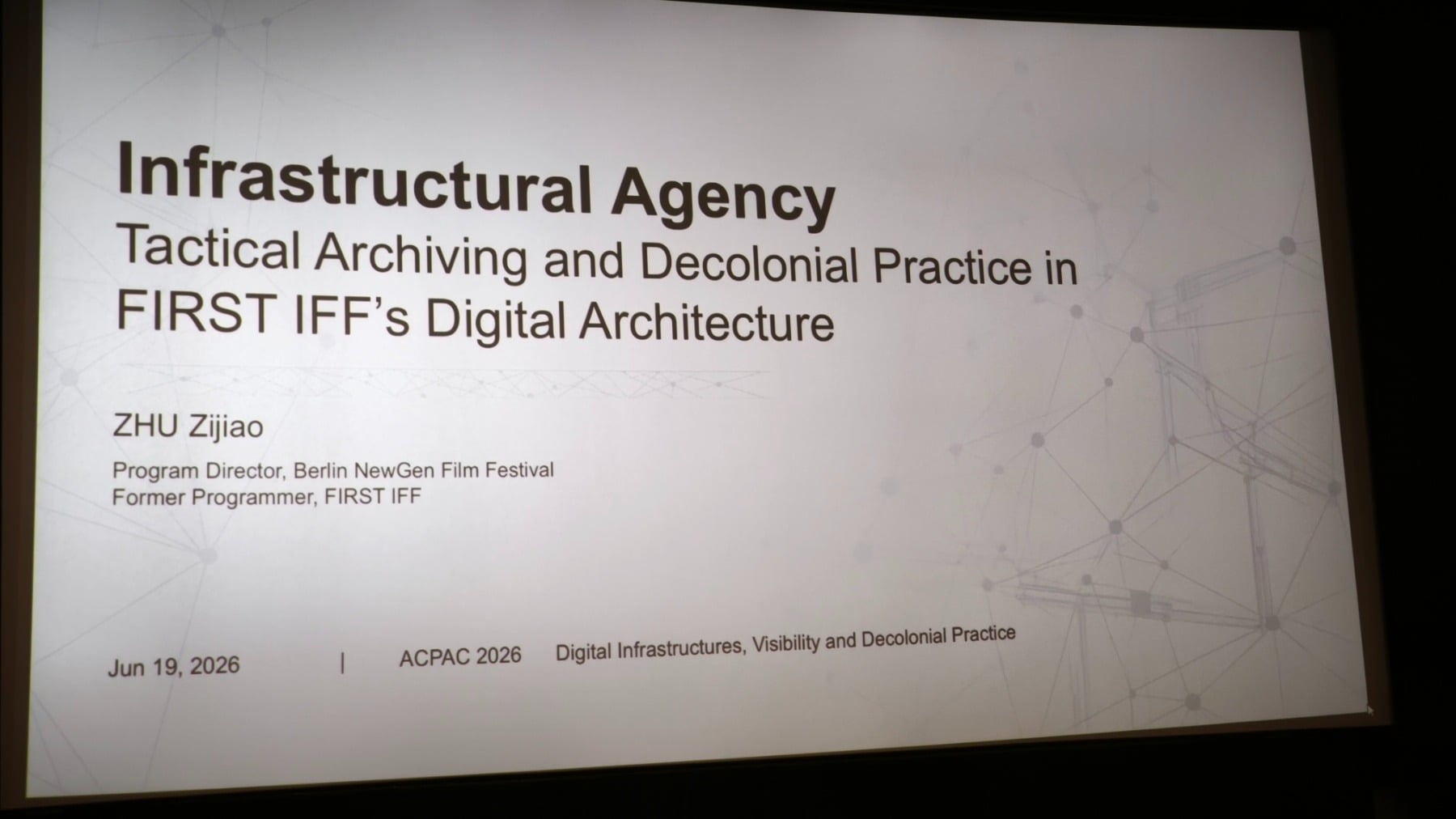
The presentation examined how the FIRST International Film Festival has been rethinking its internal digital infrastructure through Lark Suite. What initially caught my attention was that they were no longer treating documentation as simply storing information in Google Sheets or Excel. Instead, they have begun building an integrated workspace where archival records, programming notes, communications, festival documents, and institutional knowledge coexist within one collaborative ecosystem.
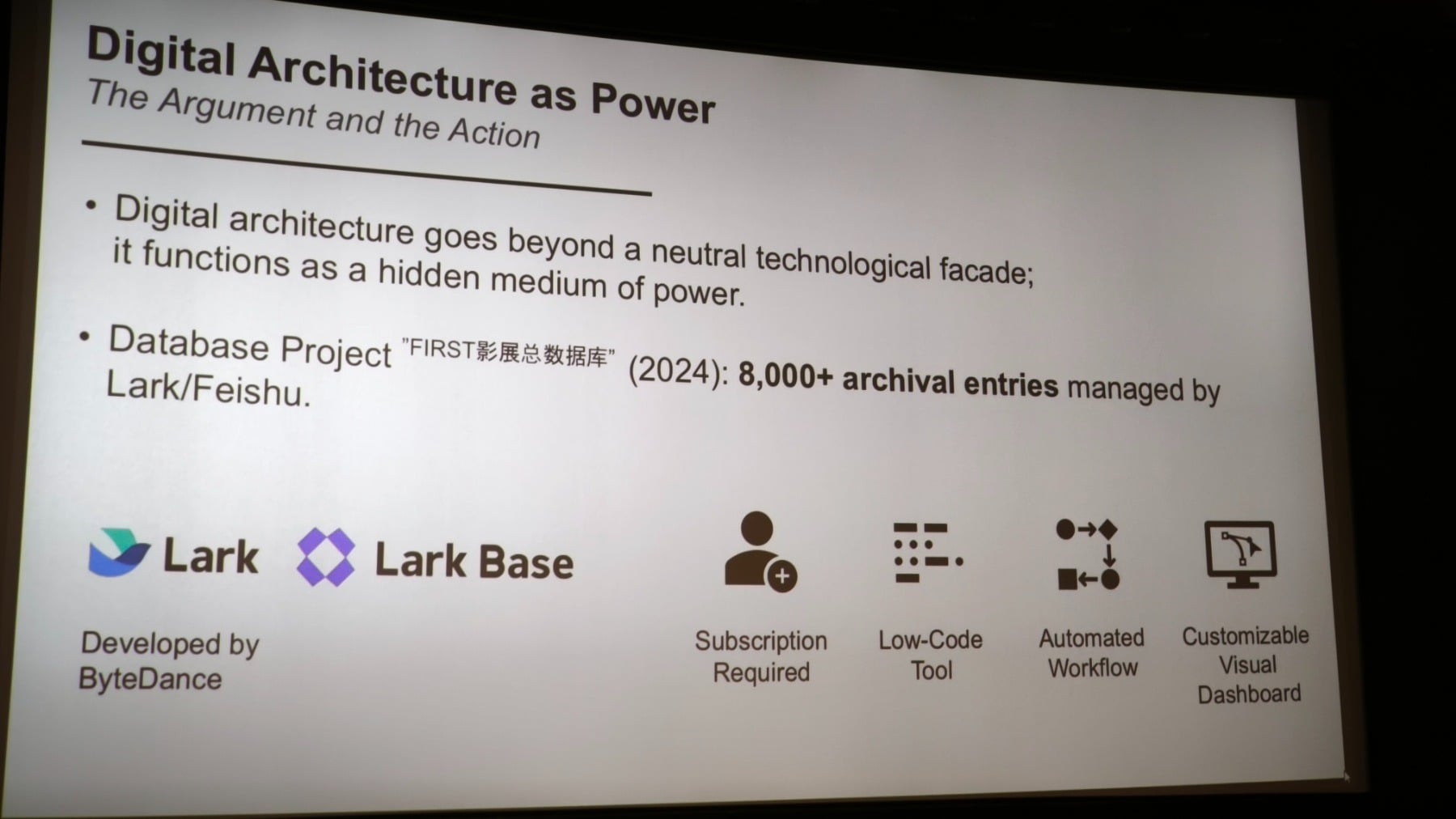
While many festivals—including ourselves—still rely heavily on spreadsheets for cataloguing films, tracking rights, or documenting programmes, the presentation demonstrated how festivals are beginning to think much further ahead. Documentation is no longer viewed merely as administrative work. It has become part of sustaining institutional memory.
What I found particularly valuable was realizing that festivals are now actively seeking digital infrastructures capable of supporting them long after each edition concludes. Instead of creating isolated documents every year, they are investing in systems that allow knowledge to accumulate, become searchable, and remain accessible for future programmers, staff, and collaborators.
This immediately made me think about Cinemata.
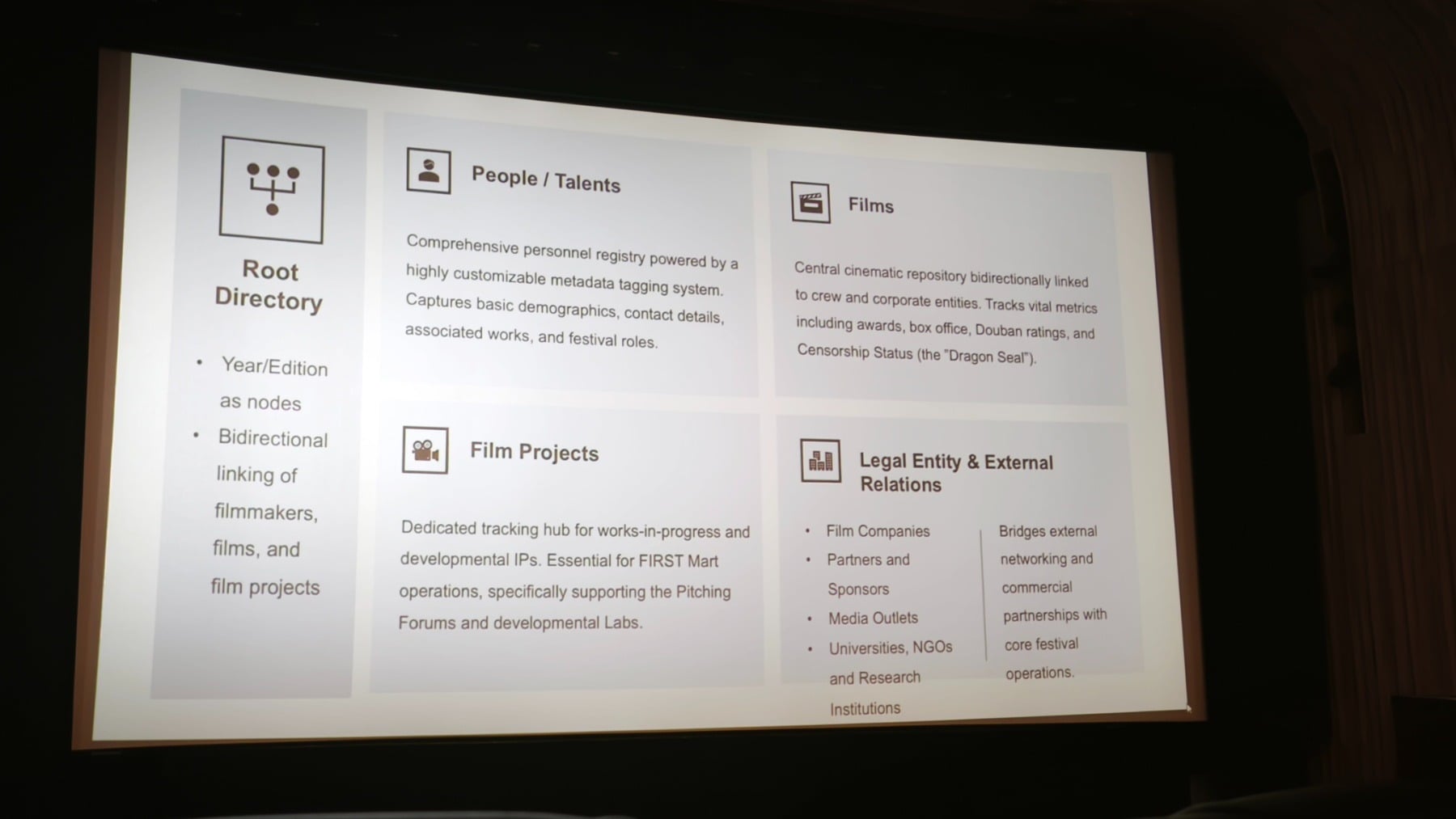
Although Cinemata serves a very different purpose from a film festival, there may be opportunities for us to conduct market and competitive research into how similar platforms are evolving. Our own workflows currently make extensive use of Google Workspace and spreadsheets, which remain highly functional. However, sessions like this encourage us to look ahead and consider what kinds of collaborative infrastructure may eventually become valuable—not only for film collections, but also for curatorial notes, screening histories, editorial planning, partnership records, and community knowledge.
Rather than viewing this as something we should immediately adopt, I saw it as an interesting direction for future research. As Cinemata continues growing, conversations around digital infrastructure will likely become increasingly important alongside conversations about film circulation itself.
Another discussion that stayed with me throughout the day was "Canon, Taste, and Reframing Asian Cinema," moderated by Ari Ernesto Purnama. One of the recurring questions raised during the panel was whether curators truly shape audience taste, or whether audiences ultimately construct their own canon through viewing habits. I found myself reflecting on this long after the session ended because it closely echoed conversations we recently had during the Cinemata Community Convening.
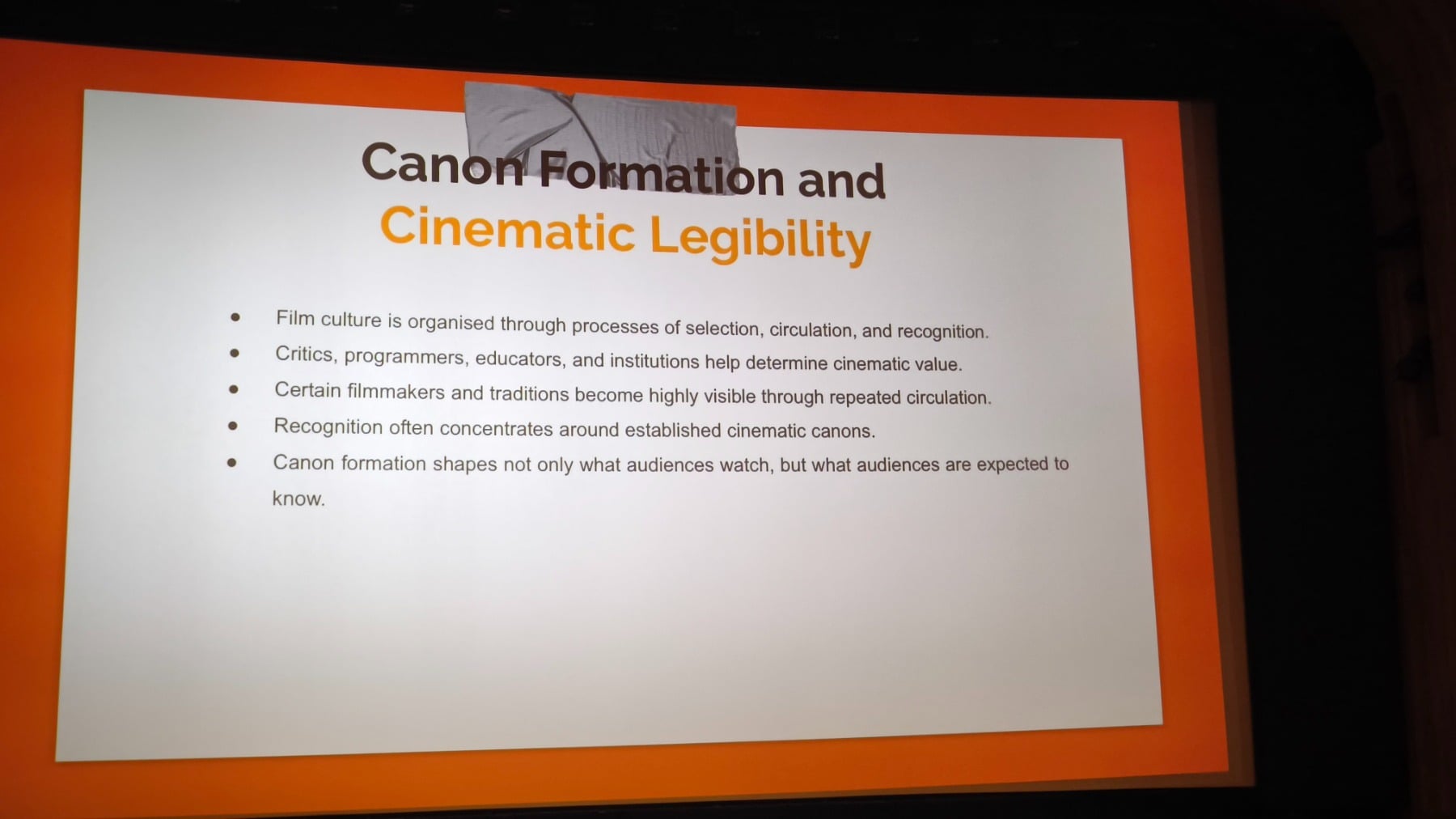
As curators, we often describe ourselves as facilitators rather than gatekeepers. We emphasize openness, diversity, and accessibility. Yet regardless of our intentions, every editorial decision we make inevitably influences what audiences repeatedly encounter.
Taste is not necessarily formed through a single programme. It is constructed through frequency. Which countries appear most often? Which communities become most visible? Which themes are repeatedly foregrounded?
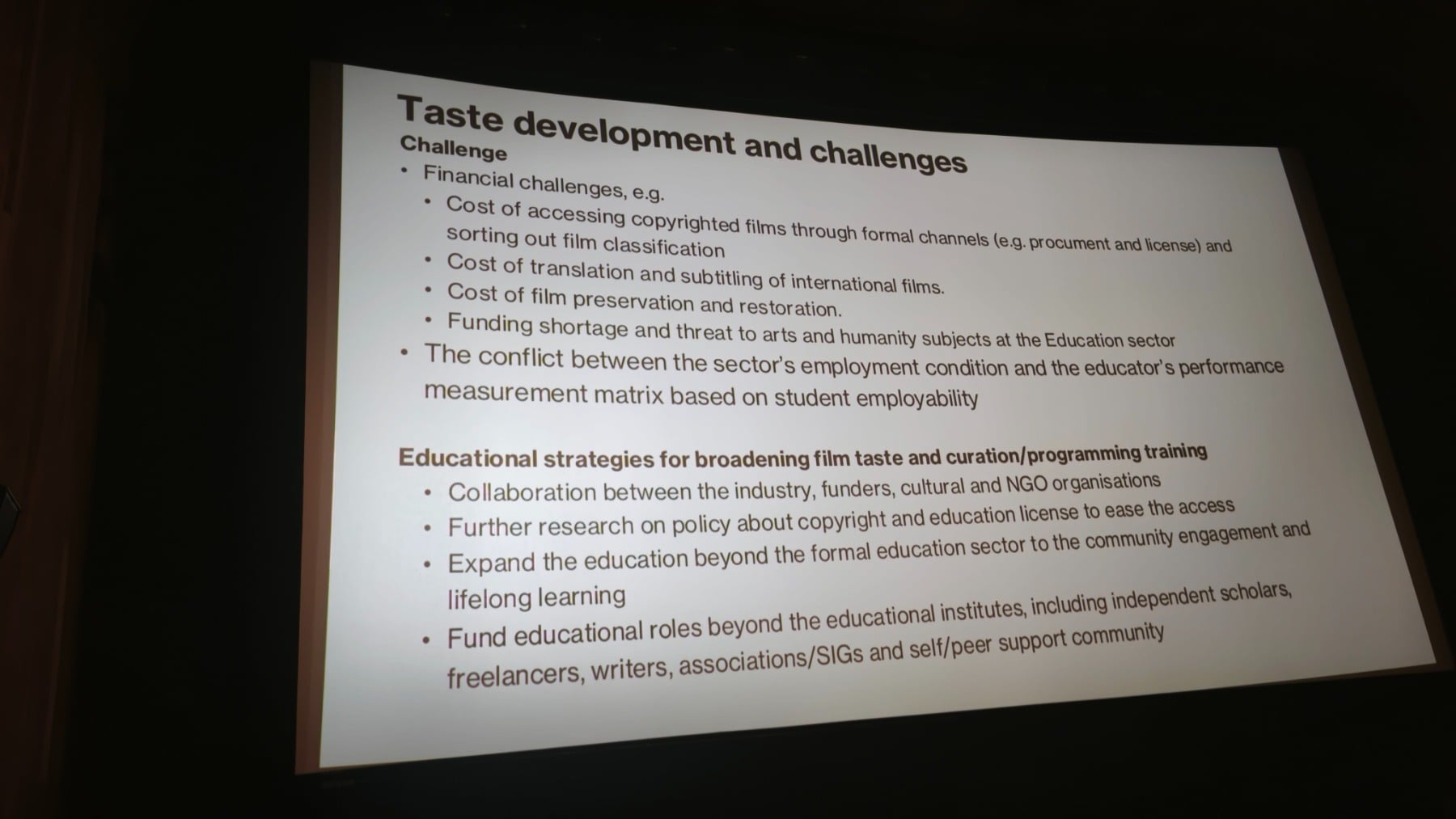
These questions immediately reminded me of our internal conversations about whether Cinemata's editorial output had gradually become more Philippine-centered than we initially intended. While this naturally reflects our own contexts and networks, the session reinforced that we must remain attentive to how repetition gradually shapes audience perception.
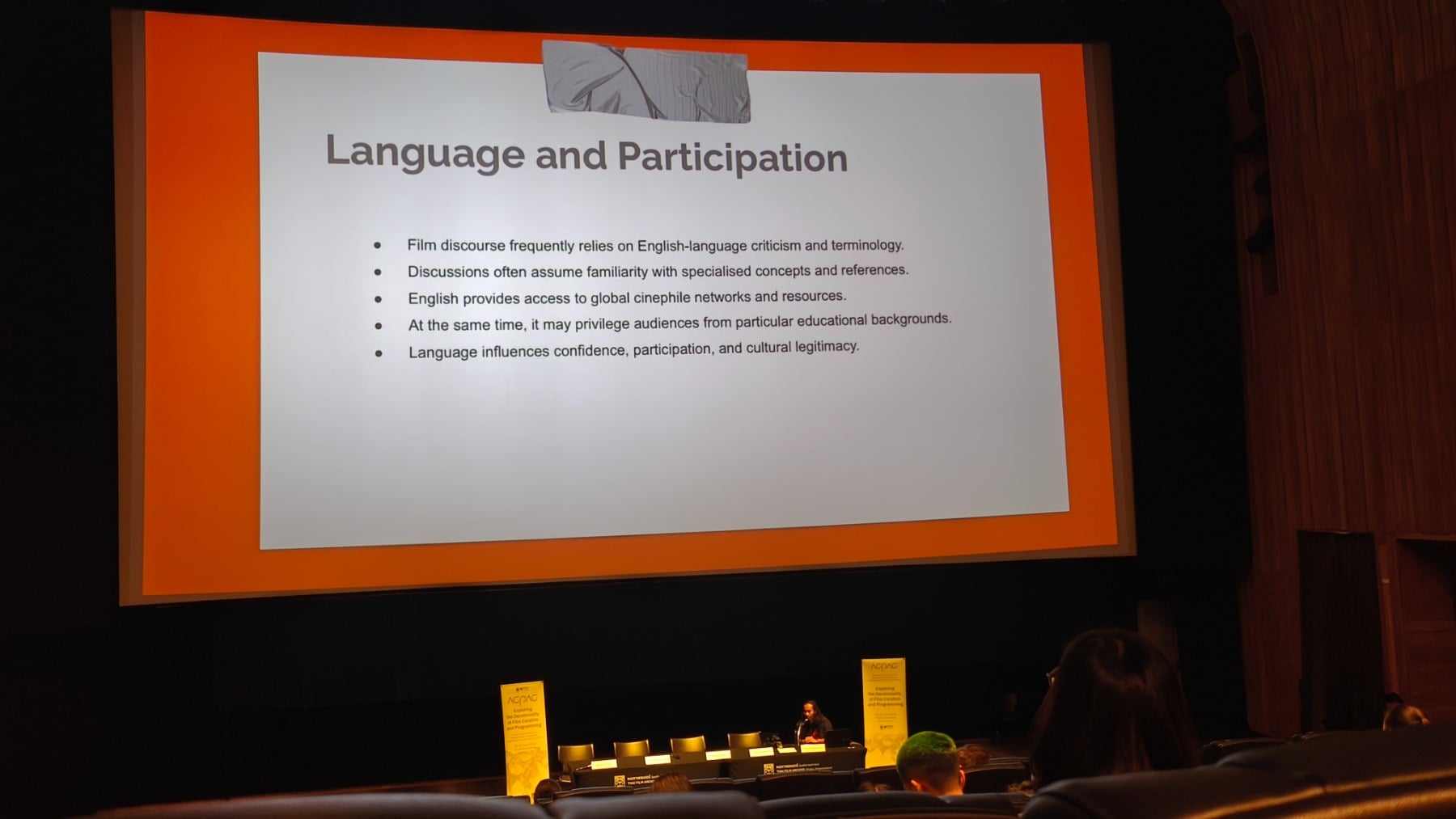
One takeaway that I found especially relevant for Cinemata is that expanding representation is not only about adding more countries or communities into the platform. It is equally about paying attention to editorial rhythm—how frequently different voices return, how consistently audiences encounter filmmakers from across the Asia-Pacific, and how deliberately we construct a broader understanding of regional cinema over time.
This discussion gave me greater confidence that these are healthy questions for Cinemata to continue asking itself. Rather than seeing them as criticisms, I now see them as part of responsible curatorial practice.
One of the most memorable experiences of the first day was Nathalie Khoo's performance lecture on the archaeological approach to programming and memory. Unlike a conventional presentation, this session invited participants to physically gather around archival materials, photographs, printed documents, and objects laid out across the floor. Instead of observing from our seats, we collectively moved around the materials while listening to the lecture unfold.
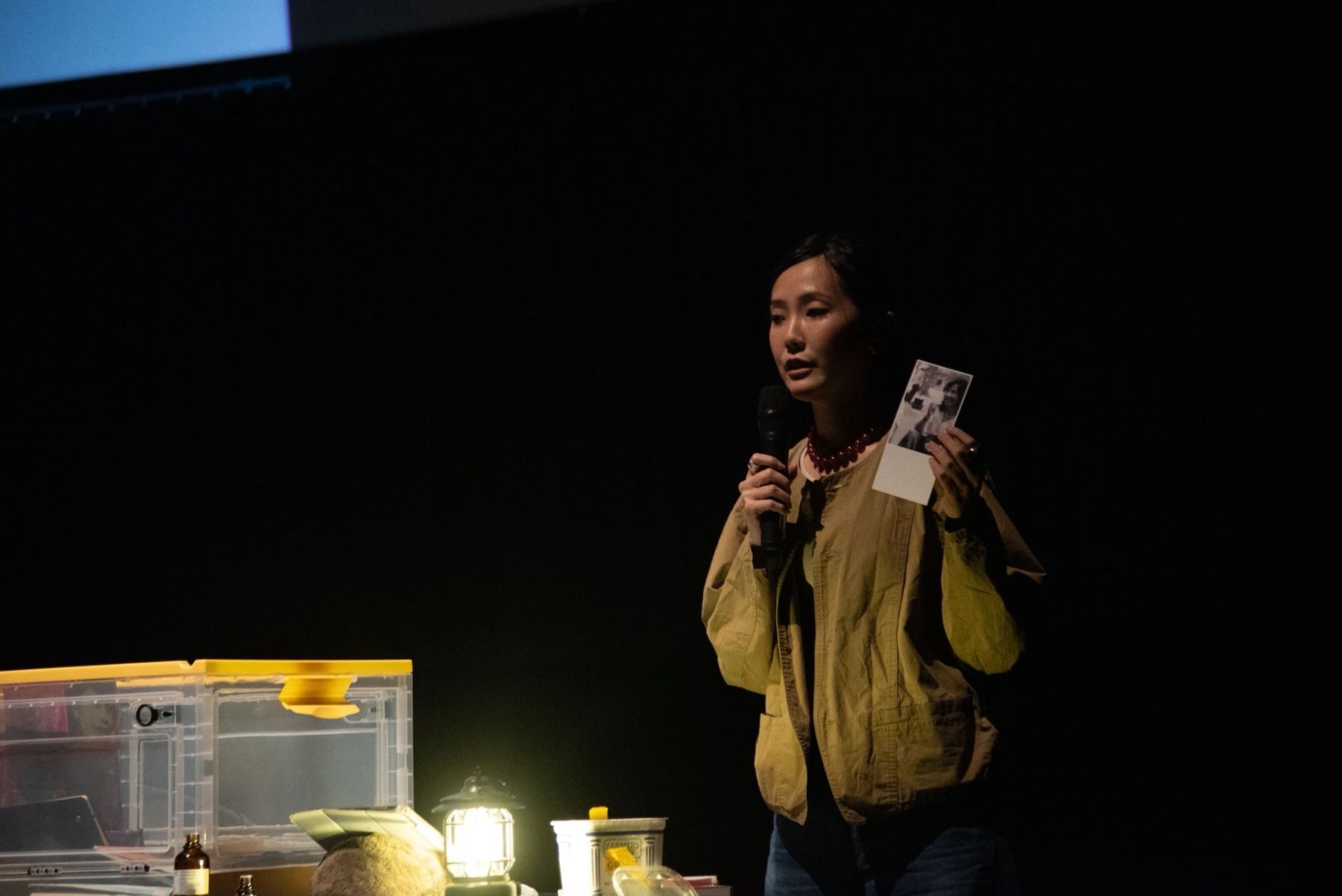
I found this format particularly moving because it transformed the archive into something active rather than static. The archive was no longer simply something we looked at. It became something we experienced together.
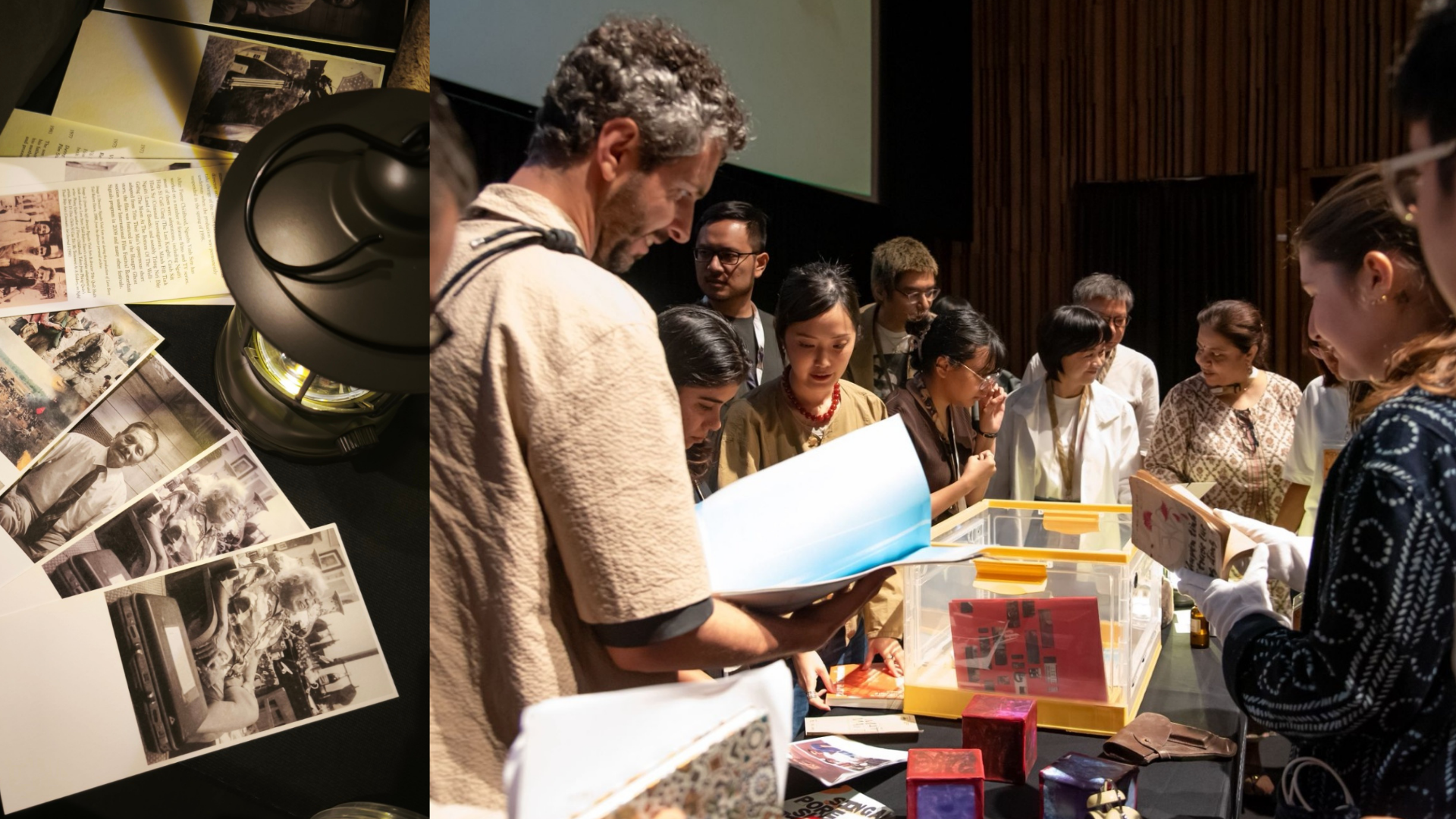
The session proposed that programming itself can become an archaeological practice—not simply selecting films, but carefully uncovering forgotten relationships, histories, and memories that continue to exist beneath contemporary programming.
This resonated deeply with how I think about curation at Cinemata. Our work is not only about making films available online. It is also about creating contexts that allow audiences to rediscover relationships between films, communities, and histories that may otherwise remain invisible. Whether through editorial writing, themed playlists, community screenings, or discussions, curation becomes an act of activating memory rather than merely preserving it. I left the session thinking that archives are not simply collections. They become meaningful only when someone invites audiences back into them.
Later that afternoon, I attended Amirali Ghasemi's performance lecture, "Navigating an Archive in Euphoric/Diasporic Mode," followed by a screening of The Bird, The Train and The Ritual, featuring Iranian short films produced before the 1979 Revolution.
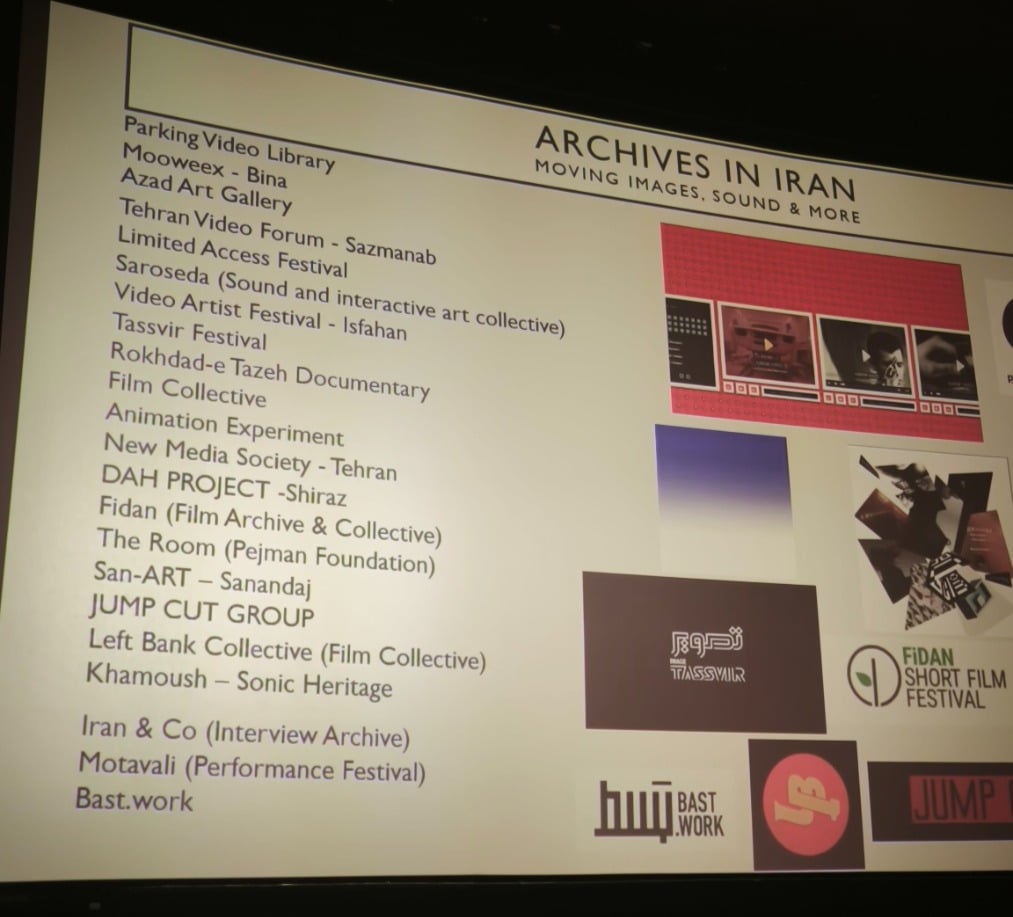
Although the programme focused on Iranian cinema rather than the Asia-Pacific, it sparked an important reflection for me. Many of the themes explored—displacement, political violence, memory, exile, censorship, and belonging—strongly resonate with issues experienced throughout Southeast Asia and the wider Asia-Pacific. This reminded me of conversations we have already begun having within Cinemata about how we approach films that fall outside our geographical focus.
While our commitment remains rooted in the Asia-Pacific, I found myself asking whether there are moments when works from outside the region can meaningfully deepen conversations already taking place within our programmes. Iran may not geographically belong within our mandate, yet films about displacement, state violence, occupation, or resistance may still resonate deeply with audiences engaging with similar issues elsewhere in Asia.
Rather than seeing geography as a rigid boundary, the session encouraged me to think about regional programming as creating conversations between histories rather than merely organizing films by location. It reaffirmed that Cinemata's commitment is ultimately not only geographical, but also rooted in dialogue, solidarity, and shared struggles.
If the first day of ACPAC encouraged me to think about the infrastructures that sustain film culture, the second day shifted the focus toward the people and practices that activate those infrastructures. Many of the sessions explored how curatorial work continues long after a festival ends, whether through educational initiatives, community engagement, alternative exhibition spaces, or sustained relationships with audiences. Throughout the day, I found myself reflecting on where Cinemata fits within this wider regional network and how our own work contributes to extending the life of films beyond their initial circulation.
One of the sessions that resonated with me most was "Beyond Film Programming – Opening up New Possibilities," featuring Jacob Wong (Hong Kong International Film Festival), Kay Wee Thong (Singapore International Film Festival), and Sung Moon (Jeonju International Film Festival).
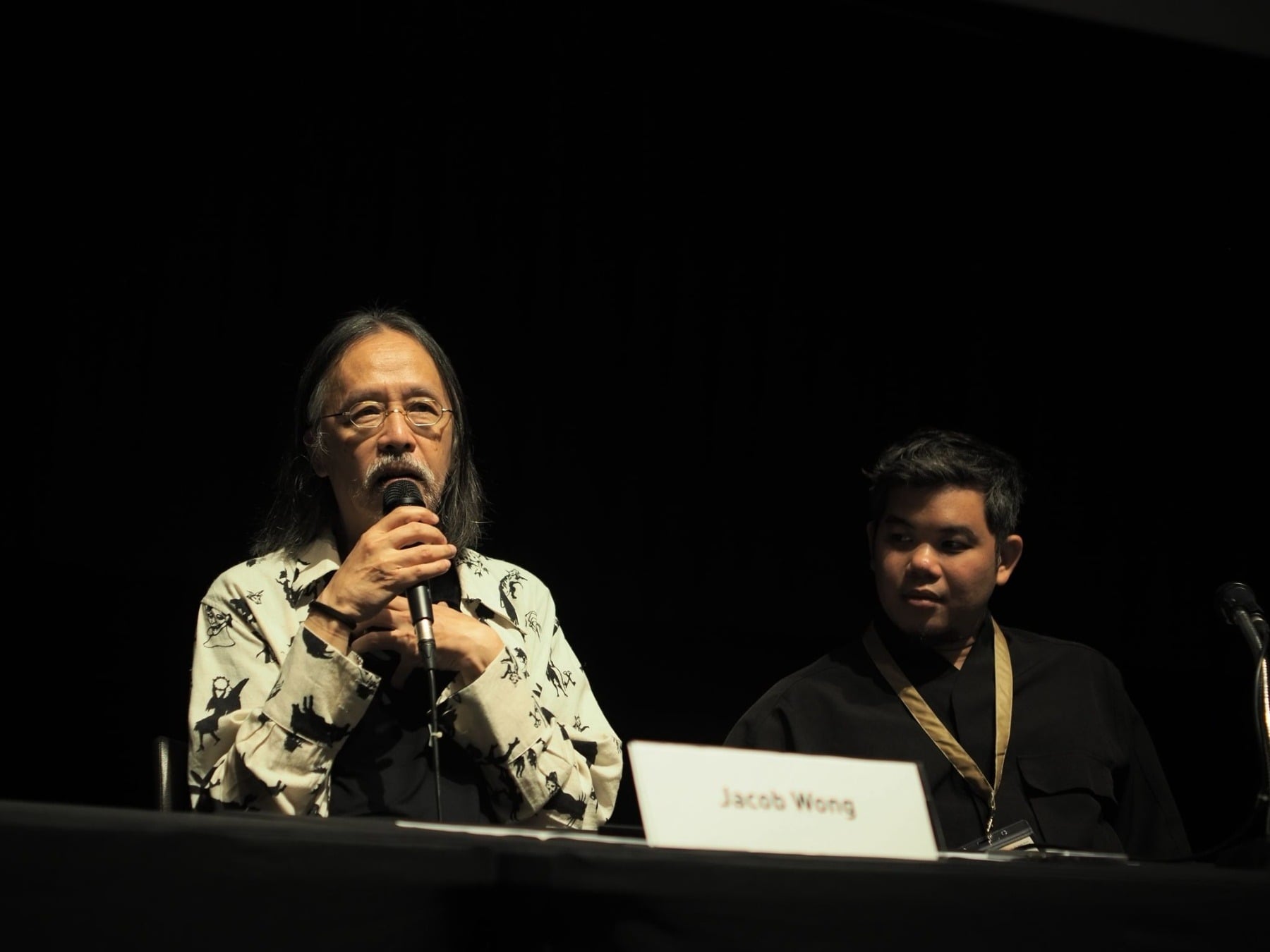
The discussion drew an important distinction between film programmers and curators. Programmers often work within the festival cycle, researching and selecting new films—typically within a recent production window—for exhibition. Curators, on the other hand, work with collections over time, building contexts, relationships, and new meanings around existing bodies of work. Rather than simply deciding what audiences will watch, curators consider how films continue to generate conversations long after their premiere through education, editorial work, community partnerships, and sustained audience engagement.
This conversation strongly resonated with the work we have been developing through Cinemata's Community Curators Initiative. While our practice naturally overlaps with programming, our primary role is curatorial. We work with an existing collection of social issue films, developing thematic programmes, editorial essays, watch parties, educational resources, and community screenings that encourage audiences to revisit films within new contexts. At the same time, the discussion reminded me that Cinemata occupies a productive space between programming and curation. We continue discovering new filmmakers and perspectives while also caring for and activating the collection we already have. Rather than treating these as separate responsibilities, our work demonstrates how the two practices can complement one another.
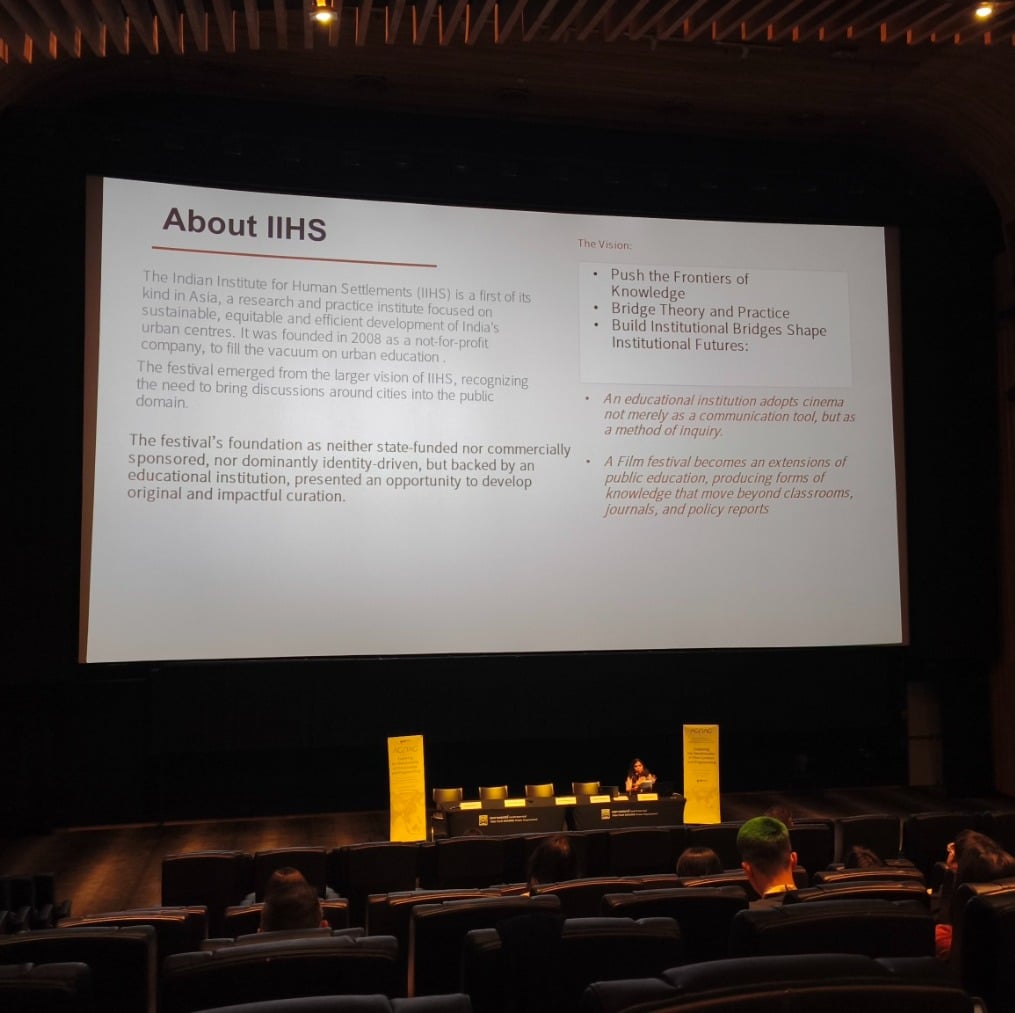
Another insightful presentation was Kanika Katyal's "Curating the City as Method: Conversation, Collectivity, and the Urban Lens Film Festival." Her presentation demonstrated how cities themselves can become curatorial spaces, where public life, urban histories, and civic participation are brought into dialogue through film. Rather than treating the city merely as a backdrop, the festival becomes a way of encouraging residents to critically reflect on the spaces they inhabit and the social issues shaping everyday urban life.
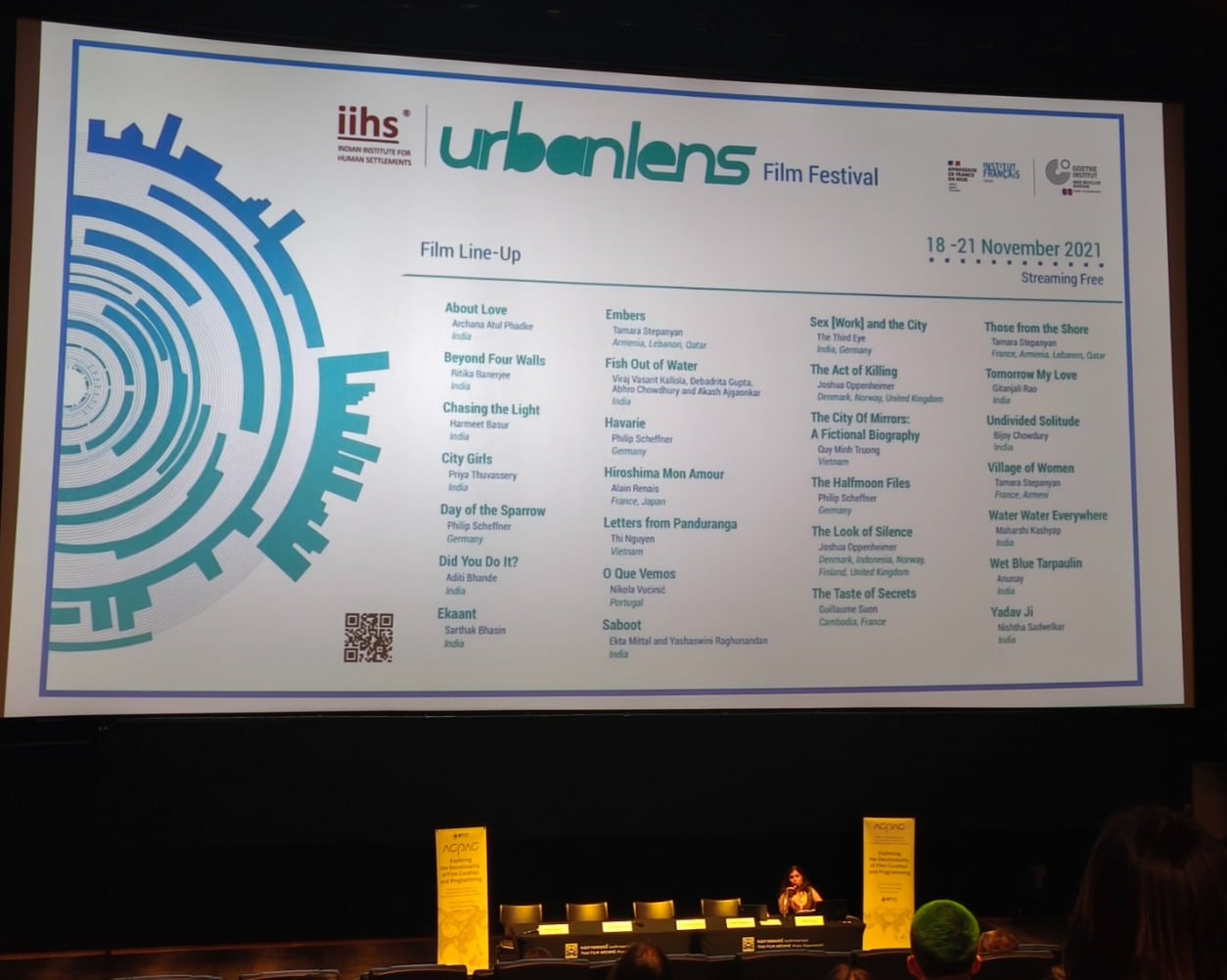
I found strong parallels with many of Cinemata's existing programmes, particularly those exploring environmental justice, urban development, displacement, and community rights. The presentation reinforced that curation can also function as civic engagement, creating opportunities for communities to collectively reflect on questions of belonging, accessibility, and the future of shared spaces. Our conversations after the session revealed overlapping interests in socially engaged programming, and I believe there is strong potential for future collaboration around urban rights and environmental justice initiatives.
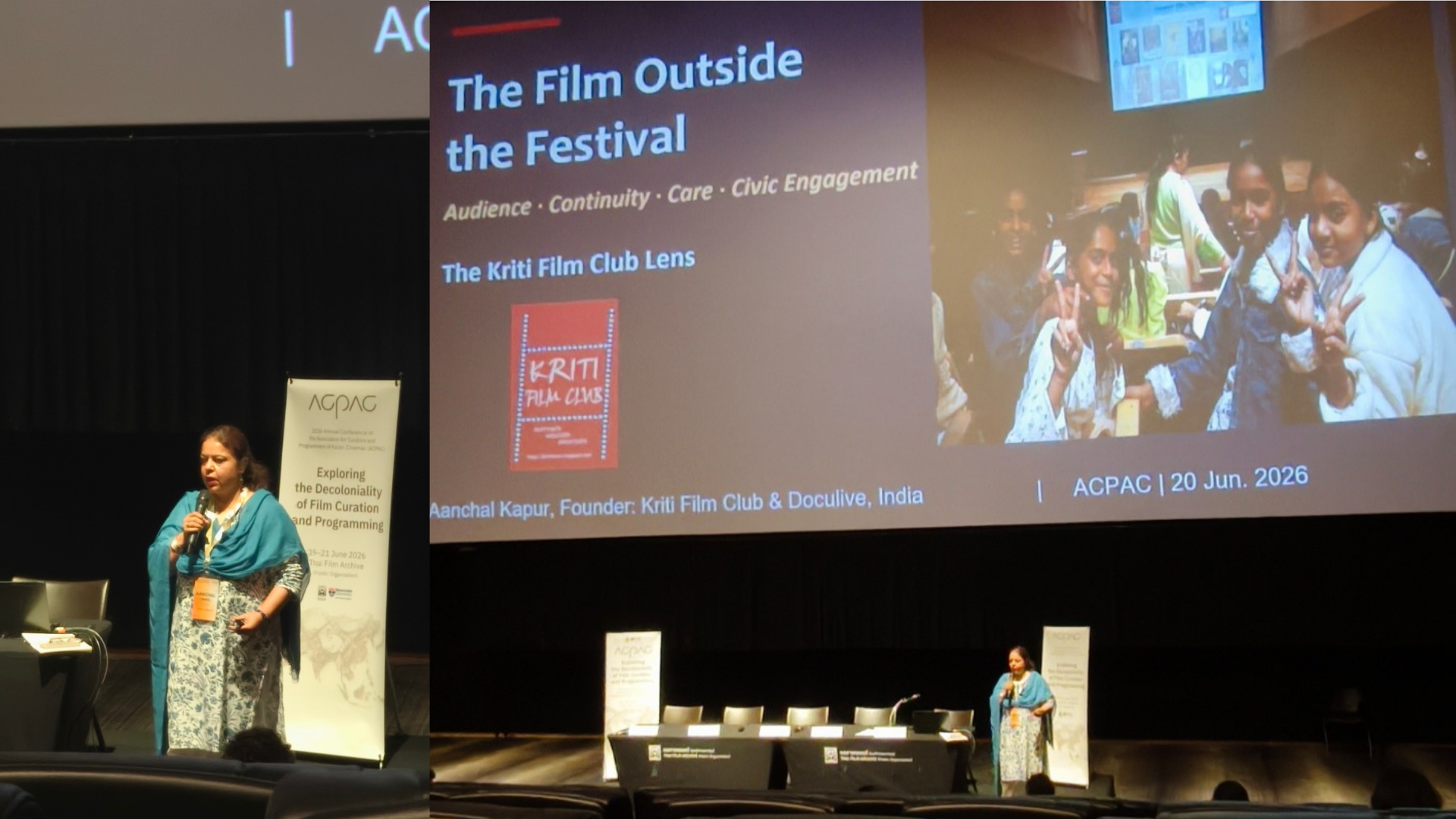
It was equally rewarding to attend Aanchal Kapur's presentation, "The Film Outside the Festival: Audience, Continuity, Care and Civic Engagement: The Kriti Film Club Festivals' Lens." Having encouraged Aanchal to join ACPAC during the Cinemata Community Curators Residency Lab, it was especially meaningful to see her presenting her own work to the broader community of Asian curators and programmers. It served as a reminder that the relationships built through the residency continue to grow well beyond the programme itself.
One moment that particularly stood out was hearing Aanchal independently mention Cinemata as a platform where audiences can continue engaging with films after festival screenings. Hearing Cinemata referenced before my own presentation later that afternoon demonstrated that the platform is gradually becoming part of regional conversations around audience development, accessibility, and the continued circulation of films. It was encouraging to see Cinemata recognized not because I was present, but because others already viewed it as a meaningful part of the ecosystem.
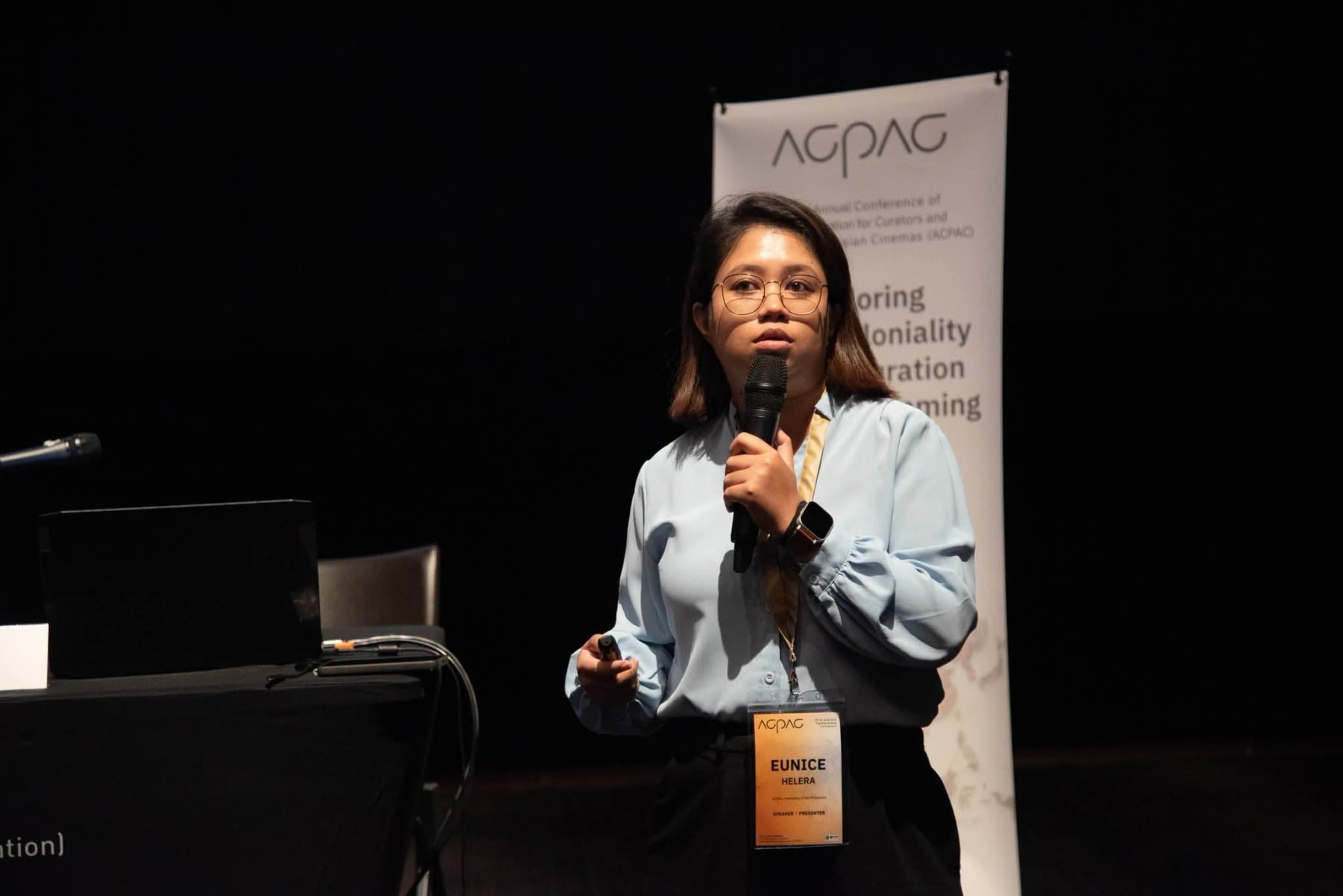
Later that afternoon, I presented "Where Do Short Films Go? Reimagining Film Circulation Through Cinemata's Community Curators Initiative." The presentation introduced Cinemata as a community-governed platform that extends the circulation of social issue films through curation, contextualization, and community engagement. Rather than presenting Cinemata simply as a streaming platform, I emphasized its role in creating renewed encounters between films, communities, educators, and audiences beyond the festival circuit.
I shared how the Community Curators Initiative encourages programmers from across the Asia-Pacific to develop thematic programmes using Cinemata's collection, supported by editorial writing, discussions, and audience engagement strategies that allow films to remain active long after their initial release. In many ways, the presentation echoed many of the themes that had emerged throughout ACPAC: that the future of film circulation depends not only on festivals, but also on the networks, infrastructures, and communities that continue caring for films after they leave the cinema.
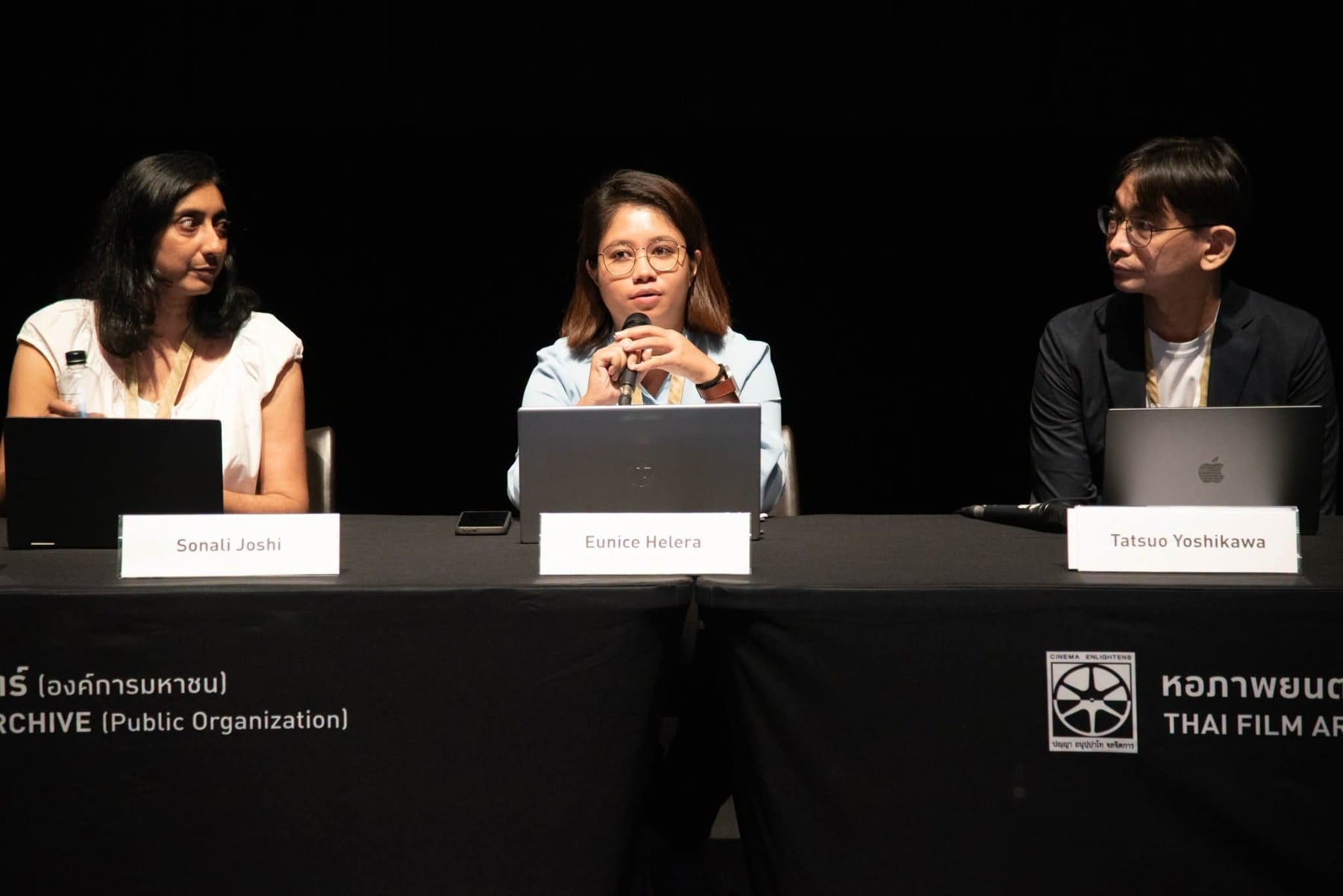
The presentation also opened several meaningful conversations about future collaboration. I spoke with Tatsuo Yoshikawa, whose presentation, "Curation and Reception of Sinophone Student Films: From Tokyo International Film Festival to HFCC," explored university-based exhibition and reception. Our discussion centered on the possibility of using Cinemata as a platform for educational screenings and campus-based programming, particularly as a resource that could complement classroom discussions and university film activities beyond one-off events.
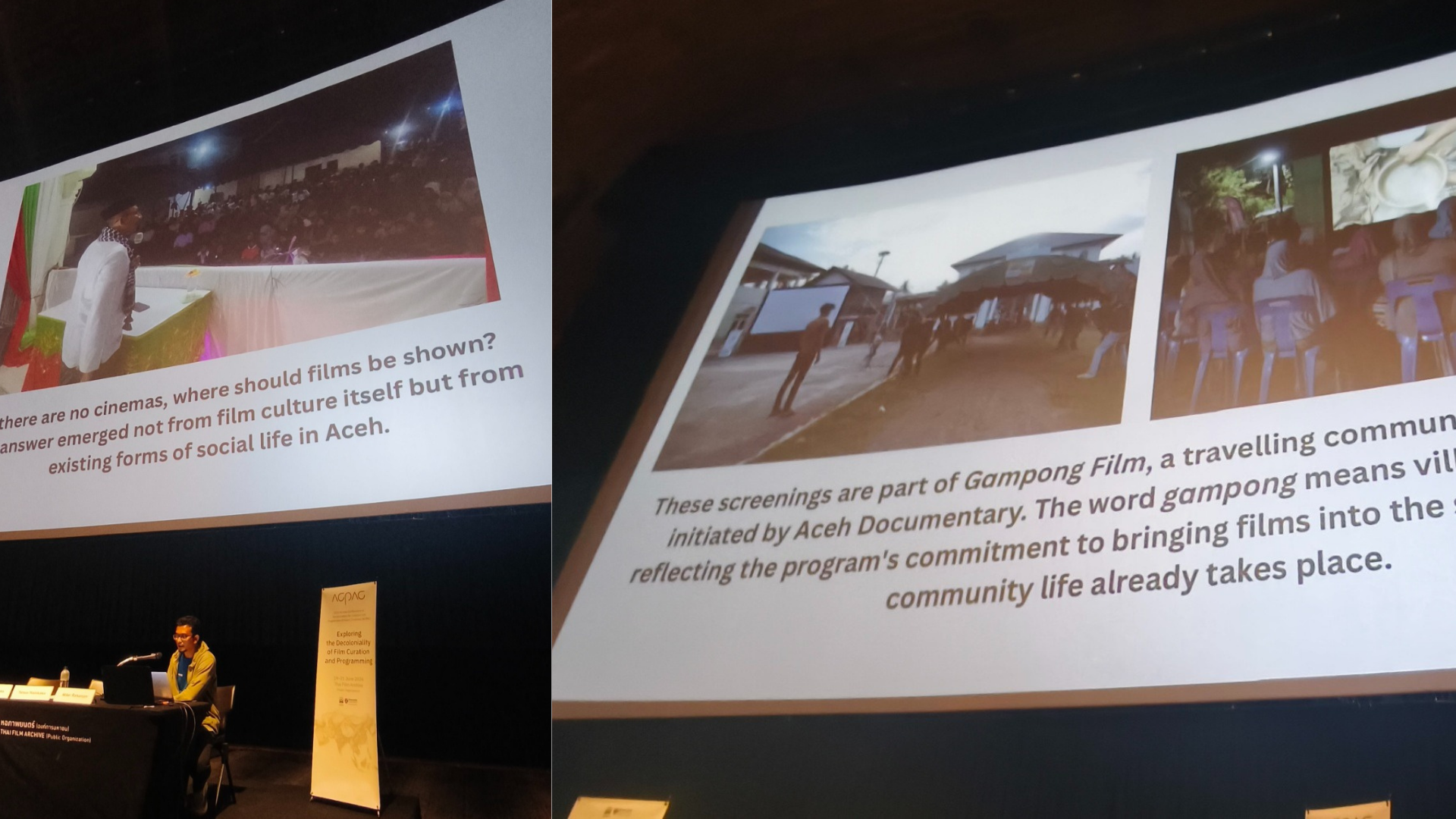
I also reconnected with Akbar Rafsanjani, whose presentation, "No Cinema, No Problem: Film Curation as Decolonial Practice in Aceh," reflected on grassroots film culture in Aceh and the ways communities continue sustaining cinema despite limited access to formal exhibition spaces. Having previously collaborated with Cinemata, Akbar expressed interest in reconnecting and exploring future partnerships through their screening initiatives, cafés, and community-based programmes. Our conversation reaffirmed that Cinemata's mission aligns closely with grassroots organizations working to build local audiences outside conventional festival infrastructures.
Another valuable conversation was with Suyin Haynes, whose presentation, "From Archive to Audience: Programming Southeast Asian Cinema Across UK Cultural Spaces," examined how Southeast Asian films can reach audiences through museums, universities, and alternative cultural venues across the United Kingdom. We discussed how Cinemata could complement these initiatives by providing continued online access to films after physical screenings, allowing audiences to revisit works while supporting educational and public engagement activities beyond the exhibition period.
Collectively, these conversations reinforced one of the most significant takeaways from the second day: Cinemata is increasingly being recognized not only as a streaming platform, but as a regional partner for curation, education, audience development, and long-term film circulation. Across discussions with festival programmers, independent curators, educators, and cultural institutions, I found genuine interest in how Cinemata could support existing initiatives rather than compete with them. This reaffirmed that our greatest strength lies in building partnerships that extend the life of films across different contexts, ensuring that they continue to generate dialogue long after their festival screenings have concluded.
While the first day explored the infrastructures that sustain film culture and the second day focused on the evolving role of curatorial practice, the final day shifted the conversation toward sustainability. Many of the sessions addressed a common challenge facing independent film culture across Asia: how do we continue building spaces for cinema when funding, venues, and institutional support remain limited? Rather than ending the conference with conclusions, the discussions emphasized the importance of long-term collaboration, shared resources, and regional networks that continue supporting one another beyond annual gatherings.
One discussion that particularly resonated with me was "Independent Curators: Navigating Space and Funding Challenges in Thailand," featuring Wiwat Lertwiwatwongsa, Pathompong Manakitsomboon, and Mary Pansanga, moderated by Kong Rithdee.
The panel highlighted the emergence of new independent film spaces and collectives across Thailand that continue experimenting with alternative exhibition models despite limited funding and infrastructure. Rather than waiting for permanent cinemas or institutional backing, many initiatives have built sustainable communities through flexible programming, partnerships, and grassroots participation. One initiative that particularly stood out was Rae Nang, an emerging community film space in Bangkok that is actively cultivating audiences outside commercial cinema circuits while serving as a gathering space for filmmakers and local communities.
Listening to these experiences reminded me that many of the challenges discussed were not unique to Thailand. Across Southeast Asia, independent organizers continue navigating similar questions of sustainability, audience development, and access. It also made me reflect on Cinemata's own role within this ecosystem. As more grassroots initiatives emerge across the region, there is an opportunity for Cinemata to strengthen its regional presence by working alongside these community spaces rather than independently from them. Partnerships with organizations such as Rae Nang could provide opportunities for community screenings, collaborative programming, and knowledge exchange while allowing films on Cinemata to continue reaching audiences through both online and offline experiences.
Another session explored questions of archives, displacement, and vulnerability across East and Southeast Asian cinema. Although each presentation approached the subject from different perspectives, I noticed a shared interest in making Southeast Asian films more visible within international contexts, particularly across Europe, the United Kingdom, and North America. Many of the speakers discussed the importance of building sustainable infrastructures that allow regional films to continue circulating beyond festival premieres through educational institutions, museums, archives, and alternative cultural spaces.
These conversations reaffirmed that there is increasing demand for platforms capable of supporting regional film circulation over longer periods of time. This is precisely the space that Cinemata continues to occupy. Rather than replacing festivals, Cinemata complements them by extending the life of films through online accessibility, editorial contextualization, community engagement, and partnerships with organizations that continue introducing films to new audiences.
The conference also provided an opportunity to think about how this collaboration could continue beyond ACPAC itself. During the ACPAC Annual General Meeting, I shared ideas on how ACPAC and Cinemata might strengthen their relationship in the years ahead. Among the possibilities discussed were connecting ACPAC members with future editions of the Community Curators Initiative, inviting experienced programmers and curators to serve as mentors, encouraging curator recommendations from across the region, and exploring collaborative programming opportunities that would benefit both organizations.
I believe there is considerable potential in bringing together ACPAC's regional network of programmers and curators with Cinemata's growing community of filmmakers and community curators. Such collaborations could contribute not only to knowledge exchange, but also to stronger regional partnerships, broader audience development initiatives, and more opportunities for films to circulate across different cultural contexts.
One of the most significant outcomes of attending ACPAC 2026 came during the Annual General Meeting, where I was elected to serve on the ACPAC Board of Directors. While this is certainly a meaningful personal milestone, I see the appointment primarily as an opportunity to further strengthen the relationship between ACPAC and Cinemata. Serving on the Board creates more opportunities to introduce Cinemata's initiatives to a wider network of curators, programmers, archives, festivals, and cultural organizations throughout the Asia-Pacific region. It also allows me to advocate for community-led curation while identifying future collaborations that support film circulation beyond traditional festival models.
Looking ahead, I hope to continue building connections between ACPAC and Cinemata through initiatives such as the Community Curators programme, regional mentorship, collaborative programming, and knowledge-sharing activities. I believe these partnerships will benefit both organizations by expanding opportunities for curators, filmmakers, educators, and audiences while strengthening regional networks committed to socially engaged cinema.
Another meaningful experience during the conference was attending alongside UPFI Programmer Noy Lauzon, who participated as a fellow Filipino delegate and observer. During one of our conversations, he reflected that after decades of working in film programming, ACPAC was the first initiative of its kind that brought together curators and programmers of Asian cinema to learn directly from one another's practices. Although he is approaching retirement, he decided to join the conference at the last minute because this was an opportunity he and many of his contemporaries never had during the height of their careers.
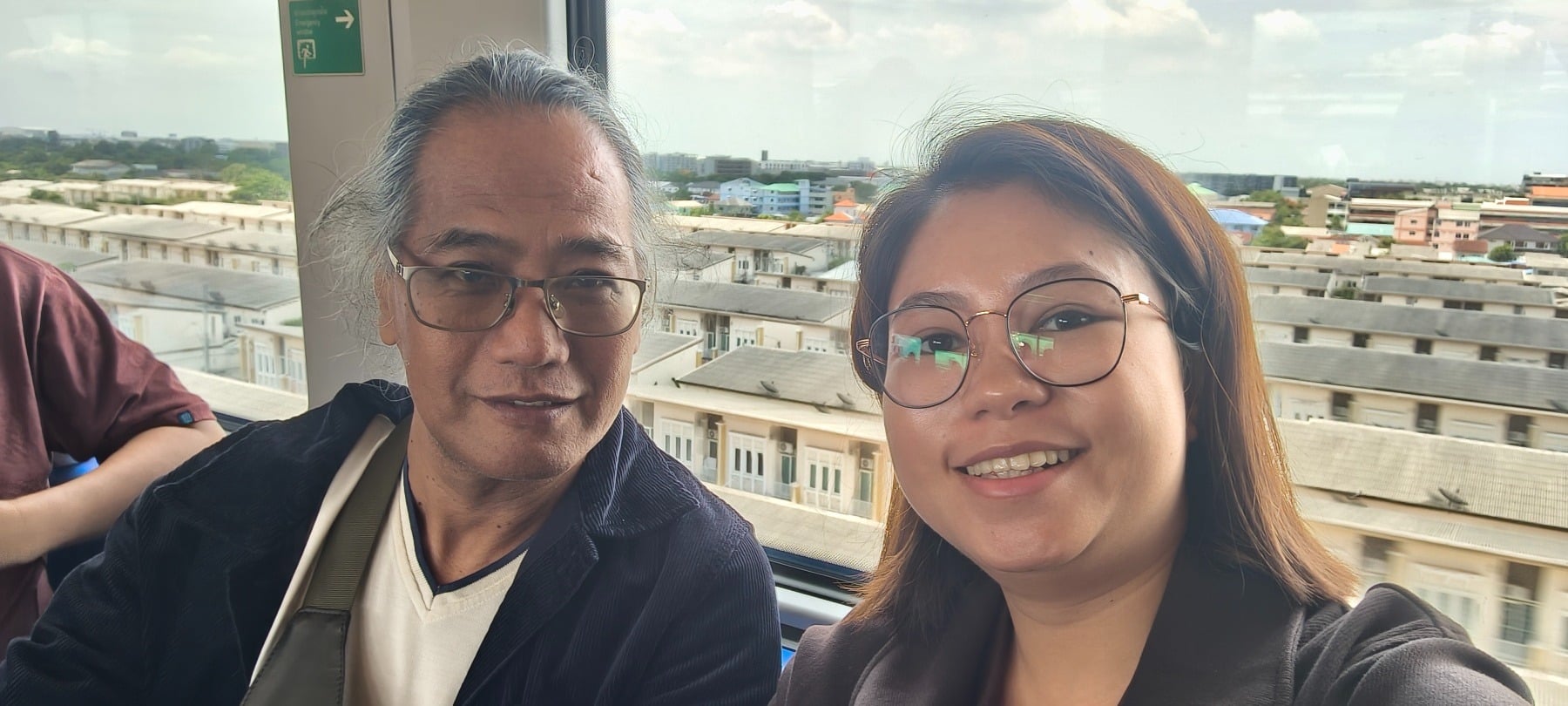
Hearing his reflections reminded me that ACPAC is valuable not only as a professional conference, but also as a space where knowledge is shared across generations. It was especially meaningful to experience the conference alongside someone who has contributed so much to Philippine film programming and to witness how even seasoned practitioners continue seeking new perspectives through conversations with colleagues across Asia. His remarks also underscored the importance of creating spaces where emerging and established curators can learn from one another, ensuring that experience, institutional memory, and new ideas continue to circulate together.
Looking back on ACPAC as a whole, one of my strongest takeaways is seeing Cinemata's growing recognition within the regional curatorial community. From its inclusion among ACPAC's milestone initiatives during the opening programme, to delegates independently referencing the platform during their own presentations, to the conversations that followed my presentation, it became increasingly clear that Cinemata is no longer viewed solely as an online streaming platform. It is increasingly recognized as a community-driven initiative contributing to conversations around curation, audience development, accessibility, and sustainable film circulation across Asia-Pacific.
More importantly, the conference generated concrete opportunities that extend beyond the three days we spent together. New conversations around educational partnerships, grassroots screening initiatives, mentorship, collaborative programming, and institutional cooperation all point toward future collaborations that I intend to continue pursuing. I believe these relationships will help expand Cinemata's regional network while creating more opportunities for filmmakers, curators, educators, and audiences to engage with socially engaged cinema in meaningful ways.
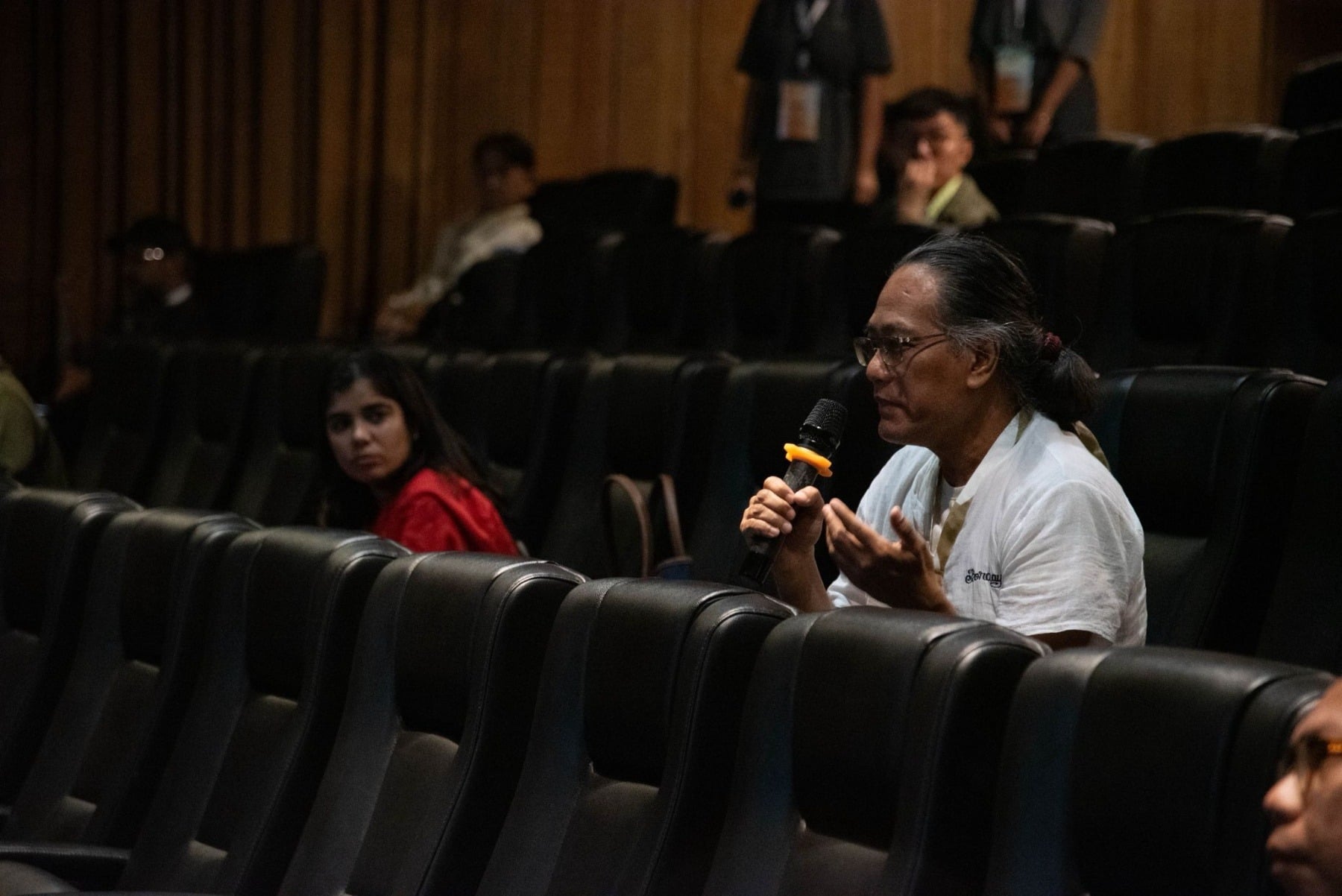
As I look back at the photographs from the conference, I see more than documentation of my participation. They represent conversations initiated, partnerships strengthened, ideas exchanged, and the continued growth of a regional community committed to supporting Asian cinema. More importantly, they capture the realization that Cinemata is becoming part of a broader ecosystem of organizations collectively working to expand access to Asian films and to imagine new possibilities for film circulation beyond conventional festival and exhibition models.
Photo credits: With thanks to Association of Curators and Programmers of Asian Cinemas and the Thai Film Archive for allowing us to feature photographs from the conference in these field notes. The images are used for non-profit, educational, and documentation purposes, as part of a reflection on the conference and its conversations. All images remain the property and copyright of their respective owners.