Cinemata Recut. Shaped by the people who use the platform.
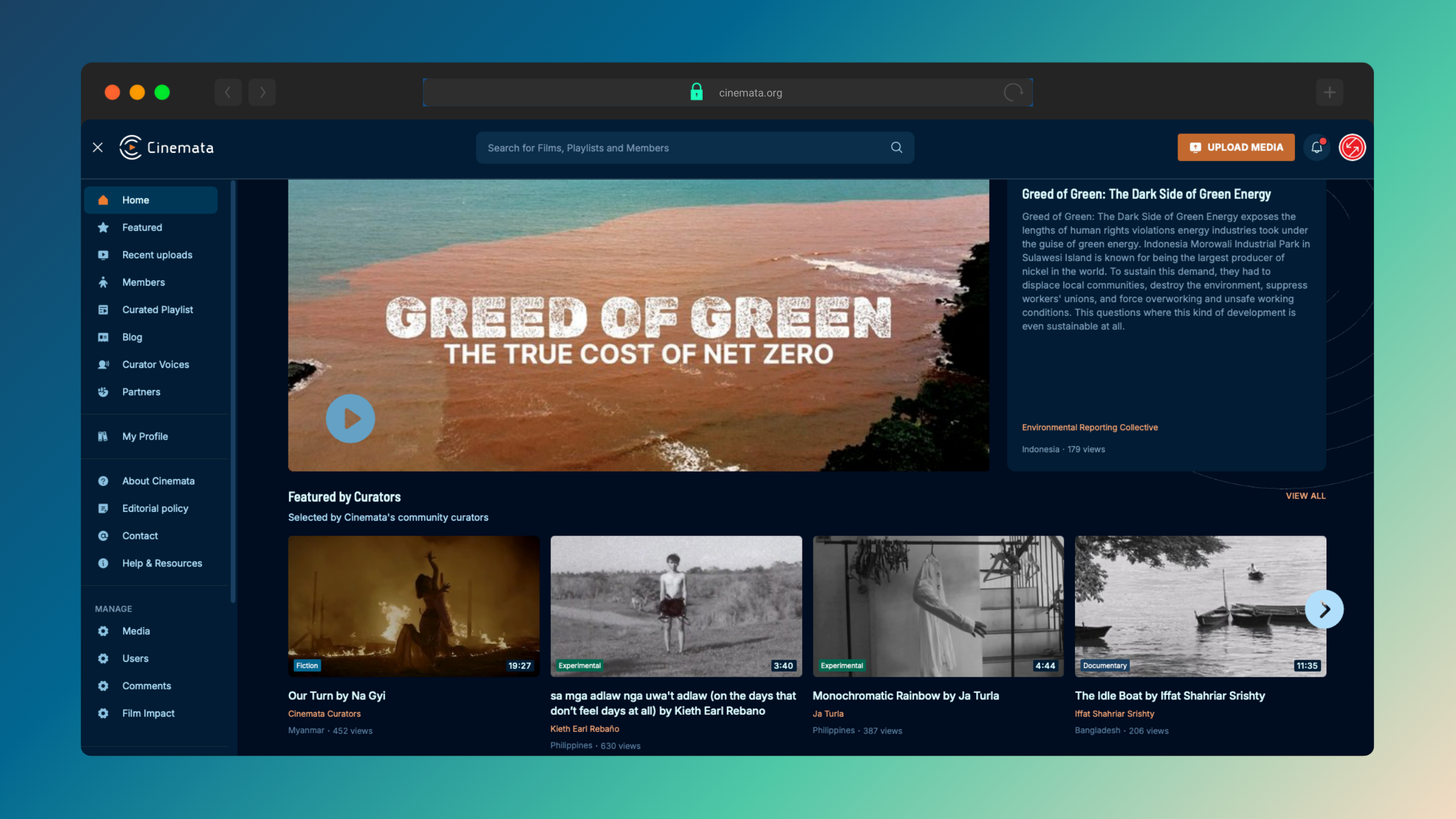
The remade Cinemata. Built around how filmmakers, curators, and advocates actually work.
By King Catoy, Cinemata Development Lead / 2026-07-22
Some films cannot live on Big Tech. A documentary about a land dispute. A short fiction about a family split by a border. An experimental film about a dying river. Context-rich work like this, carrying a real social issue, is compromised the moment it goes onto a platform that surveils its viewers, sells their attention, and pulls films down when an authoritarian government asks.
That is the reason Cinemata exists. For five years it has given social issue films from the Asia-Pacific somewhere to live that answers to the people who make and curate them, not to advertisers or governments. Every film here is chosen by actual people, filmmakers, advocates, and curators from the communities the work comes from. The library now holds more than 7,300+ films from over 30 countries, and the audience has grown year on year, with tens of thousands of visits each month.
But the tools around them had aged. So over the past year, we rebuilt them.
The interface was built for a different moment
The filmmakers uploading to Cinemata today are younger than the original platform. So are the people watching. They arrived to find a site that worked but felt dated, made for an earlier stretch of the web.
We could have repainted it. Instead we went back to the people who use Cinemata most and asked what actually gets in their way.
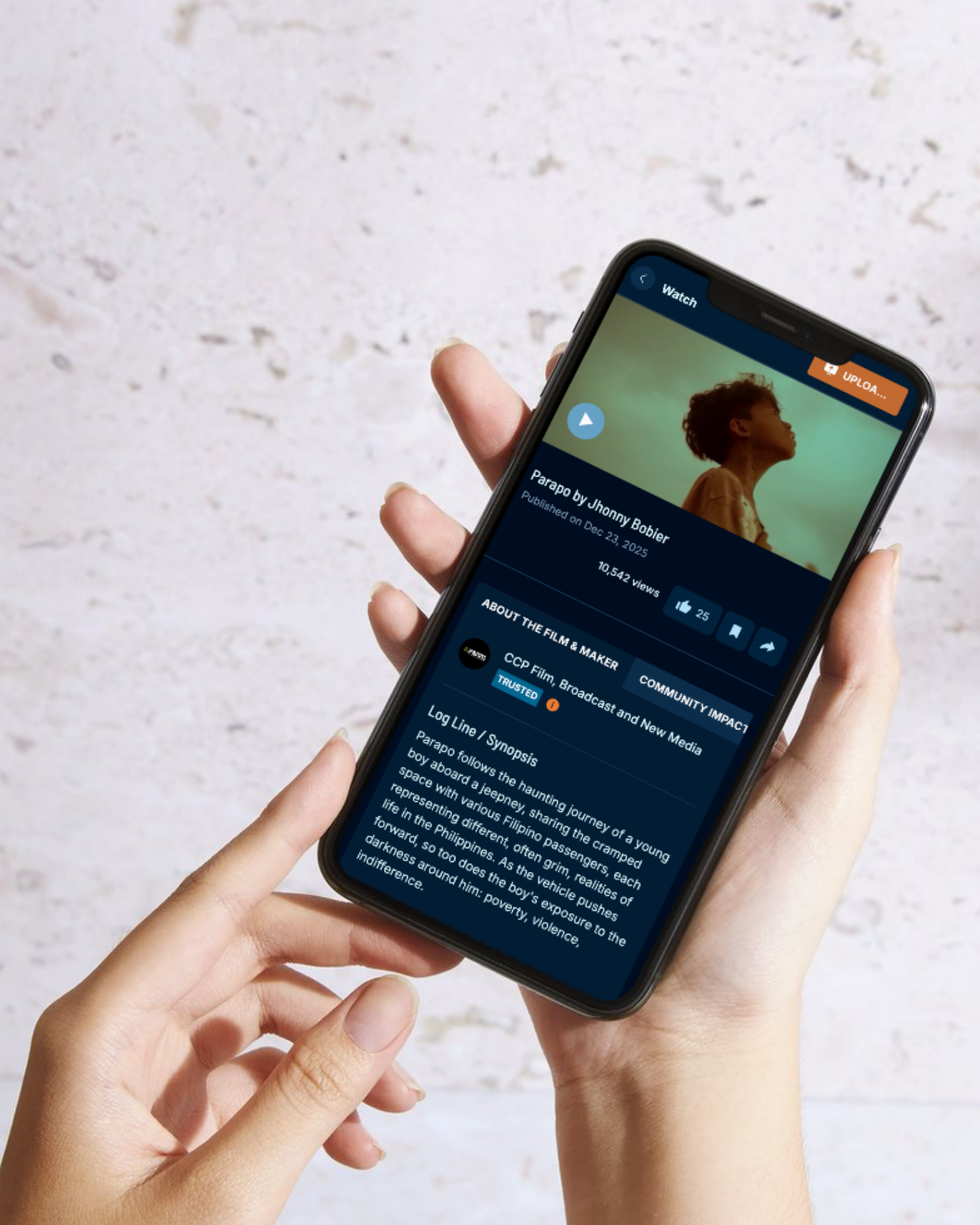
Most people reach Cinemata on a phone. The platform had to work there first.
We asked before we built
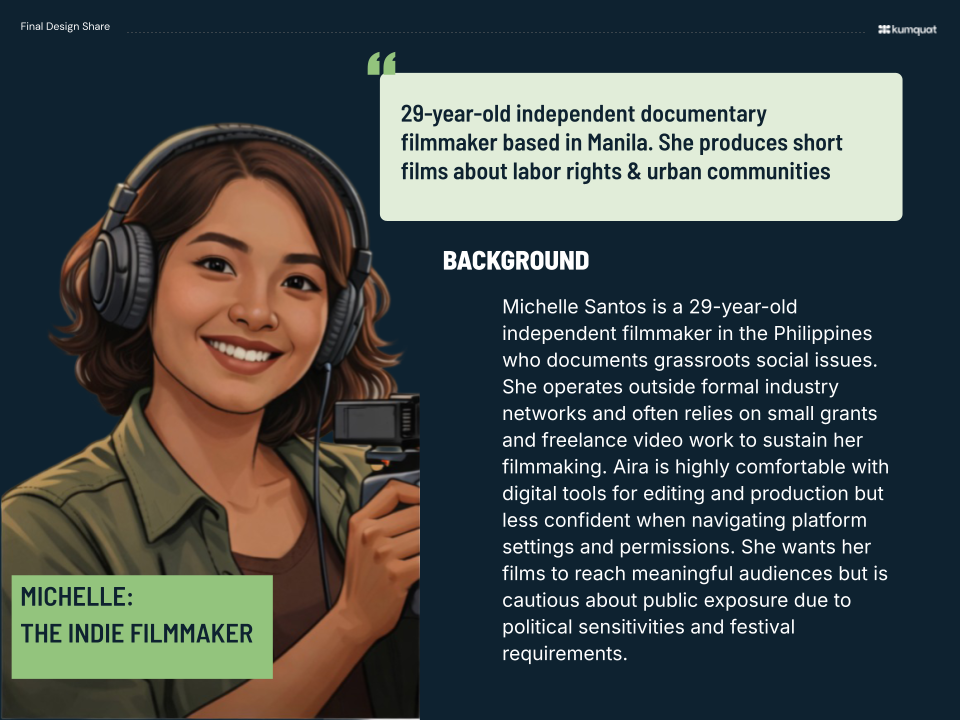
A filmmaker persona, built from Kumquat's research.
Through the Open Technology Fund's UX and Discovery Lab, a programme that pairs civil society platforms with design researchers, we worked with Kumquat, a women-led design studio based in Cape Town. Over several months they ran interviews and usability sessions with filmmakers, curators, educators, and organisers across the region.
Some of what they found stung. Uploading a film, the single most important thing a contributor does here, was also the most frustrating. Privacy settings were hard to find and harder to trust. Search buried the very films that made Cinemata worth visiting.
One finding sat beneath all the others. People put up with the friction because the films could not be found anywhere else. That is not a reason to relax. It is a reason to earn the trust people were extending on faith.
Kumquat spoke with filmmakers and curators across the region. Their findings set the year's priorities.
Drawn from the sea

The new palette is drawn from the seas that connect the Asia-Pacific. The films move the same way.
The first thing you notice is the colour.
Cinemata's new palette comes from the water that joins this region. The blues and greens of the seas and the currents that run between islands, coastlines, and countries. The Asia-Pacific is not held together by land. It is held together by water, and by the films that travel it the way currents do, carrying something from one shore to the next.
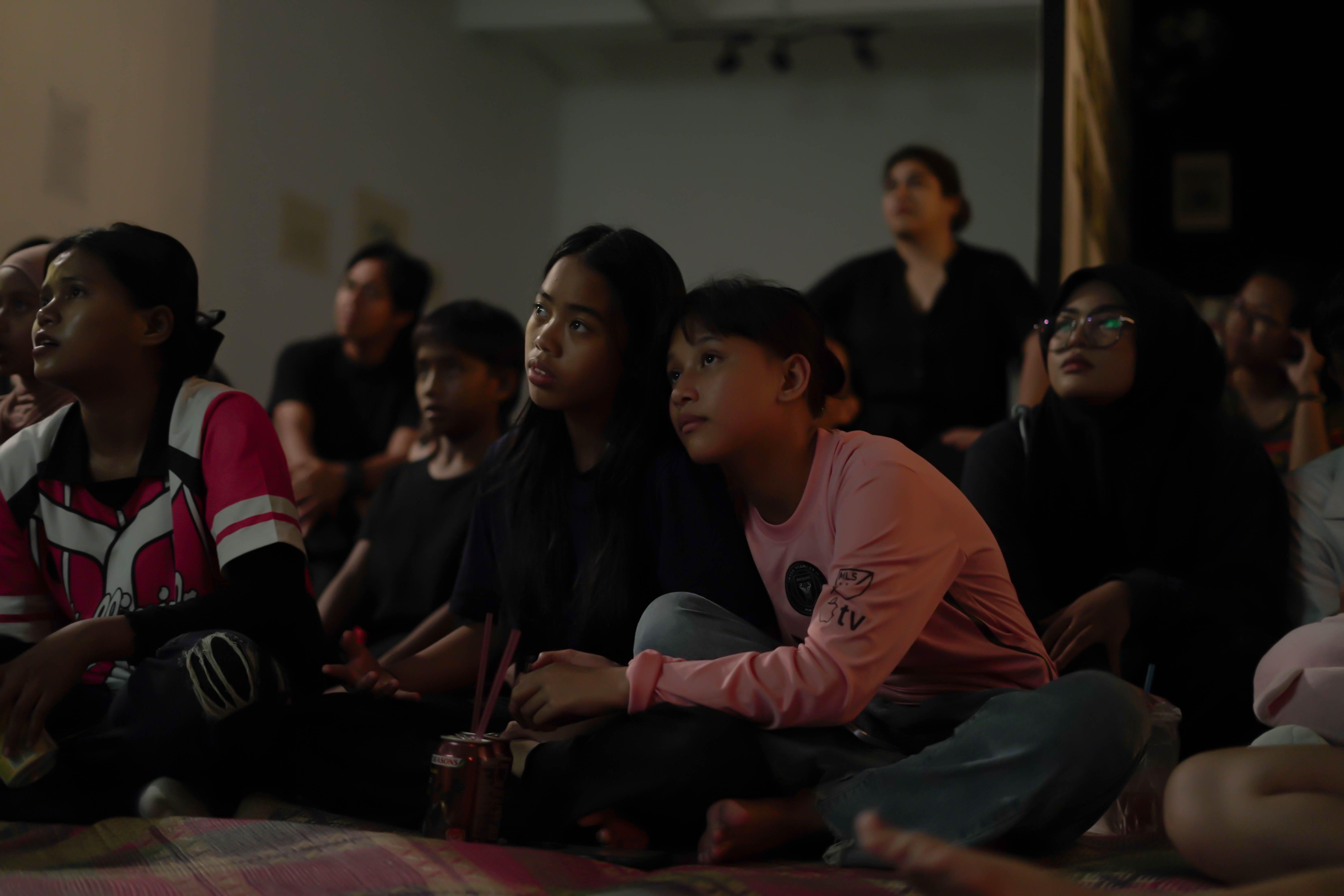
Audience members from Kota Kinabalu watching the films, including stateless children. Photo by Cristy Aniko Markus.
There is a second reason the water fits. A community film rarely arrives like a wave. It starts small, one screening, one room, one viewer who decides to act, and moves outward from there. A film made in a single village can shape a conversation three countries away. That is how impact works here. Not a splash, but a ripple that keeps reaching.
The interface carries the idea without announcing it. Calmer than before, easier to read, built to feel like it belongs to this part of the world rather than to Silicon Valley.
Uploading, rebuilt
This was the hardest problem and the one we spent the most time on.
Uploading a film used to feel like a task you endured. The flow has been reworked from the ground up, for both single films and batches. Filling in a film's details is cleaner. Choosing a thumbnail no longer means hunting for a separate image, you can pick a frame straight from the video. Encoding progress and errors are easier to read, so a failed upload tells you what went wrong instead of leaving you to guess.
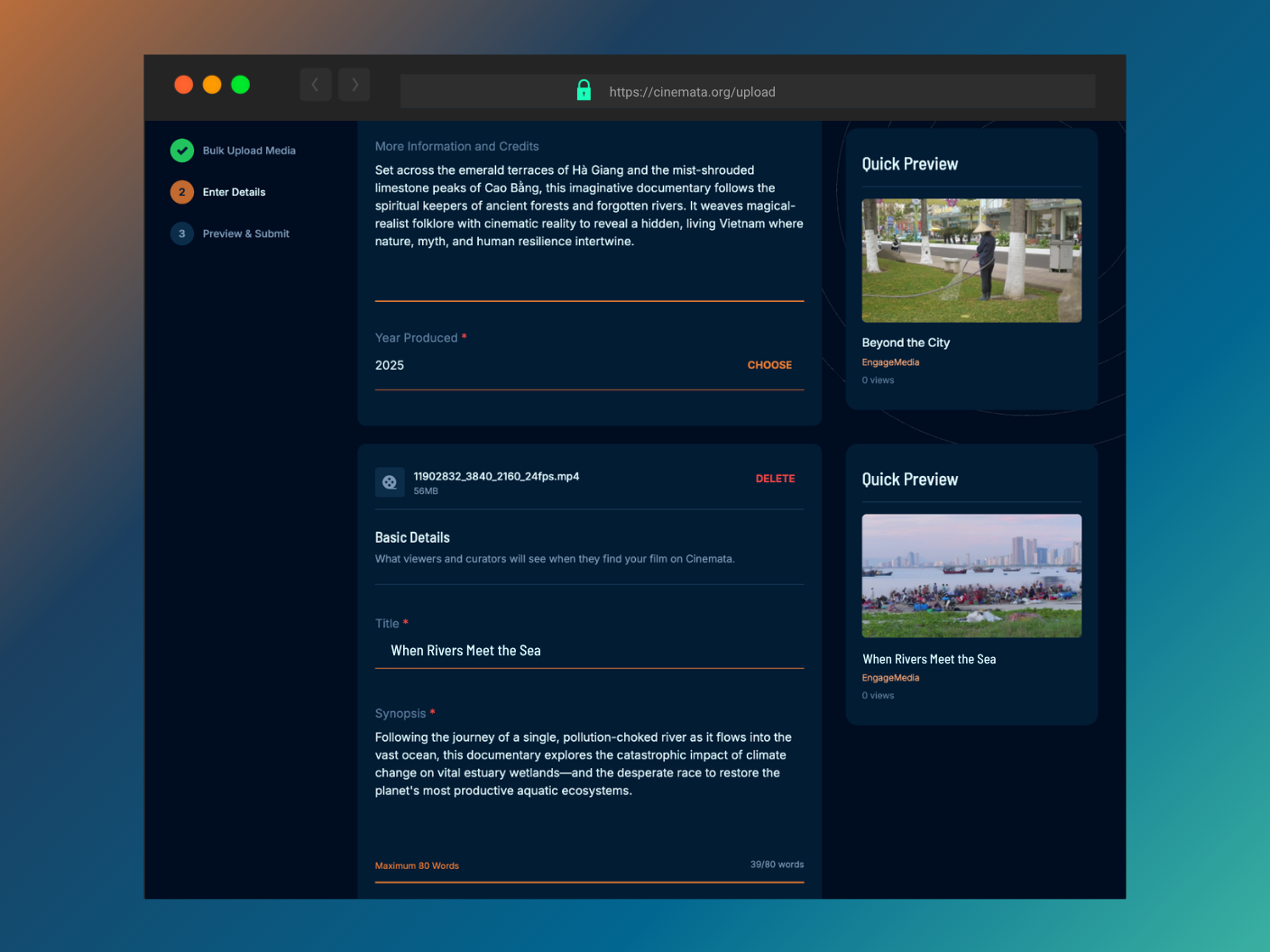
The rebuilt upload flow. Fewer dead ends, clearer feedback.
For curators and institutions moving many films at once, batch uploading was reworked and optimised to carry the load without the old friction.
You decide who sees your film, and for how long
Some films can only go public for a window. A festival requires it. An embargo demands it. Safety requires it.
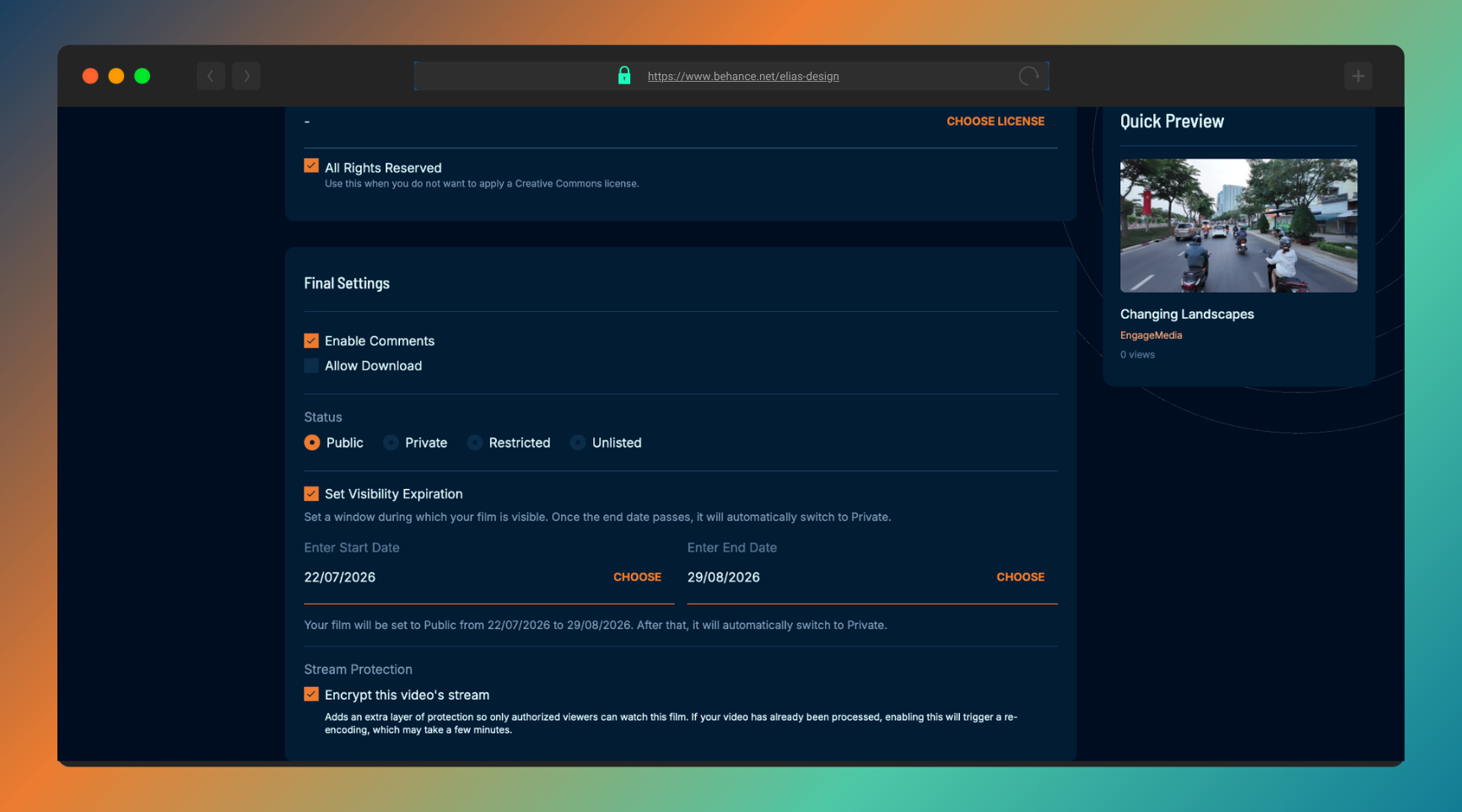
Set the window once. Cinemata handles the rest.
Visibility expiration lets you set that window when you upload. Choose a start and end date, and the film goes live and comes down on schedule, on its own. When the window closes, the film returns to private. No reminder to set. No late-night scramble to pull something down.
This sits alongside the privacy controls filmmakers already rely on. Public, private, unlisted, and password-protected, each now clearer about who can see what.
A profile that shows the whole person
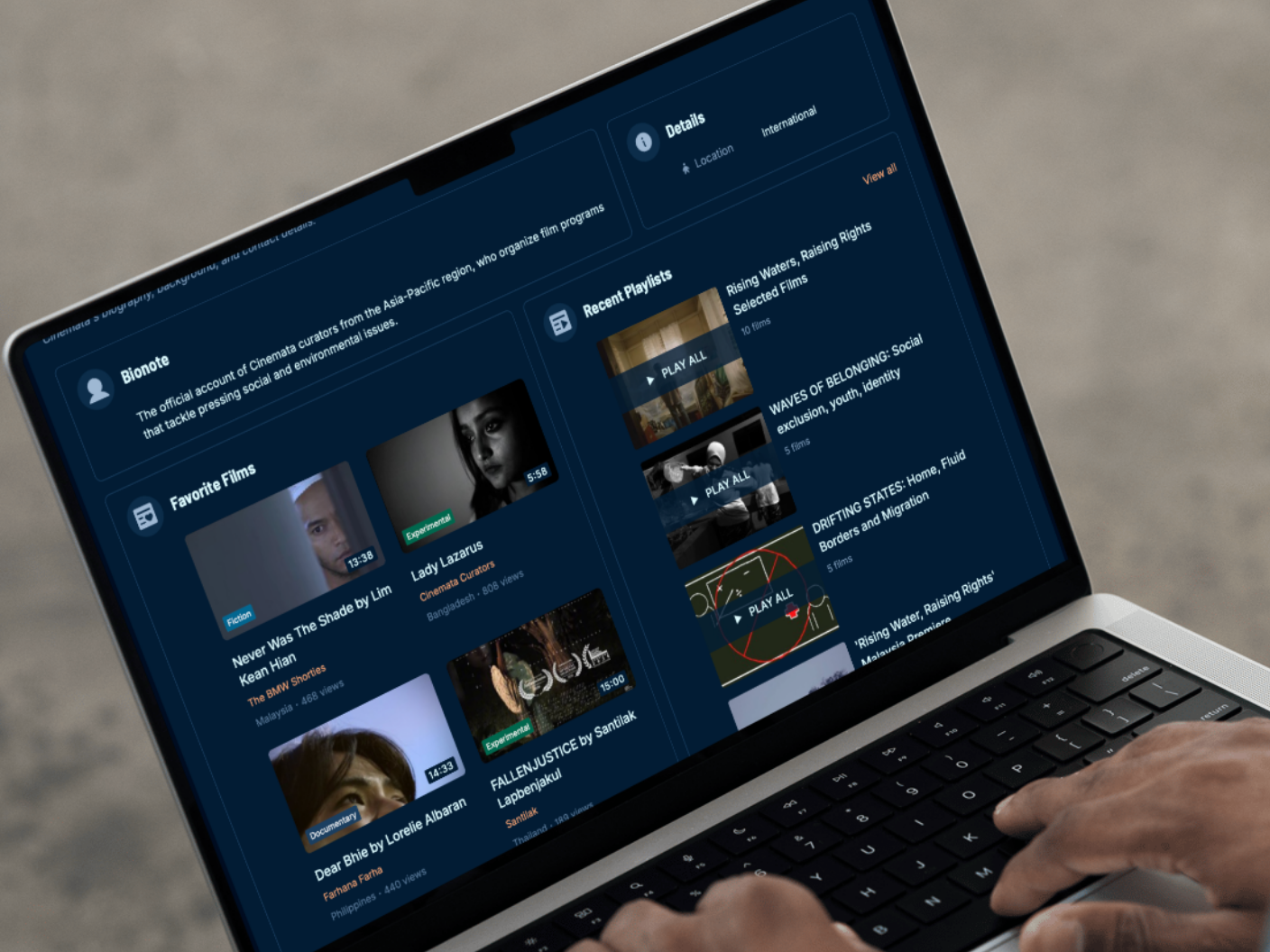
Every profile now carries a fuller picture. Who someone is, what they have made, where their films have travelled.
The profile page was thin. It listed a name and some films. It said little about the person behind them.
It says more now. A Bionote gives every member a real introduction. Uploaded films, playlists, and impact each have their own place. Reaching a filmmaker is simpler too, through a dedicated contact tab that keeps the rest of the profile focused on the work.
Two changes matter more than they first appear.
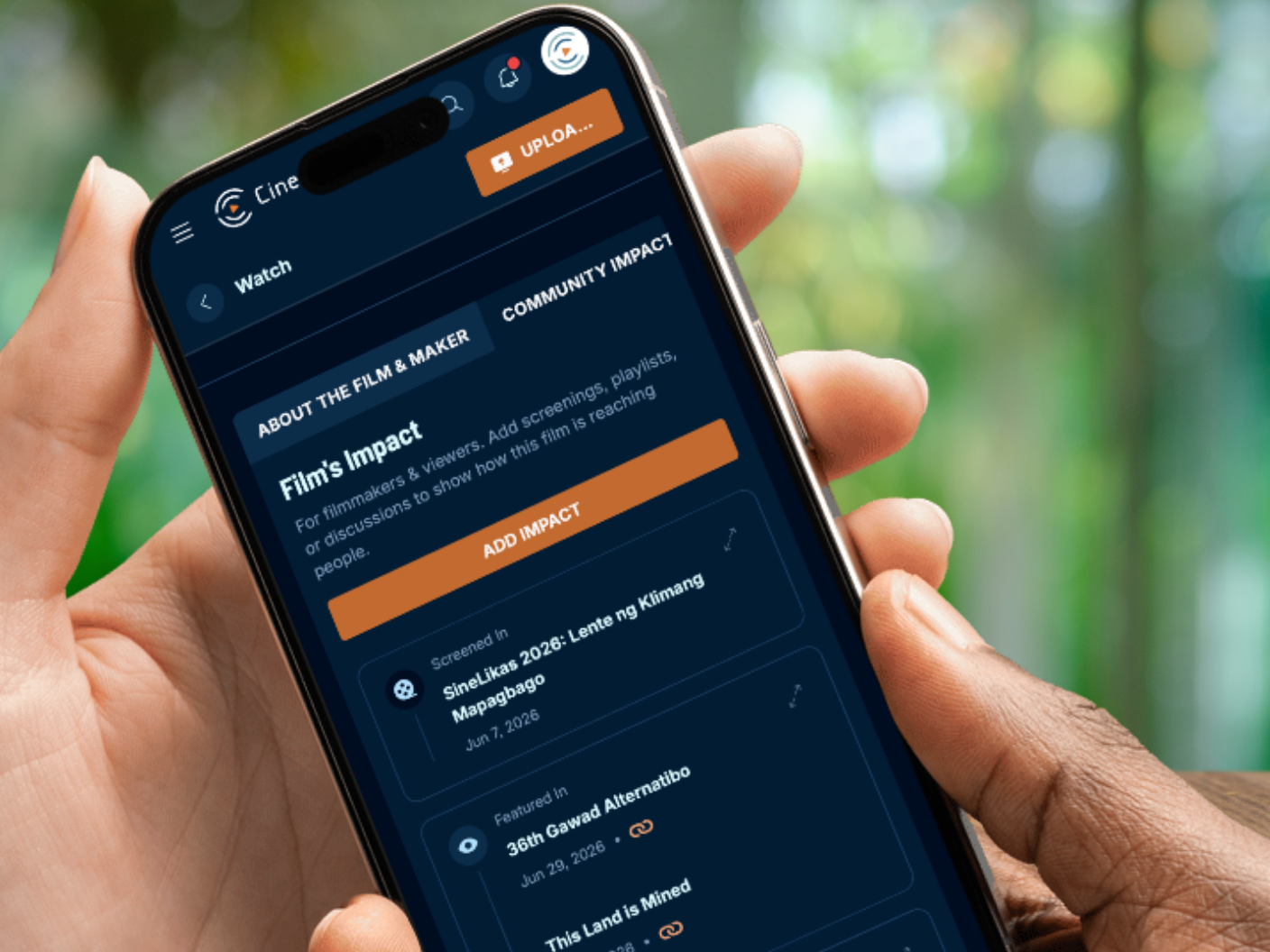
Screenings and features, tracked film by film.
The first is impact. If a film has been screened at a festival, taught in a course, or cited in a campaign, that now shows on the profile, film by film. Not a view count. A record of where the work has gone and what it has done. For a filmmaker writing a grant application, or a programmer weighing a body of work, that record is the thing that matters.
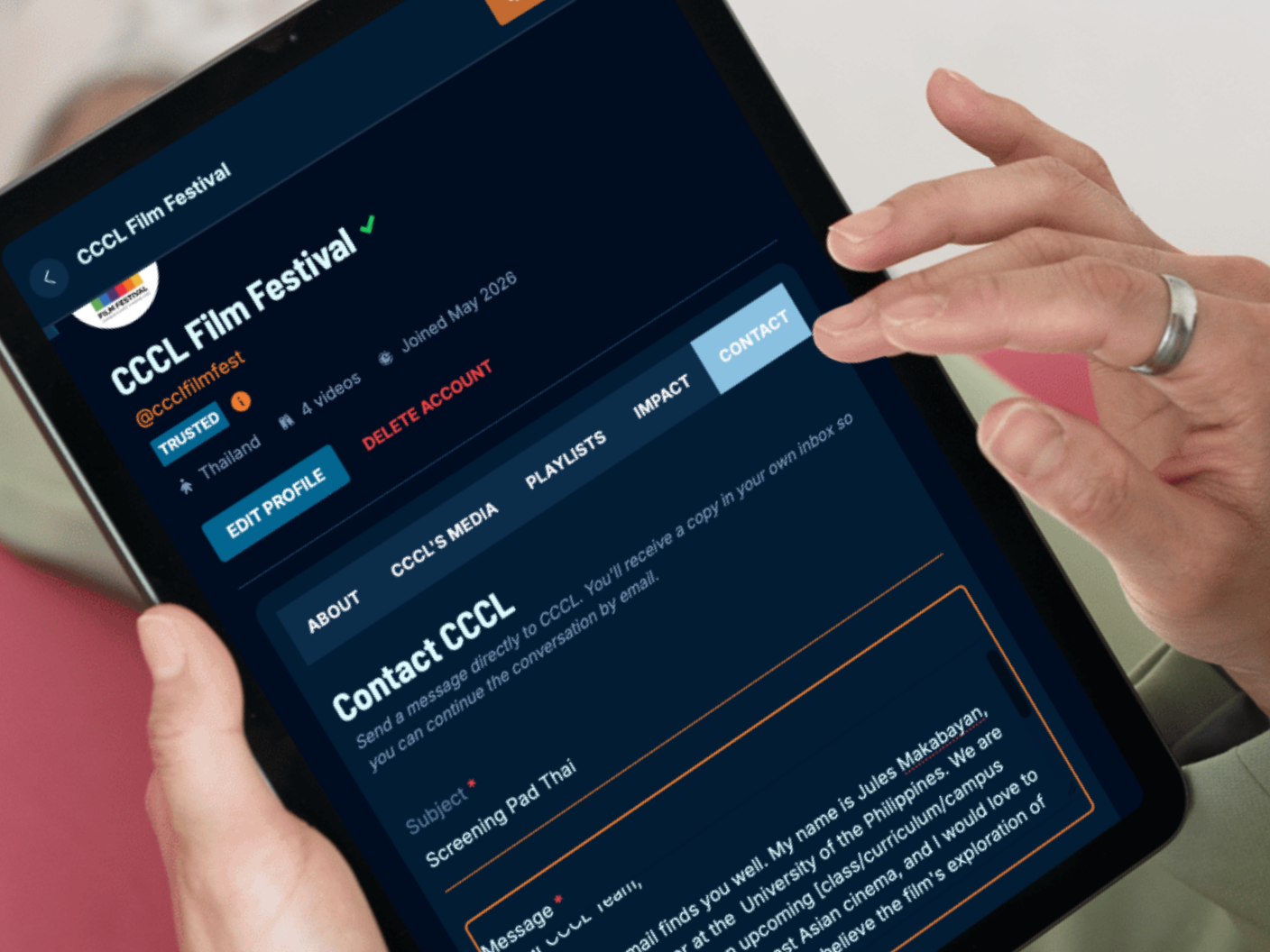
One tap, straight to the filmmaker.
The second is contact. It sounds minor. For a filmmaker who receives a screening invitation through Cinemata, or an educator trying to license a film for a classroom, a reliable way to reach someone is the difference between a film that travels and one that sits still.
We are all curators
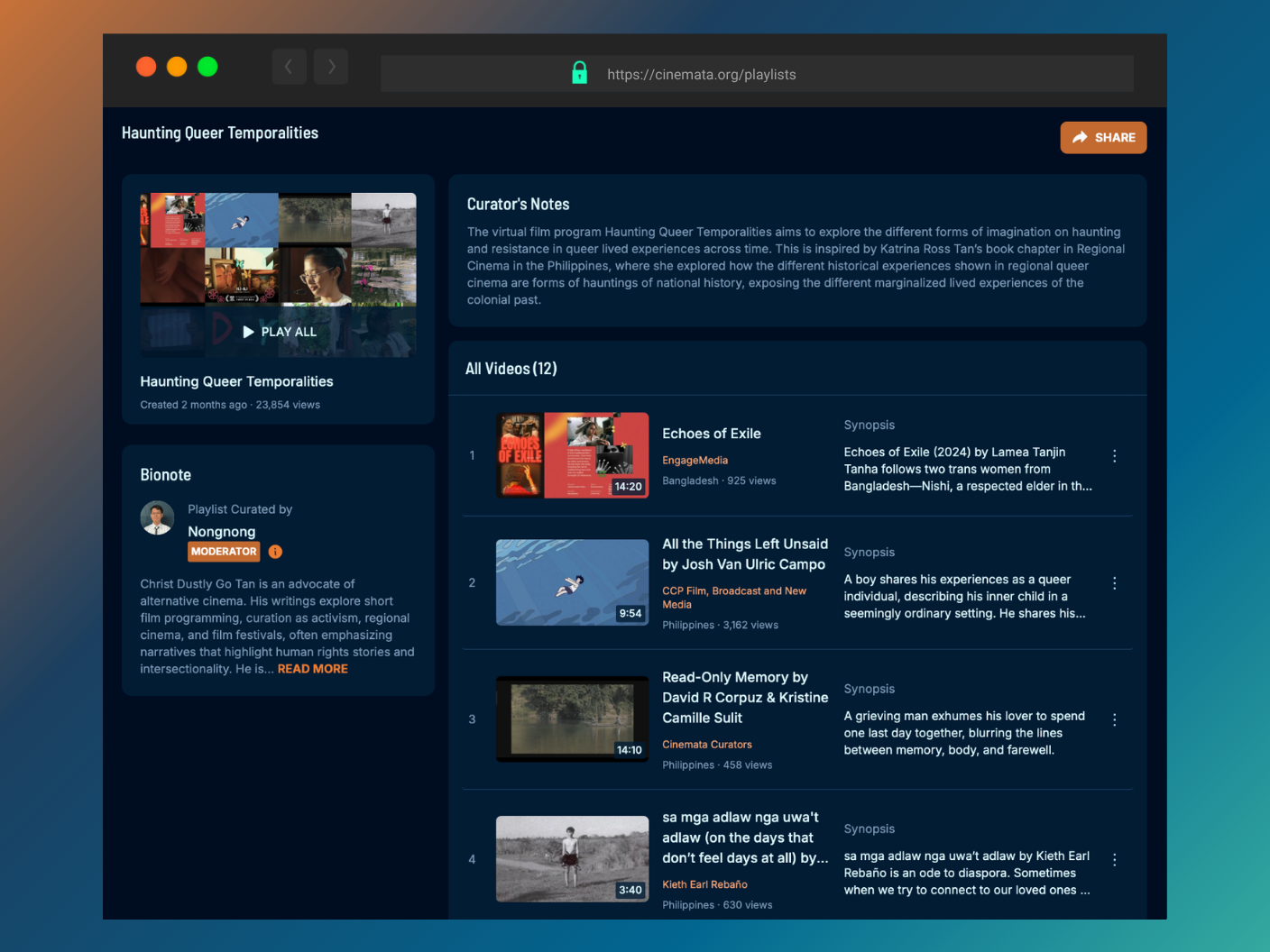
The playlist and the context behind them, side by side.
Cinemata has always leaned on playlists. They are how the platform programmes films rather than only storing them. The page they lived on never reflected that weight.
It does now. Playlists have been redesigned, and curators can add a note to each one, framing why these films belong together. Editing that note is straightforward.
There is a quiet claim in this. You do not need a title or a badge to curate. A teacher building a syllabus, an organiser assembling films for a screening night, a viewer collecting work that moved them. All of them are curating. The page treats their work as worth presenting well.
My Notes
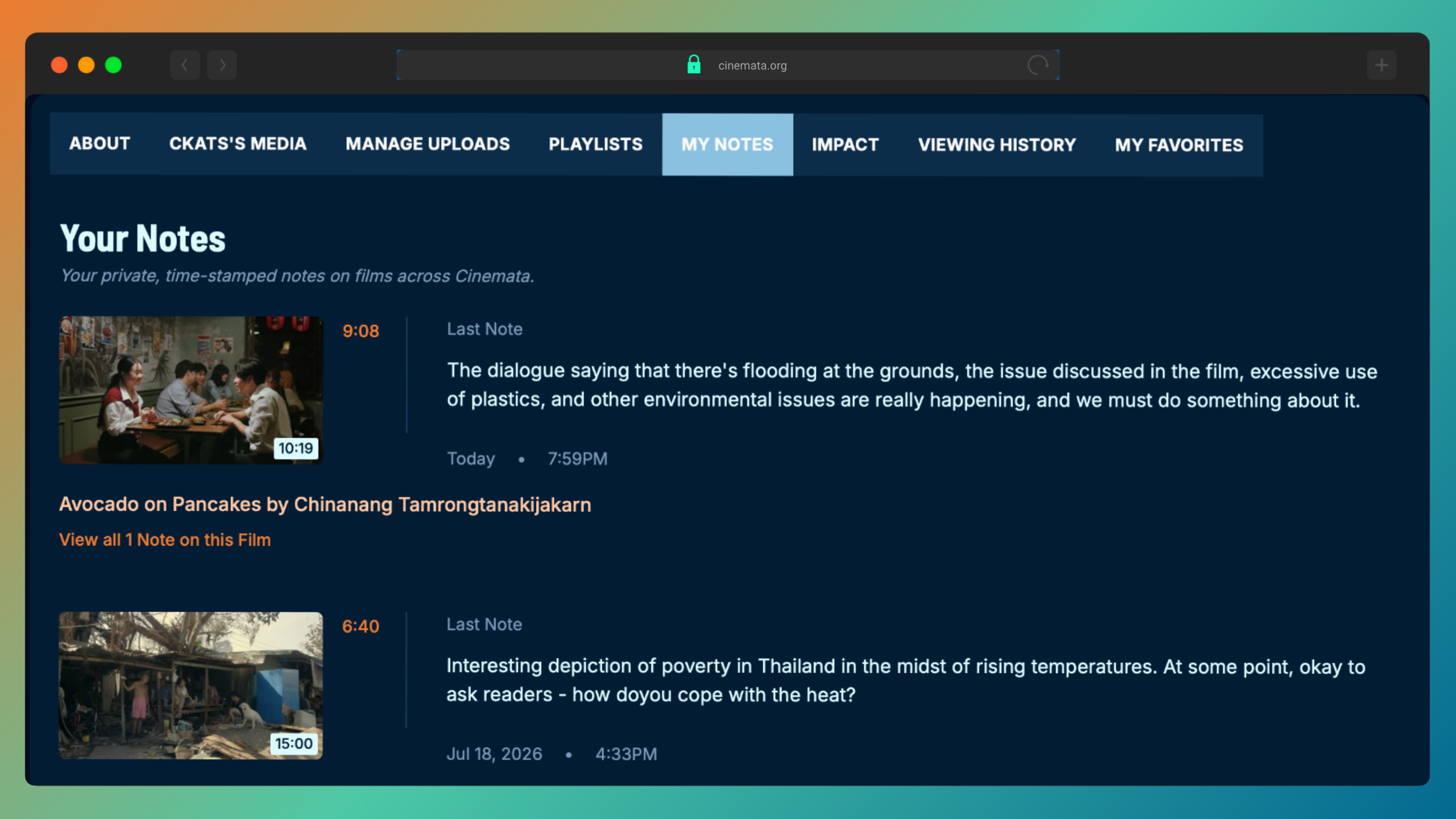
Private notes, time-stamped, yours alone.
This one is different. It is deliberately experimental, and it is not for everyone.
My Notes lets you write private, time-stamped notes on any film, anchored to specific moments. Only you can read them. Not other users. Not the filmmaker. Not platform staff.
We built it for a particular kind of viewer. A festival juror working through a longlist. A programmer building a thematic argument across a dozen films. An academic preparing a close reading. A cinephile who watches social issue film with attention and wants to hold on to what they noticed, and where.
It changes what Cinemata can be. Not only a place to watch, but a place to study.
What this was
Everything here came from one body of research and one long stretch of work. The branding, the search, the upload flow, the profiles, the playlists, My Notes. A finished piece of work, not a preview of one.
None of it would exist without the filmmakers and partners who sat with Kumquat and spoke plainly about what was broken and what they needed. Our thanks to them, including Freedom Film Network, Gawad Alternatibo, FEU Department of Communication, Christ Dustly Go Tan, Anthem: Dionysus Experiment, and to the Open Technology Fund, to Kumquat, and to every filmmaker who has trusted Cinemata with their work.
Now it is your turn.
Watching is open to everyone. The rest opens when you sign up, and signing up is free.
If you make films, upload your Asia-Pacific social issue work and set exactly who sees it and when. If you programme, teach, or organise, build playlists and frame them with a curator's note. Whoever you are, claim your profile, write your Bionote, and keep private notes on the films that matter to you.
The seas connect this region. So do its stories. Add yours.
Cinemata runs on CinemataCMS, and it is open source. Every line of it sits on GitHub under GPL v3, free for anyone to read, fork, or run.
The Cinemata Development Team is open to deployments from schools, festivals, archives, and advocacy groups anywhere in the region. If you run community screenings, teach film, or steward an archive that needs somewhere sovereign to live, we want to hear from you.
Full technical detail on this release sits in the changelog: CinemataCMS v3.2.0 release notes.